Hosta, Genus, 'Blue Angel', Cultivar,
- Genus
- Cultivar
blue angel hosta
Genus native to Japan, China, Korea (cultivar of hybrid origin)
Overview
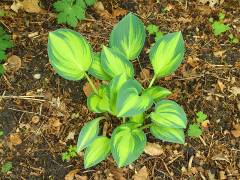
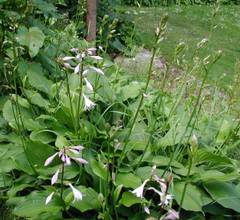
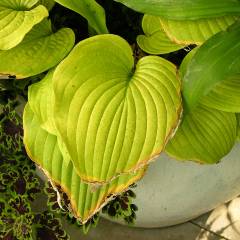
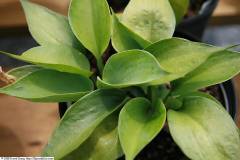
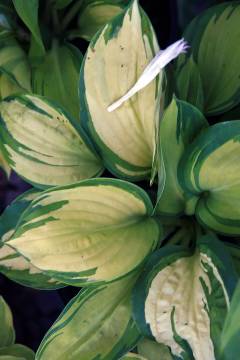
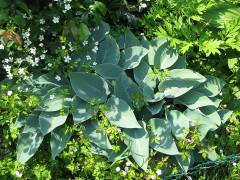
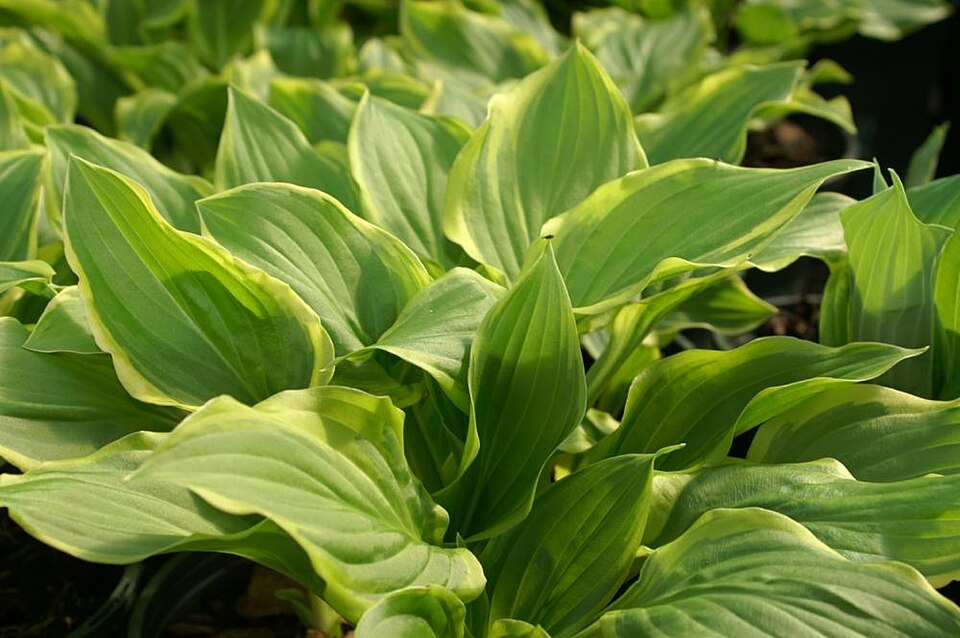
Hosta 'Blue Angel' is a clump-forming herbaceous perennial reaching 30-36 inches (76-91 cm) tall in foliage and 60-72 inches (1.5-1.8 m) wide at maturity. Leaves are heart-shaped to ovate, 14-16 inches (36-41 cm) long and 10-12 inches (25-30 cm) wide, with deeply impressed parallel veins, blue-gray waxy bloom, and slightly cupped or arching form. Thick leathery leaf texture reduces slug damage compared to thin-leaved hostas. Funnel-shaped flowers are white to near-white, 1.5-2 inches (4-5 cm) long, on stout scapes 36-48 inches (90-120 cm) tall above the foliage in June-July. Mature size requires 5-7 years from a 1-gallon (3.8 L) starter plant. The blue waxy bloom on leaves fades to dull green by late summer in zones 7-9, while in zones 4-6 with cool nights it holds blue-gray color longer. Slugs and snails feed on leaves in cool wet conditions, producing irregular holes; iron phosphate slug bait or copper barriers reduce damage. Hosta virus X (HVX) symptoms include puckered leaf surfaces and color streaking; affected plants are removed and not propagated. Registered by Paul Aden in 1986.
Native Range
The genus Hosta is native to Japan, China, and Korea, growing in moist forests, woodland edges, and stream banks. 'Blue Angel' is a hybrid cultivar registered by Paul Aden in 1986; parentage involves selections of H. sieboldiana.Suggested Uses
Used as a specimen in shaded borders, beneath deciduous trees, and as ground-level structure in woodland gardens spaced 5-6 feet (1.5-1.8 m) apart. The mature size requires 25-36 square feet (2.3-3.3 sq m) per plant; smaller spaces fill more quickly with smaller hosta cultivars. Grown in containers of at least 15 gallons (57 L) but flowers and leaves are smaller than in ground plantings.How to Identify
Appearance
Size & Dimensions
Height2'6" - 3'
Width/Spread5' - 6'
Bloom Information
White to near-white funnel-shaped flowers in clusters of 8-12 open in June-July on scapes 36-48 inches (90-120 cm) tall above the foliage. Individual flowers last 1 day; total bloom period extends 2-3 weeks. Cooler zones 4-6 see bloom in early to mid-July; zones 7-8 bloom in mid- to late June. Seedpods develop only when pollinated, holding on stiff scapes through autumn.
Detailed Descriptions
Flower Description
White to near-whiteFoliage Description
Blue-gray, fading to dull green by late summerGrowing Conditions
Sun Requirements
Requires 2-5 hours of direct sunlight daily
• Full Sun: 6+ hours of direct sunlight
• Partial Shade: 3-6 hours of direct sunlight
• Full Shade: Less than 3 hours of direct sunlight
Care & Maintenance
Care Guide
Water weekly during the first growing season with 3-5 gallons (11-19 L) per session in the absence of rain. Established clumps tolerate 2-3 weeks without rain but show wilting and crisp leaf margins during prolonged drought, especially in zones 7-9. Crown rot develops on poorly drained heavy clay soils, particularly in winter; raised beds with amended soil reduce risk. Slugs and snails feed on leaves in cool wet conditions; iron phosphate baits or copper barriers reduce damage. Voles tunnel and feed on crowns in winter under heavy mulch in zones 4-6; gravel-amended planting holes deter access. Hosta virus X (HVX) appears as puckered leaf surfaces and color streaks; affected plants should be discarded along with surrounding soil to limit spread.Pruning
Cut foliage to 2-3 inches (5-7.5 cm) above the crown after the first hard frost or in early spring before new growth emerges. Remove flower scapes after bloom in mid- to late summer to direct energy to leaf growth; intact scapes drop seed and produce volunteer seedlings of unpredictable habit. Damaged or yellowing leaves are removed mid-season as observed. Division every 5-7 years in spring rejuvenates clumps when the center thins.Pruning Schedule
Prune: March & November
fallearly spring
Container Growing
Suitable for container growing
Minimum container size: 15 gallons