Agastache, Genus, 'Black Adder', Cultivar,
- Genus
- Cultivar
black adder hummingbird mint
East Asia and north-central North America (parent species)
Overview
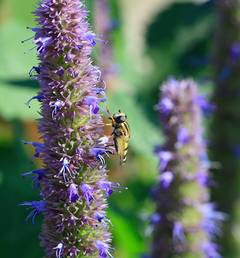
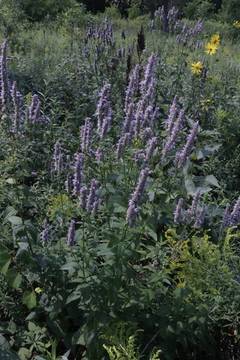
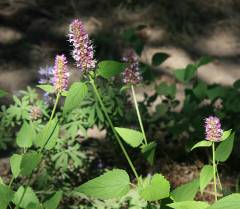
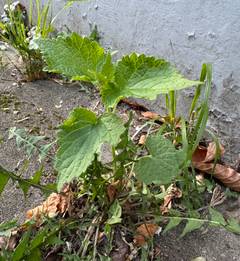
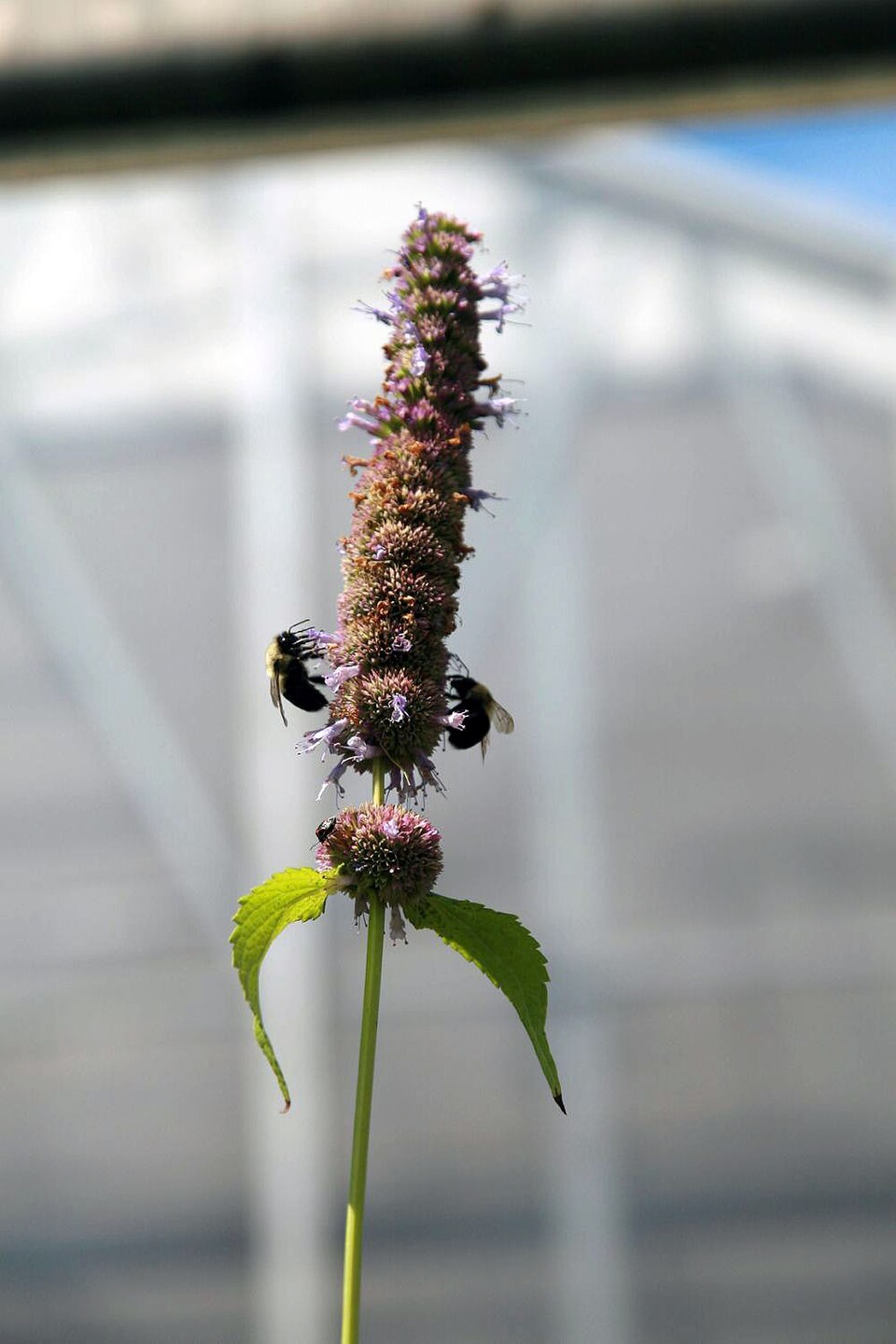
Agastache 'Black Adder' is an upright, clump-forming herbaceous perennial reaching 24-32 inches (60-80 cm) tall and 18-24 inches (45-60 cm) wide. Square stems carry triangular-ovate to lance-ovate leaves 2-3 inches (5-8 cm) long with toothed margins, mid-green above with an anise-licorice scent when crushed. Flower spikes are densely packed, 4-6 inches (10-15 cm) tall and 1-1.5 inches (2.5-4 cm) wide, with violet-blue tubular corollas emerging from dark purple-black calyces; the dark calyces hold color long after the corollas drop, extending the visible color display by 3-4 weeks. Flowering begins in early July and continues through October in zones 6-9, ending earlier in cooler zones. Plants are sterile and produce few or no viable seeds; propagation is by cutting or division of established clumps. Roots form a shallow fibrous system rather than a deep taproot, allowing easier transplanting than other Agastache hybrids but reducing drought tolerance compared to deeply rooted forms. Pollinator activity is heavy throughout flowering.
Native Range
Agastache 'Black Adder' is a hybrid likely involving A. rugosa (Korean mint) crossed with A. foeniculum (anise hyssop) or related species. A. rugosa is native to East Asia; A. foeniculum is native to north-central North America from southern Canada through the northern Great Plains. The hybrid was introduced through European nurseries in the early 21st century.Suggested Uses
Planted in pollinator gardens, mixed perennial borders, and cottage-style plantings, spaced 18-24 inches (45-60 cm) apart. Used as a long-season nectar plant for bees and butterflies in zones 5-9. Grows in containers of 5 gallons (19 L) or larger with sharp drainage; container plants often die over winter in zones 5-6 unless overwintered indoors at 35-40°F (2-4°C).How to Identify
Appearance
Size & Dimensions
Height2' - 2'8"
Width/Spread1'6" - 2'
Bloom Information
Early July through October in zones 6-9 with peak bloom in August. In zones 5-6, bloom begins in mid-July and ends with the first hard frost. Individual corollas drop after 4-6 days but the dark calyces remain colored for an additional 3-4 weeks, extending the visible flowering period to 14-16 weeks. Bumblebee, honeybee, and butterfly visitation is heavy throughout.
Detailed Descriptions
Flower Description
Violet-blue tubular corollas with persistent dark purple-black calycesFoliage Description
Mid-greenGrowing Conditions
Sun Requirements
Requires 6-8 hours of direct sunlight daily
• Full Sun: 6+ hours of direct sunlight
• Partial Shade: 3-6 hours of direct sunlight
• Full Shade: Less than 3 hours of direct sunlight
Care & Maintenance
Care Guide
Plant in spring after the soil reaches 60°F (16°C); fall planting in zones 5-6 reduces winter survival. Water weekly through the first season; established plants need water during prolonged drought of 2-3 weeks without rain due to the shallower root system. Mulch lightly with gravel or pea-stone rather than organic mulch, which holds moisture against the crown and increases winter rot. Powdery mildew may develop in still, humid air; downy mildew appears as leaf yellowing and stem dieback in continuously wet conditions. Crown rot is the principal cause of death in clay soils. Divide every 3-4 years in early spring as new growth begins; lift the entire crown and cut into wedges with 3-5 growing points each.Pruning
Cut stems to 4-6 inches (10-15 cm) above the crown in early spring after new growth emerges; fall cutting is not used, as old stems insulate the crown over winter. Deadheading is not required; the persistent dark calyces remain colored on the plant. Pinching young shoots in May reduces final height by 2-3 inches (5-8 cm) and increases branching.Pruning Schedule
Prune: April–May
early springlate spring
Container Growing
Suitable for container growing
Minimum container size: 5 gallons