Agastache, Genus, urticifolia, Species,
- Genus & species
nettle-leaf giant hyssop
Overview
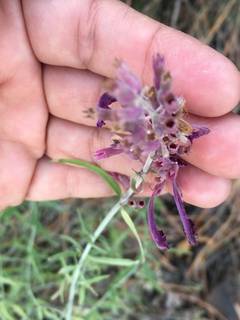
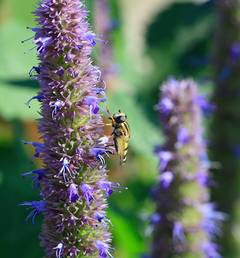
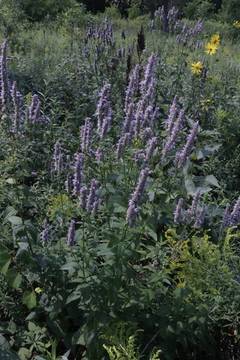
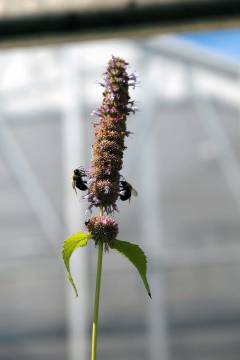
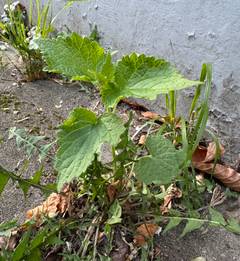
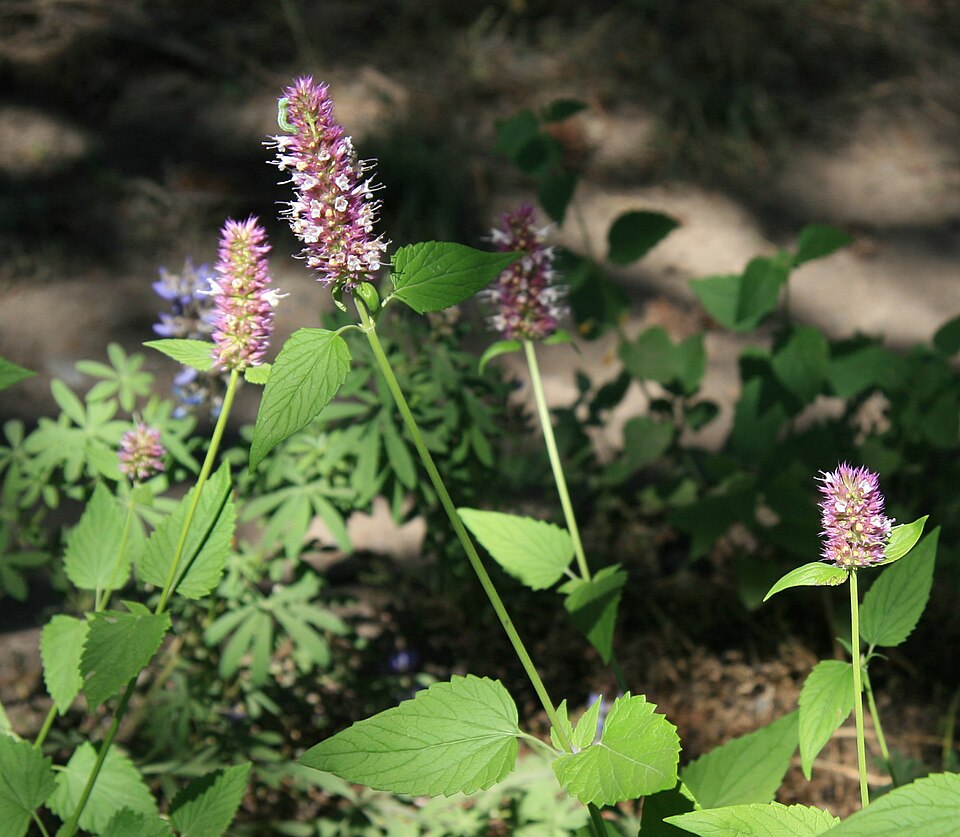
An upright perennial growing 3–5 feet (0.9–1.5 m) tall in clumps of square, branching stems. Leaves are opposite, triangular to heart-shaped with toothed margins, 2–4 inches (5–10 cm) long, resembling nettle leaves, medium green, and aromatic when crushed. Small tubular flowers, pink to lavender or nearly white, about 0.25 inch (6 mm) long, are packed into dense cylindrical spikes 2–6 inches (5–15 cm) long at the stem tips. Protruding stamens give the spikes a fuzzy look. Bloom occurs from June to August. The flowers are followed by small nutlets, and the dried spikes persist into fall. The plant grows from a woody crown and shallow rhizomes, forming expanding clumps, and dies back to the ground each winter. The foliage carries a mint- to anise-like scent. Lower leaves may drop in dry, hot conditions.
Native Range
Native to western North America from British Columbia and Montana south to California, Arizona, and Colorado. Grows in moist meadows, streambanks, open forest, and sagebrush slopes at montane to subalpine elevations.Suggested Uses
Grown in pollinator gardens, meadow plantings, and moist borders at 18–24 inch (45–60 cm) spacing. Used to draw bees, butterflies, and hummingbirds to the summer flowers. Suited to moist mountain-climate gardens and less persistent in hot, dry lowlands.How to Identify
Appearance
Size & Dimensions
Height3' - 5'
Width/Spread1'6" - 3'
Bloom Information
Flowers from June to August, with peak bloom in midsummer. A spike blooms from the bottom upward over 2–4 weeks, and a plant flowers for 4–8 weeks. Bloom is later and shorter at higher elevations.
Detailed Descriptions
Flower Description
Pink to lavenderFoliage Description
Medium greenGrowing Conditions
Sun Requirements
Requires 5-10 hours of direct sunlight daily
• Full Sun: 6+ hours of direct sunlight
• Partial Shade: 3-6 hours of direct sunlight
• Full Shade: Less than 3 hours of direct sunlight
Care & Maintenance
Care Guide
Grows in full sun to partial shade in moist, well-drained soils. Water during dry spells, as the plant needs steady moisture and wilts in extended drought. It tolerates a range of soils but grows taller and fuller in richer, moister ground. Plants self-sow and the clumps spread by rhizomes, forming wider stands over time. Aromatic foliage is seldom browsed by deer. Powdery mildew can appear on the leaves in humid, crowded conditions.Pruning
Cut stems to the ground in late fall or early spring. Deadhead spent spikes during bloom to extend flowering and reduce self-seeding, or leave them to feed birds and self-sow. Divide crowded clumps in spring every 3–4 years. No other pruning is needed.Pruning Schedule
Prune: March & November
fallearly spring