Agastache, Genus, foeniculum, Species,
- Genus & species
anise hyssop
North-central and northern North America (the northern Great Plains east through the Great Lakes region and into southern Canada); dry prairies, open woodlands, and disturbed meadows.
Overview
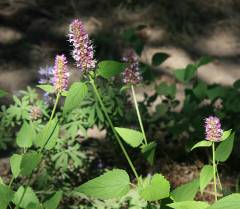
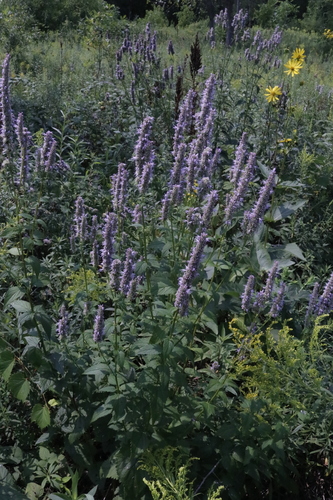
Agastache foeniculum is a short-lived perennial in the mint family (Lamiaceae) growing 24-48 inches (60-120 cm) tall on erect square stems and spreading 12-18 inches (30-45 cm) wide. The square stems and opposite leaves place this plant unambiguously in the mint family, alongside such relatives as Salvia, Nepeta, and Monarda. Opposite serrated leaves release a strong anise (licorice-like) aroma when brushed, a trait from the high methyl chavicol concentration in the foliage glandular tissue, and the same compound class that gives the leaves their scent makes the foliage a deer-and-rabbit-deterrent because the volatile oil chemistry makes the leaves unpalatable to mammalian browsers. Dense terminal spikes of small lavender-blue tubular flowers open from the bottom upward from July through September, with each spike reaching 3-6 inches (8-15 cm) long. Pollinator value is substantial: bees (both bumblebees and honeybees), butterflies, and hummingbirds work the small tubular flowers in sequence across the 3-4 week active bloom window per spike. Plants self-sow freely in open ground, and seedling volunteers can become numerous in loose cultivated soil; removing spent spikes before seed dispersal limits the self-sown spread, while leaving some spikes in place produces replacement seedlings to carry the colony forward as individual mother plants reach the end of their 3-4 year lifespan. In heavy clay or waterlogged conditions, crown rot during winter is the most common cause of plant loss, and the species is unreliable on poorly drained sites where the snowmelt-and-rain saturation period extends past 4 weeks. The species tolerates light shade but produces fewer flower spikes and more open growth when light drops below 6 hours per day. Native to the north-central and northern North American prairies and open woodlands, the species is a keystone pollinator plant in midwest tallgrass prairie restoration projects and a recurring component of honey production landscapes because the high nectar yield supports both honey production and wild bee community development.
Native Range
Agastache foeniculum is native to north-central North America, with a range from the northern Great Plains east through the Great Lakes region and into southern Canada from Manitoba and Ontario south through Minnesota, Wisconsin, Michigan, and into Iowa, Illinois, and Indiana. The species occurs naturally in dry prairies, open woodlands, and disturbed meadows where the well-drained soils and full sun match the species' physiological preferences. The species is a recurring component of midwest tallgrass prairie communities and is widely used in prairie restoration projects across the central United States as a keystone pollinator plant.Suggested Uses
Used in pollinator gardens, prairie-style meadows, and cottage garden borders where the upright spikes add vertical structure to the planting and the long bloom window supports a continuous pollinator presence. The anise-scented leaves work as teas and culinary garnishes, with the high methyl chavicol content giving the leaves the licorice-like flavor that the species name 'foeniculum' (meaning fennel in Latin) reflects. Mid-border filler placement with companions like coneflower (Echinacea purpurea), black-eyed Susan (Rudbeckia hirta), and Russian sage (Perovskia atriplicifolia) builds a prairie-style mixed planting. Container culture requires pots of 5 gallons (19 liters) or larger to accommodate the 24-48 inch (60-120 cm) mature height and the moderately spreading rhizomatous habit.How to Identify
Appearance
Size & Dimensions
Height2' - 4'
Width/Spread1' - 1'6"
Bloom Information
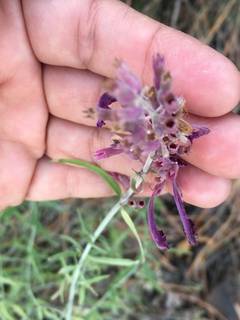
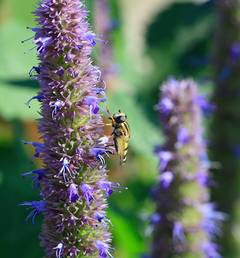
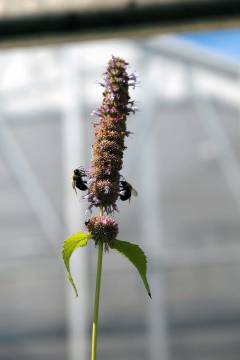
Lavender-blue tubular flowers in dense terminal spikes 3-6 inches (8-15 cm) long open from July through September on the warm-season growth, with each spike blooming bottom-to-top across a 3-4 week active window. Pollination is shared between bumblebees and honeybees (both worker the small tubular flowers in sequence), butterflies (using the spike as a landing platform and probing the individual tubular flowers), and hummingbirds (working the spikes from below in their characteristic hovering pattern). Deadheading spent spikes stimulates lateral branches to produce secondary flower spikes, extending the bloom by several weeks into early fall through October on warm autumn weather.
Detailed Descriptions
Flower Description
Lavender-blue tubular flowers densely packed in terminal spikes 3-6 inches (8-15 cm) long; the bottom-to-top bloom progression on each spike spreads bloom across the 3-4 week active flowering window per spikeFoliage Description
Medium green; ovate opposite leaves with serrated margins, releasing a strong anise (licorice-like) aroma when crushed from high methyl chavicol content in the foliage glandular tissueGrowing Conditions
Sun Requirements
Requires 6-10 hours of direct sunlight daily
• Full Sun: 6+ hours of direct sunlight
• Partial Shade: 3-6 hours of direct sunlight
• Full Shade: Less than 3 hours of direct sunlight
Care & Maintenance
Care Guide
Plant in full sun with at least 6 hours of direct light for the densest flowering. Well-drained soil is essential because winter crown rot in heavy or poorly drained ground is the principal cause of plant loss. Watering is regular through the first growing season for establishment, then natural rainfall handles the species' moderate water needs except during extended drought. High-nitrogen fertilizers encourage lanky growth and reduce flower density, so fertilization is omitted on average garden soil. Self-sowing is allowed on naturalistic plantings to replace aging mother plants, while spent spikes are removed before seed dispersal in formal settings where volunteer seedlings would disrupt the planned planting. All growth is cut to the ground in late fall after frost or in early spring before new shoots emerge from the basal rosette. The species supports a substantial pollinator community across its bloom window: bees, butterflies, and hummingbirds work the spikes in sequence, and the high nectar yield supports both honeybee colonies and wild bee populations including bumblebees, mason bees, and other native pollinators.Pruning
Spent flower spikes are removed during the bloom season by cutting back to a lateral branch to promote rebloom on lateral shoots. In late fall or early spring, all stems are cut to 2-3 inches (5-8 cm) above ground level to clear the way for new growth. No formal shaping is required, and the plant develops its upright multi-stemmed habit naturally without staking or training.Pruning Schedule
Prune: March–April
early spring
Container Growing
Suitable for container growing
Minimum container size: 5 gallons