Image 1 of 5
1 / 5
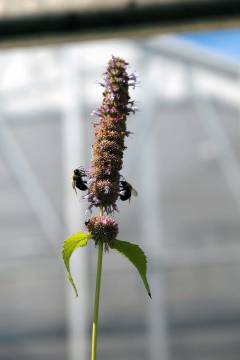
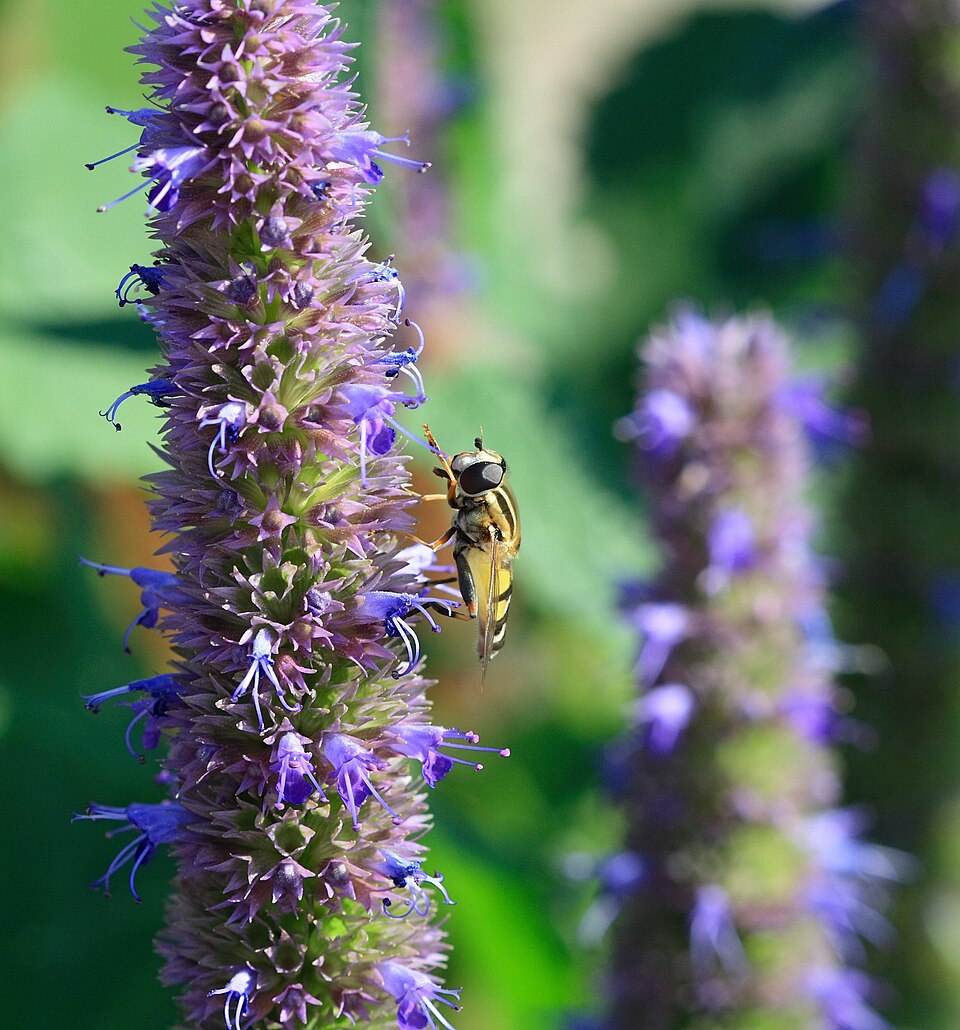
© Benh LIEU SONG - Hoverfly identification by Lycaon, some rights reserved (CC-BY-SA) · Wikimedia Commons
Agastache, Genus, 'Blue Fortune', Cultivar,
- Genus
- Cultivar
blue fortune hummingbird mint
Garden hybrid ({A. foeniculum} crossed with {A. rugosa})
Overview
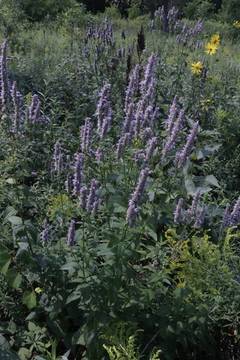
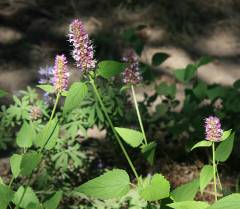
Agastache 'Blue Fortune' is an upright, clump-forming perennial that reaches 24-36 inches (60-90 cm) tall and 18-24 inches (45-60 cm) wide. A hybrid of A. foeniculum and A. rugosa, it has square stems that branch from the base and gray-green toothed leaves 2-3 inches (5-8 cm) long that give off a mint-anise scent when bruised. Dense cylindrical spikes 3-6 inches (8-15 cm) long carry tightly packed lavender-blue tubular flowers from July through October; each spike lasts 3-4 weeks and successive spikes stretch the season to 8-10 weeks. Because it is a sterile hybrid, the plant does not self-seed, which suits tidy plantings. Growth is moderate, reaching full size in one to two seasons, and the stem bases turn somewhat woody in mild climates. In heavy, wet winter soils the plant is short-lived, usually declining after 3-4 years, and root rot from Pythium and Phytophthora takes hold in waterlogged ground. Bees, butterflies, and hummingbirds work the flowers, while deer and rabbits pass the aromatic foliage by. It is non-toxic and hardy in zones 5-9 in full sun.
Native Range
A garden hybrid of A. foeniculum, native to central and northern North America, and A. rugosa of eastern Asia. The cultivar arose in the Netherlands.Suggested Uses
Grown in perennial borders, pollinator gardens, and herb gardens, spaced 18-24 inches (45-60 cm) apart. Being a sterile hybrid, it does not self-seed and suits formal plantings. It is not suited to heavy clay, waterlogged winter sites, or spots with fewer than 6 hours of sun.How to Identify
Appearance
Size & Dimensions
Height2' - 3'
Width/Spread1'6" - 2'
Bloom Information
Flowers July through October in zones 5-9. Individual spikes last 3-4 weeks, and successive spikes stretch total bloom to 8-10 weeks. In zone 9 bloom can start in late June, while in zones 5-6 it tapers in late September as nights cool below 50 F (10 C).
Detailed Descriptions
Flower Description
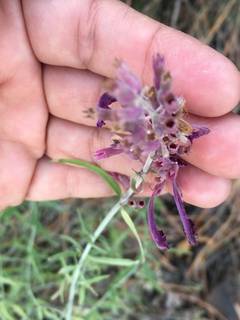
Lavender-blue tubular flowers packed into dense cylindrical spikes 3-6 inches (8-15 cm) longFoliage Description
Gray-green, aromatic, opposite, 2-3 inches (5-8 cm) long, with toothed marginsGrowing Conditions
Sun Requirements
Requires 6-12 hours of direct sunlight daily
• Full Sun: 6+ hours of direct sunlight
• Partial Shade: 3-6 hours of direct sunlight
• Full Shade: Less than 3 hours of direct sunlight
Care & Maintenance
Care Guide
Grow in full sun with 6 or more hours of light; in shade the stems flop and flowering drops off. Water sparingly once established, since the plant tolerates drought and fails in soggy ground. Well-drained soil is the key requirement, as root rot sets in on waterlogged winter soils and cuts lifespan to 2-3 years in heavy clay. Skip regular feeding, because extra nitrogen pushes leaves at the expense of flowers. Spider mites can appear in hot, dry spells. In humid climates with heavy winter soils the plant usually lasts 3-5 years.Pruning
Cut all stems to 4-6 inches (10-15 cm) above the ground in early spring, March or April, before new growth starts. Leave the dried spikes standing through winter for structure and to shield the crown from wet; removing spent spikes during the season draws a second flush.Pruning Schedule
Prune: March–April
early spring
Container Growing
Suitable for container growing
Minimum container size: 3 gallons