Begonia, Genus, longiciliata, Species,
- Genus & species
Begonia longiciliata
Subtropical southwestern China (Yunnan, Guizhou, Guangxi)
Overview
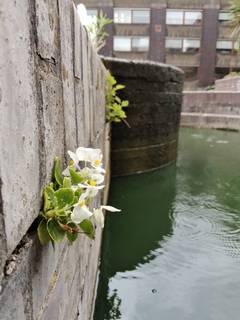
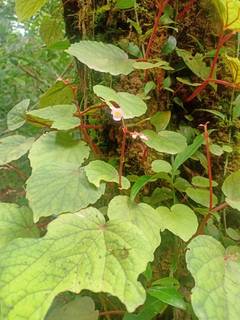
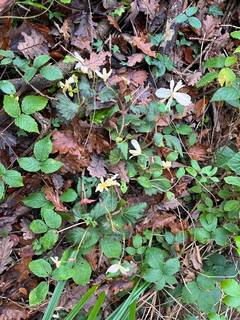
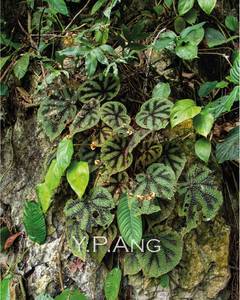
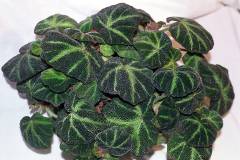
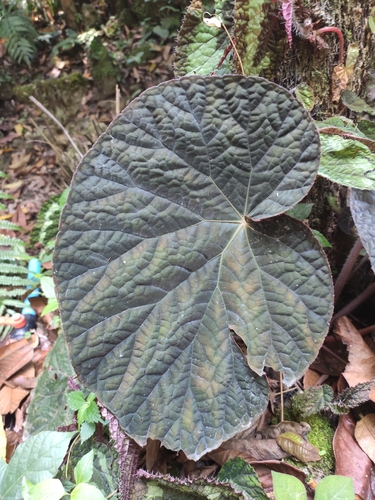
Begonia longiciliata is a rhizomatous evergreen perennial begonia grown indoors and in tropical shade gardens for its broad emerald-green leaves edged with long pale-pink to red cilia (hairs). Mature plants reach 8–14 inches (20–35 cm) tall and 12–18 inches (30–45 cm) wide as a clumping rosette of leaves rising from a thick creeping rhizome that travels along the soil surface. Leaves are obliquely ovate, 4–7 inches (10–18 cm) long and 3–5 inches (7–13 cm) wide, with a glossy dark-green to bronze-green upper surface, paler reddish underside, and the characteristic 0.2–0.4 inch (5–10 mm) ciliate hairs along leaf margins and major veins that give the species its name. Each leaf is held on a 4–6 inch (10–15 cm) hairy petiole. Flowers are small (0.5–0.7 inch, 12–18 mm), white to pale pink, in branched cymes 6–10 inches (15–25 cm) tall held above the foliage in winter and early spring. The species is monoecious, with separate male and female flowers in the same cluster; female flowers carry a small three-winged ovary that develops into a dry capsule with many tiny seeds. The plant is mildly toxic to pets if ingested, with calcium oxalate crystals in stems and rhizome causing oral irritation; the species was described in 1939 from collections in Yunnan, China.
Native Range
Begonia longiciliata is native to subtropical southwestern China (Yunnan, Guizhou, and Guangxi provinces), growing on shaded limestone cliffs, rocky outcrops, and humus-rich slopes in evergreen broadleaf forests at 600–1,800 m (2,000–5,900 ft) elevation. The species occurs naturally on humid, north-facing slopes where year-round air humidity stays above 70%.Suggested Uses
Used as a tabletop or terrarium specimen in collections of rhizomatous and Rex begonias, in tropical conservatories, and in shaded covered patios in zones 10–11. Pairs well with other shade-tolerant tropicals (Anthurium, Calathea, Pilea) at similar humidity needs. Spaced one plant per 6–8 inch (15–20 cm) shallow pot, the species expands to fill the container in 18–24 months.How to Identify
Appearance
Size & Dimensions
Height8" - 1'2"
Width/Spread1' - 1'6"
Bloom Information
Flowers open from December through March in indoor and tropical conditions, with peak bloom in January and February. Each branched cyme carries 8–20 small white to pale-pink flowers and lasts 4–6 weeks before drying back. Mature plants produce 2–4 flowering cymes per season; bloom is suppressed below 60°F (16°C) or above 85°F (29°C) and pauses entirely during the warm summer months.
Detailed Descriptions
Flower Description
white to pale pinkFoliage Description
emerald green to bronze-green with pink-red ciliaGrowing Conditions
Sun Requirements
Needs bright indirect light. Keep it out of direct sun, which can scorch the leaves.
• Bright indirect light: a bright spot near a window, with no direct sun on the leaves
Care & Maintenance
Care Guide
Bright indirect light of 5,000–12,000 lux suits this species; under 3,000 lux the leaves stretch and the ciliate margins shorten, and over 15,000 lux the leaves bleach and the bronze tones fade. Humus-rich, well-drained mix (2 parts peat-based potting soil to 1 part perlite to 1 part orchid bark) with a pH of 5.5–6.5 is required; alkaline mixes cause iron deficiency. Watering occurs when the top 1 inch (2.5 cm) of mix dries; the rhizome rots in waterlogged medium and is the main organ damaged by overwatering. Temperatures of 60–80°F (16–27°C) and humidity above 50% are required for steady growth, with leaf damage at temperatures below 50°F (10°C). Balanced liquid fertilizer at quarter strength every 3–4 weeks during active growth (April–October) supports leaf and rhizome production; fertilizer is paused during winter bloom. The rhizome travels across the soil surface and over the pot rim, and shallow wide pots support the natural growth pattern better than tall narrow ones.Pruning
Spent flower cymes are cut at the base of the peduncle once flowers have dried, typically March or April. Old yellowing or damaged leaves are removed at the petiole base individually using a clean blade. The rhizome is divided every 3–4 years when it overgrows the pot; cut sections include at least one growth node and are repotted into the same humus-rich mix.Pruning Schedule
Prune: March–April
early spring
Container Growing
Suitable for container growing
Minimum container size: 1 gallons