Begonia, Genus, ferox, Species,
- Genus & species
Begonia ferox
Limestone karst caves of Guangxi, southern China
Overview
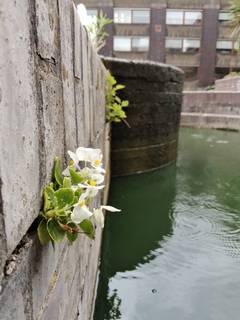
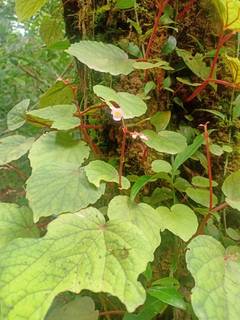
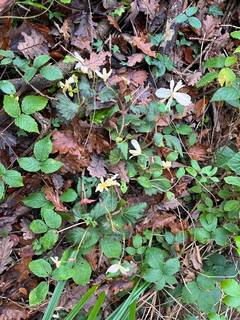
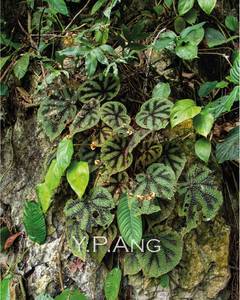
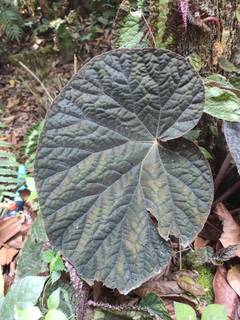
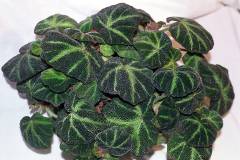
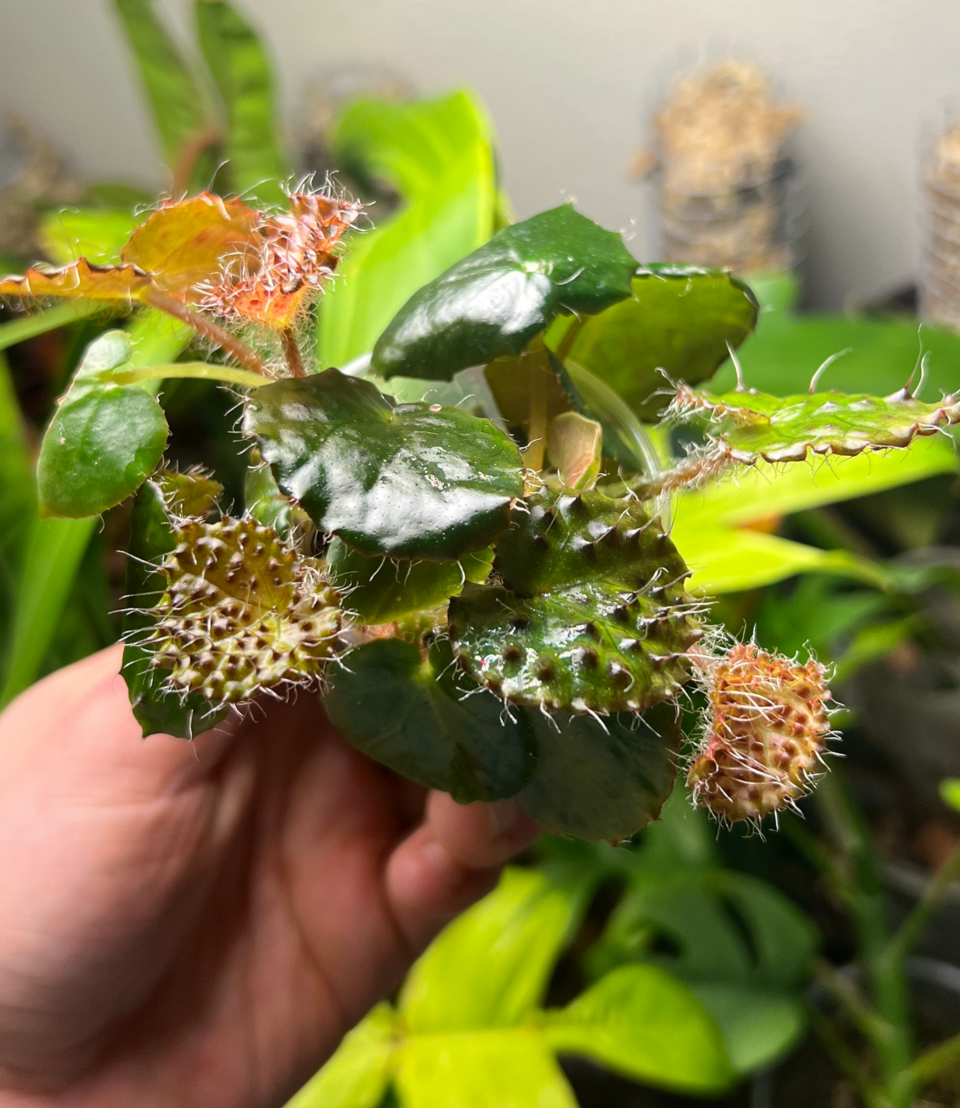
Begonia ferox is a rhizomatous evergreen perennial begonia native to limestone karst caves of southern China, grown indoors and in tropical conservatories for its sharply bullate cone-bearing leaves. Mature plants reach 6–12 inches (15–30 cm) tall and 8–14 inches (20–35 cm) wide, forming a low rosette of leaves on a thick creeping rhizome that travels along the soil surface. Leaves are obliquely ovate, 3–6 inches (7–15 cm) long and 2–4 inches (5–10 cm) wide, dark green with bronze-purple undersides, and bear 30–80 sharply pointed conical bullate protrusions per leaf, each 0.1–0.2 inch (3–5 mm) tall, that give the plant its species name (Latin 'ferox' meaning fierce). The protrusions are leaf-tissue extensions covering each papilla and are hard but not actually sharp; they show up most on mature leaves under bright light. Flowers are small (0.5–0.7 inch, 12–18 mm), white to pale pink, in branched cymes 4–8 inches (10–20 cm) tall held above the foliage, opening from late autumn through early spring. The species was described in 2018 from cultivated plants traced to limestone outcrops in Guangxi province; wild populations are restricted to a few sites and the species carries conservation concern in its native range. All parts contain calcium oxalate crystals causing oral irritation in pets if ingested.
Native Range
Begonia ferox is native to limestone karst caves and shaded cliff bases in Guangxi province of southern China, growing on humid mossy rock substrates at 200–600 m (660–2,000 ft) elevation. The species is restricted to a small area and was first formally described in 2018 by Chinese botanists; cultivation in the West relies on tissue-cultured stock from those original collections.Suggested Uses
Used as a terrarium or cabinet specimen for collectors of rare aroids and begonias, in shaded conservatories, and in tropical container collections in zones 11–12. Pairs in collections with other rhizomatous begonias (B. masoniana, B. bowerae, B. soli-mutata) and small terrestrial aroids that share humid shade requirements. Spaced one plant per 4–6 inch (10–15 cm) shallow pot, the species needs careful matching of humidity and substrate to the karst-cave origin of the wild population.How to Identify
Appearance
Size & Dimensions
Height6" - 1'
Width/Spread8" - 1'2"
Bloom Information
Flowers open from late autumn through early spring (November–March) under indoor conditions, with peak bloom in January and February. Each branched cyme carries 8–15 small white to pale-pink flowers and lasts 4–6 weeks before drying back. Mature plants produce 1–3 flowering cymes per season; bloom is suppressed below 60°F (16°C) sustained or under low light below 4,000 lux.
Detailed Descriptions
Flower Description
white to pale pinkFoliage Description
dark green with bronze-purple undersides and conical protrusionsGrowing Conditions
Sun Requirements
Needs bright indirect light. Keep it out of direct sun, which can scorch the leaves.
• Bright indirect light: a bright spot near a window, with no direct sun on the leaves
Care & Maintenance
Care Guide
Bright indirect light of 5,000–10,000 lux suits this species; under 3,000 lux the cone protrusions become smaller and the bronze underside fades, while direct sun bleaches and crisps the leaves. Humus-rich, well-drained mix (2 parts peat-based potting soil to 1 part perlite to 1 part orchid bark) with a pH of 5.5–6.5 is required, with an additional layer of crushed limestone or oyster shell suiting the karst-cave origin of the species. Watering occurs when the top 1 inch (2.5 cm) of mix dries; the rhizome rots in waterlogged medium. Temperatures of 60–80°F (16–27°C) and humidity above 60% are required, with leaf damage at temperatures below 50°F (10°C). Balanced liquid fertilizer at quarter strength every 4 weeks during active growth (April–October) supports steady leaf turnover; fertilizer is paused during winter bloom. The rhizome travels across the soil surface and over the pot rim, and shallow wide pots match the natural growth pattern.Pruning
Spent flower cymes are cut at the base of the peduncle once flowers have dried, typically March or April. Old yellowing or damaged leaves are removed at the petiole base individually using a clean blade; healthy leaves are not removed because each leaf takes 6–8 weeks to fully develop the cone protrusions. The rhizome is divided every 4–5 years when it overgrows the pot.Pruning Schedule
Prune: March–April
early spring
Container Growing
Suitable for container growing
Minimum container size: 1 gallons