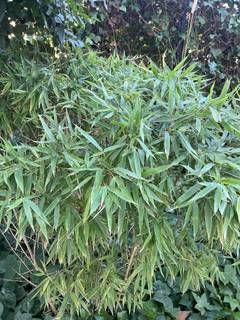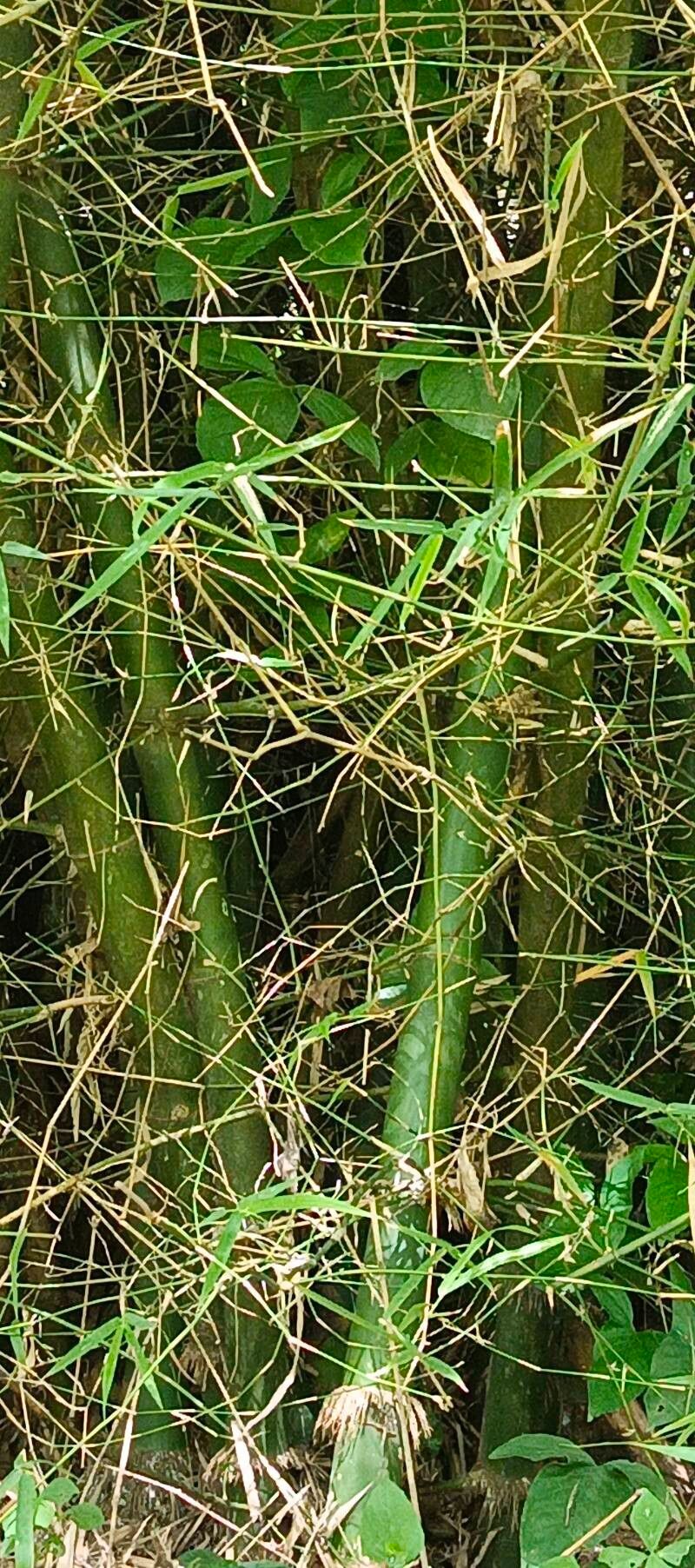
Bambusa, Genus, spp., Multiple species,
- Genus
- Multiple species
Overview
Bambusa is a genus of roughly 150 clump-forming bamboos in the grass family (Poaceae), native to tropical and subtropical Asia, with additional species in Africa, the Americas, and on Pacific and Indian Ocean islands. These are woody grasses with sympodial (clumping) rhizomes, so new culms emerge close to the parent and the plant expands as a dense, non-running clump rather than spreading widely. Culms are hollow between the nodes, 10-80 ft (3-24 m) tall and 0.5-6 inches (1.3-15 cm) in diameter depending on species, often arching at the tips and clothed in narrow evergreen leaves 3-10 inches (8-25 cm) long. New culms reach near their full height in a single growing season, then harden over the following years. Many Bambusa carry persistent culm sheaths and branch clusters with one larger branch at each node. Most species flower only at long, irregular intervals of several decades, and a whole population may bloom and then die together. The clumping habit keeps the genus more containable than running bamboos, though large species still build wide, heavy clumps that are hard to remove once established.
Native Range
Native to tropical and subtropical Asia, from India and southern China through Southeast Asia to the Pacific, with some species in tropical Africa and the Americas. Many species are now grown and naturalized across warm regions worldwide.Suggested Uses
Grown as evergreen screens, windbreaks, and specimen clumps in frost-free gardens, and as container plants on patios and indoors in cooler climates. The strong, straight culms are harvested for construction, furniture, and garden stakes. Large clumping species are placed where their eventual width and weight can be accommodated.How to Identify
Appearance
Size & Dimensions
Height10' - 80'
Width/Spread5' - 15'
Bloom Information
Flowering is rare and irregular, occurring at intervals of roughly 30 to 120 years depending on species, often with all plants of one stock flowering at once. The grass-like flower clusters give way to seed, after which the flowered culms usually die. Because flowering happens so seldom, most plantings are propagated from culm or rhizome divisions rather than seed.
Detailed Descriptions
Flower Description
Green to strawFoliage Description
GreenGrowing Conditions
Sun Requirements
Requires 5-12 hours of direct sunlight daily
• Full Sun: 6+ hours of direct sunlight
• Partial Shade: 3-6 hours of direct sunlight
• Full Shade: Less than 3 hours of direct sunlight
Care & Maintenance
Care Guide
Grow in full sun to part shade in deep, fertile, moisture-retentive soil with steady water through the warm season. Most species are tropical to subtropical and hardy only in USDA zones 9-11, though a few tolerate brief frost to about 20°F (-7°C). Clumps respond to generous feeding and ample water with taller, thicker culms, while drought and cold check growth and brown the foliage. Even though the rhizomes clump rather than run, mature plants form large, dense root masses that are heavy to dig and divide. Thinning the oldest culms each year keeps the clump open and lets light reach the center.Pruning
Old, weak, and crowded culms are cut to the ground in spring to keep the clump open, since an individual culm does not regrow taller once cut. Side branches are shortened to lift the canopy and show the culms. Cut culms do not resprout, so removal is permanent for that stem.Container Growing
Suitable for container growing
Minimum container size: 15 gallons