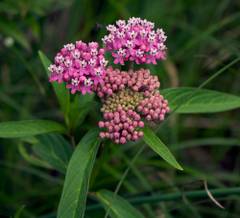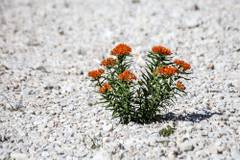
Asclepias, Genus, viridiflora, Species,
- Genus & species
green comet milkweed
Overview
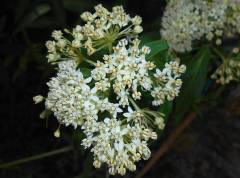
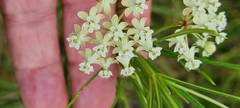
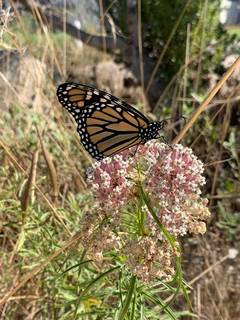
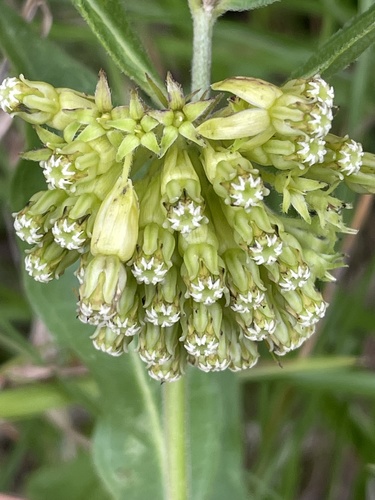
Asclepias viridiflora is an herbaceous perennial milkweed in the dogbane family, growing 1-3 ft (30-90 cm) tall from a deep taproot, usually with one to several unbranched stems. The stems often lean or arch rather than stand fully erect. Leaves are variable, from narrow and linear to oval, 2-5 in (5-13 cm) long, thick-textured, and arranged opposite or scattered along the stem. Unlike the showy pink milkweeds, it bears rounded clusters of small green to greenish-white flowers about 0.25 in (6 mm) each, held tight against the upper stem in early to midsummer. The flowers give way to slender, upright seed pods 4-5 in (10-13 cm) long that split to release seeds carried on silky white hairs. All parts exude a milky white sap when broken that contains cardiac glycosides toxic to people and livestock. It grows in dry prairies, glades, rocky slopes, and open ground on lean, well-drained soils. The plant is slow to establish and deeply rooted, which makes mature plants hard to move. Foliage is a larval host for monarch butterflies.
Native Range
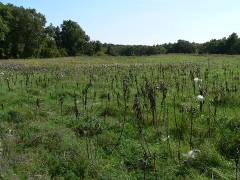
Asclepias viridiflora is native to North America, ranging across the central and eastern United States and into the prairie provinces of Canada, south to Texas and the Southeast. It grows in dry prairies, glades, and rocky open ground.Suggested Uses
Used in prairie plantings, rock gardens, and native wildflower meadows on dry, lean soils, spaced 12-18 in (30-45 cm) apart. Planted in monarch and pollinator gardens as a host and nectar source. Suited to naturalizing in well-drained open ground.How to Identify
Appearance
Size & Dimensions
Height1' - 3'
Width/Spread1' - 2'
Bloom Information
Green to greenish-white flower clusters open from June through August, set tightly along the upper stem. Bees, wasps, and butterflies visit the nectar-rich flowers. Upright seed pods follow and split open in fall to release silk-borne seeds.
Detailed Descriptions
Flower Description
green to greenish-whiteFoliage Description
greenGrowing Conditions
Sun Requirements
Requires 6-12 hours of direct sunlight daily
• Full Sun: 6+ hours of direct sunlight
• Partial Shade: 3-6 hours of direct sunlight
• Full Shade: Less than 3 hours of direct sunlight
Care & Maintenance
Care Guide
Grows in full sun on dry, lean, well-drained soils including rocky, sandy, and gravelly ground. Soil pH from 6.0 to 7.5 is suitable. It tolerates drought and poor fertility once the deep taproot forms but is intolerant of rich, wet soil, which can rot the crown. Water sparingly after the first season. The taproot makes the plant slow to settle and difficult to transplant, so it is started from seed in place. Aphids may gather on the stems but rarely cause lasting harm.Pruning
No pruning is needed. Stems can be left standing through winter to shelter insects and drop seed, or cut to the ground in late winter before new growth. Seed pods can be removed before they split if self-sowing is not wanted.Pruning Schedule
Prune: February
winter