Asclepias, Genus, variegata, Species,
- Genus & species
redring milkweed
Eastern and southeastern United States
Overview
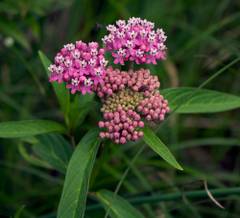
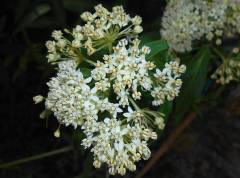
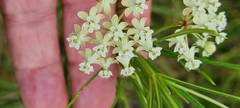
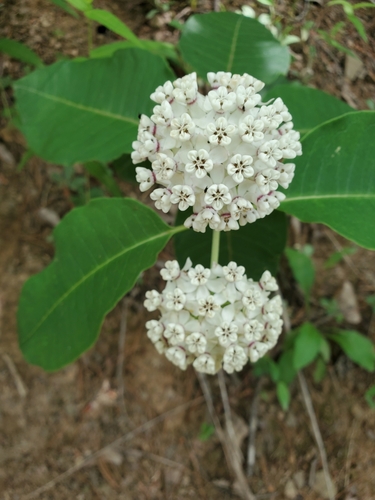
Asclepias variegata is an upright herbaceous perennial milkweed growing 12-36 inches (30-90 cm) tall, usually with a single unbranched stem that exudes milky sap when cut. The oval to elliptic leaves are 2-5 inches (5-13 cm) long, dark green, and arranged in opposite pairs. In late spring and early summer it bears one to a few dense, rounded umbels of white flowers at the stem tip, each small flower marked with a purple to reddish ring at the center, which gives the plant its name. The flowers are followed by narrow upright seed pods 3-5 inches (7.5-13 cm) long that split to release flat seeds with silky white hairs. Native to the eastern and southeastern United States, it grows in dry to moist open woods, woodland edges, and clearings, often in light shade. A. variegata grows in well-drained soil and tolerates more shade than most milkweeds, but it establishes slowly and is intolerant of root disturbance once settled. All parts contain cardiac glycosides that are toxic to people and animals if eaten. Like other milkweeds, it is a larval host for monarch butterflies.
Native Range
Native to the eastern and southeastern United States, from Connecticut and Ohio south to Florida and west to Texas. It grows in dry to moist open woodlands, woodland edges, and clearings, often in partial shade.Suggested Uses
Used in native woodland gardens, shade borders, and pollinator and butterfly plantings, spaced 12-18 inches (30-45 cm) apart. As a monarch host and nectar source it suits habitat gardens, and its shade tolerance fits spots too dim for other milkweeds. It combines with other woodland-edge perennials in informal settings.How to Identify
Appearance
Size & Dimensions
Height1' - 3'
Width/Spread1' - 1'6"
Bloom Information
Detailed Descriptions
Flower Description
white with purple-red centerFoliage Description
dark greenGrowing Conditions
Sun Requirements
Requires 4-8 hours of direct sunlight daily
• Full Sun: 6+ hours of direct sunlight
• Partial Shade: 3-6 hours of direct sunlight
• Full Shade: Less than 3 hours of direct sunlight
Care & Maintenance
Care Guide
Grow A. variegata in full sun to partial shade in well-drained soil; it accepts dry to moderately moist woodland conditions. It develops a deep root system, so it establishes slowly and is hard to move once settled. Watering helps during establishment, after which it tolerates drought. It needs no fertilizer in average soil and rarely needs division. The milky sap and cardiac glycosides make all parts toxic if eaten, and the sap can irritate skin and eyes. Aphids and the usual milkweed insects may gather on the stems.Pruning
Pruning is generally limited to cutting back the dead stem in late fall or winter. Spent flower clusters can be removed before pods form if self-sowing is not wanted, or pods can be left to ripen and release seed. The plant resprouts from the rootstock each spring.Pruning Schedule
Prune: November–December
fallwinter