Asclepias, Genus, curassavica, Species,
- Genus & species
tropical milkweed
Overview
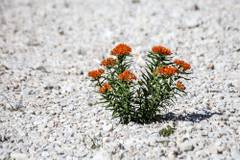
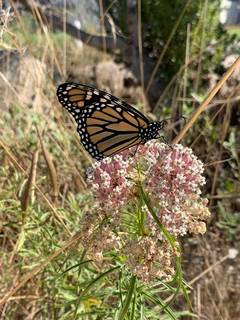
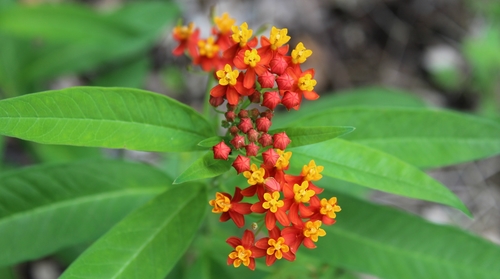
Asclepias curassavica is a tender evergreen perennial or subshrub in the dogbane family, grown as an annual in cold climates and reaching 24-36 inches (60-90 cm) tall and 12-24 inches (30-60 cm) wide. Upright stems carry opposite, lance-shaped leaves 3-5 inches (8-13 cm) long and exude a milky white sap when broken. From late spring through autumn the plant bears flat-topped clusters of small flowers, each with five reflexed red to orange petals and a raised yellow-orange central crown. The flowers are followed by slender, pointed seed pods 3-4 inches (8-10 cm) long that split to release flat brown seeds with tufts of silky white hairs. All parts contain cardiac glycosides and are poisonous to people, livestock, and pets if eaten, and the sap can irritate skin and eyes. The plant is a larval host for monarch butterflies and a nectar source for many pollinators. In frost-free regions the foliage persists year-round rather than dying back, which can alter monarch migration timing and allow the protozoan parasite Ophryocystis elektroscirrha to build up on old leaves. Plants self-seed readily in warm climates.
Native Range
Asclepias curassavica is native to tropical regions of the Americas, including Central and South America and the Caribbean. It has naturalized in warm parts of the world, including the southern United States, Africa, Asia, and Australia. It grows in open, disturbed ground, fields, and roadsides.Suggested Uses
Grown in butterfly and pollinator gardens, mixed borders, and containers, spaced 12-18 inches (30-45 cm) apart. It serves as a larval host for monarchs and a nectar source for bees and butterflies. The cut flowers and seed pods are used in arrangements.How to Identify
Appearance
Size & Dimensions
Height2' - 3'
Width/Spread1' - 2'
Bloom Information
Detailed Descriptions
Flower Description
red-orange with yellow crownFoliage Description
greenGrowing Conditions
Sun Requirements
Requires 6-12 hours of direct sunlight daily
• Full Sun: 6+ hours of direct sunlight
• Partial Shade: 3-6 hours of direct sunlight
• Full Shade: Less than 3 hours of direct sunlight
Care & Maintenance
Care Guide
Plants grow in full sun and average, well-drained soil, tolerating heat, humidity, and drought once established. They flower over a long season with little care and need no staking. All parts contain cardiac glycosides and are poisonous if eaten, and the milky sap can irritate skin. In USDA zones 9 to 11 the plant is a short-lived perennial that stays evergreen, while in colder zones it is grown as an annual. Where it stays evergreen, cutting stems back in autumn reduces parasite buildup that can affect monarchs. Plants self-seed and can spread in warm regions.Pruning
Stems can be cut back by half after the first flush to keep plants bushy and prolong bloom. In frost-free areas, cutting plants to 6 inches (15 cm) in late autumn removes old foliage and limits monarch parasite buildup. Removing seed pods before they split reduces self-seeding.Pruning Schedule
Prune: November
fall
Container Growing
Suitable for container growing
Minimum container size: 3 gallons