Artemisia, Genus, californica, Species,
- Genus & species
California sagebrush
California and northwestern Baja California
Overview
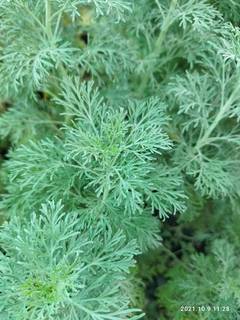
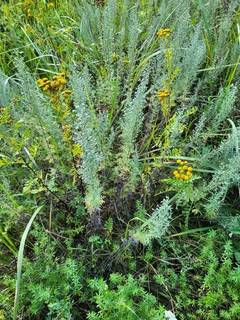
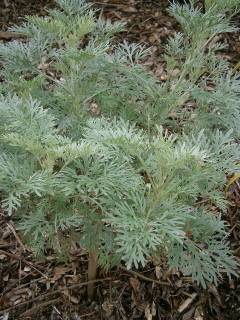
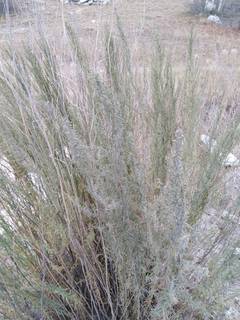
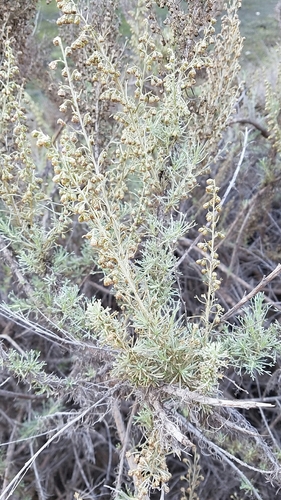
Artemisia californica is an aromatic, drought-deciduous shrub reaching 2-5 feet (0.6-1.5 m) tall and 3-6 feet (0.9-1.8 m) wide, with slender, flexible branches that arch outward from the base. The foliage is gray-green, divided into thread-like lobes 1-2 inches (2.5-5 cm) long that release a strong sage-like scent when crushed. In mild coastal climates the plant holds foliage year-round, but during prolonged summer drought it sheds much of its leaf mass and can appear sparse until fall rains. Small yellowish flower heads, each about 0.1 inch (3 mm) across, are borne in slender nodding spikes from August through November; they are wind-pollinated and produce no conspicuous petals. Seeds are tiny and dispersed by wind. Growth is rapid in the first two years, after which plants slow and typically live 5-10 years before becoming woody and open at the base. The shallow root system competes strongly with nearby plants for moisture. Foliage color ranges from silvery in full sun to duller green in partial shade.
Native Range
Native to the coastal regions of California and northwestern Baja California, Mexico, from sea level to about 2,500 feet (760 m) elevation. A dominant component of coastal sage scrub on dry slopes, bluffs, and canyon sides.Suggested Uses
Planted in dry gardens, slope-stabilization plantings, and habitat restoration in coastal California at 3-5 foot (0.9-1.5 m) spacing. The shallow, competitive root system limits underplanting. Used as a low informal screen where summer leaf drop is acceptable.How to Identify
Appearance
Size & Dimensions
Height2' - 5'
Width/Spread3' - 6'
Colors
Bloom Information
Flowers from August through November in most of its range. Individual flower heads are wind-pollinated and inconspicuous, lasting several weeks. Flowering coincides with the onset of foliage regrowth after summer dormancy. Cooler coastal sites may extend bloom into December.
Detailed Descriptions
Foliage Description
gray-greenGrowing Conditions
Sun Requirements
Requires 6-12 hours of direct sunlight daily
• Full Sun: 6+ hours of direct sunlight
• Partial Shade: 3-6 hours of direct sunlight
• Full Shade: Less than 3 hours of direct sunlight
Care & Maintenance
Care Guide
Grows in full sun and sharp-draining soils, including sandy and rocky substrates. Established plants survive on rainfall alone in Mediterranean climates and decline under summer irrigation, which promotes root rot. Supplemental water is needed only through the first dry season after planting. Aphids and spider mites appear on stressed plants in hot, dry sites. Plants become woody and open at the base after 5-7 years and are commonly replaced rather than rejuvenated. Foliage regrows from the base after fall rains.Pruning
Light tip pruning after flowering, in late fall or winter, maintains density and slows the woody opening at the base. Cutting into bare old wood rarely produces new shoots, so pruning is limited to stems carrying green growth. Hard renewal pruning often kills mature plants.Pruning Schedule
Prune: November–December
fallwinter