Arabis, Genus, spp., Multiple species,
- Genus
- Multiple species
Rock-cresses
Overview
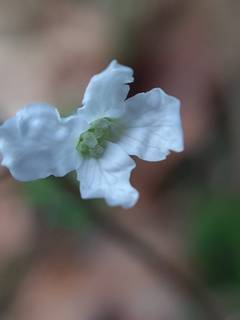
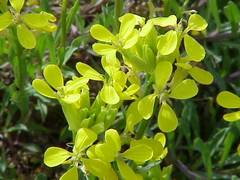
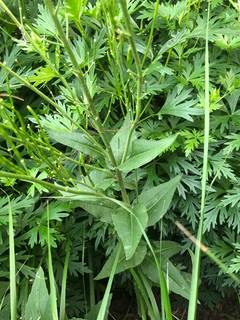
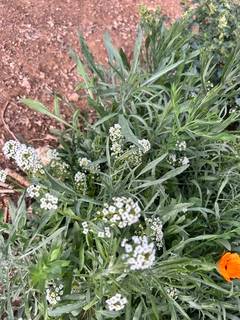
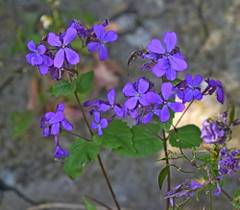
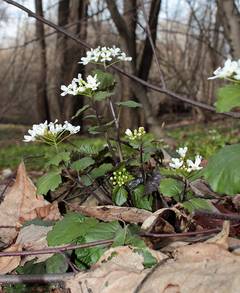
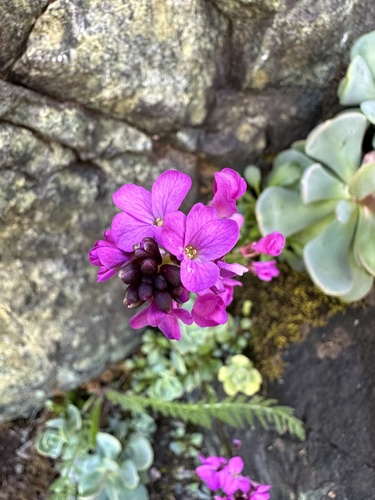
Arabis is a genus of roughly 100 species of annual, biennial, and perennial herbs in the family Brassicaceae, distributed across the temperate Northern Hemisphere and on mountains farther south. Most cultivated species are low, mat- or cushion-forming perennials 4-12 in (10-30 cm) tall and 12-18 in (30-45 cm) wide, spreading by trailing stems that root as they go. The leaves form basal rosettes of gray-green, often hairy, spoon-shaped blades 0.5-2 in (1-5 cm) long, with smaller clasping leaves up the flowering stems. In early spring the plants carry loose racemes of four-petalled flowers, each 0.3-0.6 in (8-15 mm) across, in white, pink, or purple. The cross-shaped flowers are typical of the mustard family and give way to long, narrow seedpods called siliques. Rock-cresses grow in rocky, fast-draining sites such as walls, screes, and gravel, and tolerate poor soils and drought once established. They decline in heavy, wet ground and can rot at the crown through humid summers. Many species self-seed and naturalize where conditions suit them.
Native Range
Arabis is native across the temperate Northern Hemisphere, including Europe, North Africa, temperate Asia, and North America, extending onto tropical mountains. Species grow on cliffs, rock outcrops, screes, and dry grassland, often on limestone.Suggested Uses
Arabis is grown in rock gardens, on dry stone walls, along path edges, and in gravel and scree plantings. Mat-forming species are used as spring-flowering groundcover on banks and between paving. The early flowers draw bees and other pollinators.How to Identify
Appearance
Size & Dimensions
Height4" - 1'
Width/Spread1' - 1'6"
Bloom Information
Most Arabis species flower in early to mid-spring, generally March to May, with bloom lasting four to six weeks. Flowering begins as temperatures rise and continues until early summer heat ends the show. Sheared plants sometimes produce a lighter second flush.
Detailed Descriptions
Flower Description
white, pink, or purpleFoliage Description
gray-greenGrowing Conditions
Sun Requirements
Requires 6-12 hours of direct sunlight daily
• Full Sun: 6+ hours of direct sunlight
• Partial Shade: 3-6 hours of direct sunlight
• Full Shade: Less than 3 hours of direct sunlight
Care & Maintenance
Care Guide
Grow Arabis in full sun in gritty, sharply drained soil of low to moderate fertility, since rich or wet ground shortens its life. Plants take drought, wind, and poor rocky soils once established and settle well on walls, rock gardens, and gravel. Water sparingly and let the soil dry between waterings, because crowns rot in standing moisture. In humid-summer regions, open spacing and free air movement lower fungal problems. Shearing plants back by half after flowering keeps the mats dense. Most species are hardy in USDA zones 3-7 and take no winter protection.Pruning
Shear Arabis back by one-third to one-half soon after flowering to remove spent stems and keep the cushion compact. Plants left unsheared grow open and woody at the center within a few years. Old, bare clumps are commonly renewed from cuttings or self-sown seedlings.Container Growing
Suitable for container growing
Minimum container size: 1 gallons