Image 1 of 20
1 / 20
Plant Reference
Pachyphragma, Genus, macrophyllum, Species,
- Genus & species
giant spring brassica
Overview
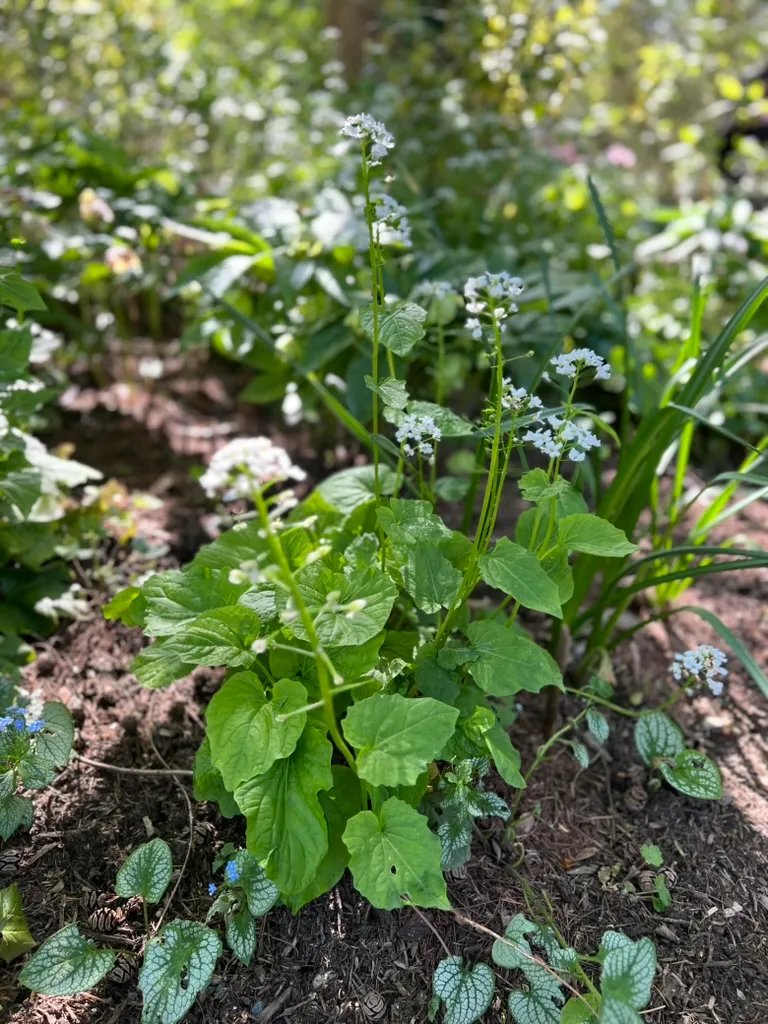
Pachyphragma macrophyllum is the giant spring brassica, growing 12–18 inches (30–45 cm) tall and 18–30 inches (45–75 cm) wide. White 4-petaled flowers 0.5 inch (12 mm) in dense terminal clusters in early to mid-spring. Large dark green glossy rounded to kidney-shaped basal leaves 4–8 inches (10–20 cm) — the species name 'macrophyllum' means 'large-leaved.' Semi-evergreen — the basal leaves persist through winter in mild climates; summer drought may cause partial dieback. Monotypic: Pachyphragma contains only this one species. In the mustard family (Brassicaceae) — resembles a large-leaved shade-tolerant relative of Cardamine (bittercress). Native to the Caucasus and northeastern Turkey, growing in moist deciduous forest understory. Tolerates dry shade once established — the large glossy leaves function as a weed-suppressing ground cover under deciduous trees. Slow to establish from transplants — may take 2–3 years to form a dense cover. Long-lived once established. Spreads slowly by self-seeding and short rhizomes. Rare in cultivation outside specialist woodland gardens. Non-toxic. Deer-resistant. Partial shade to full shade. Zones 5–9. Growth rate is slow.
Native Range
Native to the Caucasus and northeastern Turkey, growing in moist deciduous forest understory at moderate elevations.Suggested Uses
Grown as a shade groundcover under deciduous trees in zones 5–9. Tolerates dry shade. The large glossy leaves suppress weeds. Slow to establish. Companion to Helleborus, Pulmonaria, and spring bulbs. Non-toxic. Deer-resistant.How to Identify
Appearance
Size & Dimensions
Height1' - 1'6"
Width/Spread1'6" - 2'6"
Bloom Information
Early to mid-spring (March–April), lasting 3–4 weeks. Dense terminal clusters of white 4-petaled flowers. The large glossy semi-evergreen basal leaves persist year-round (partially deciduous in drought).
Detailed Descriptions
Flower Description
White, 4-petaled, 0.5 inch (12 mm), in dense terminal clustersFoliage Description
Dark green, large, rounded to kidney-shaped, 4-8 inches (10-20 cm), glossyGrowing Conditions
Sun Requirements
Requires 1-4 hours of direct sunlight daily
• Full Sun: 6+ hours of direct sunlight
• Partial Shade: 3-6 hours of direct sunlight
• Full Shade: Less than 3 hours of direct sunlight
Care & Maintenance
Care Guide
Partial shade to full shade. Tolerates dry shade once established. Semi-evergreen — basal leaves persist through winter. Slow to establish (2–3 years). Long-lived. Monotypic genus. Non-toxic. Deer-resistant. Zones 5–9.Pruning
Remove tattered or yellowed foliage in summer if drought-stressed. No other pruning needed. The semi-evergreen basal rosette is self-maintaining.Pruning Schedule
Prune: April
spring
Container Growing
Suitable for container growing
Minimum container size: 3 gallons