Ambrosia, Genus, trifida, Species,
- Genus & species
giant ragweed
Overview
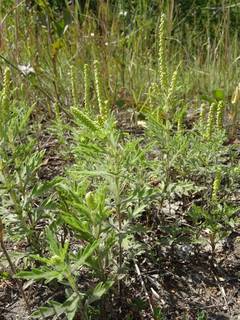
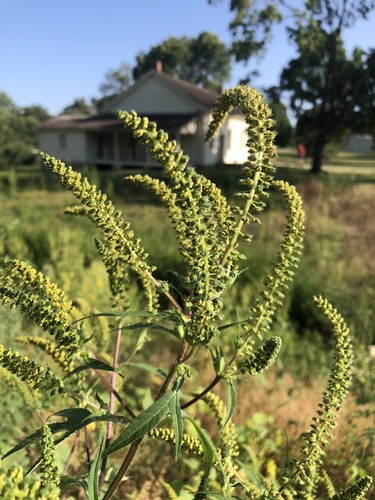
Ambrosia trifida is a robust annual in the aster family, commonly reaching 3 to 12 feet (1-3.7 m) tall and occasionally taller, on stout, rough-hairy stems. The large leaves are opposite, 4-12 inches (10-30 cm) long, and usually divided into three or five coarsely toothed lobes, rough to the touch on both surfaces. It is wind-pollinated and monoecious, bearing long, upright spikes of small greenish-yellow male flower heads above inconspicuous female heads clustered in the upper leaf axils. The male spikes shed large amounts of airborne pollen from late summer into autumn, a leading cause of seasonal hay fever in its range. Each plant produces woody, beaked seeds that persist in the soil for years. It germinates early and grows fast, shading out shorter plants and competing strongly in crops and disturbed ground. The plant dies with the first hard frost, leaving bare stems.
Native Range
Native to North America, widespread across southern Canada and most of the United States, and naturalized in parts of Europe and Asia. It grows in moist, fertile, disturbed ground including floodplains, field margins, roadsides, and croplands.Suggested Uses
Rarely cultivated, it occurs mainly as a tall weed of fertile, disturbed ground rather than a planted species. Its seeds are eaten by birds and small mammals in autumn and winter. In gardens and farmland it is managed as a weed because of its size, competitiveness, and allergenic pollen.How to Identify
Appearance
Size & Dimensions
Height3' - 12'
Width/Spread1'6" - 3'
Bloom Information
Greenish male flower spikes elongate and shed pollen from August through October, peaking in late summer. The wind-borne pollen travels long distances and is a major hay fever trigger. Woody seeds ripen through autumn and drop around the parent plant.
Detailed Descriptions
Foliage Description
GreenGrowing Conditions
Sun Requirements
Requires 6-12 hours of direct sunlight daily
• Full Sun: 6+ hours of direct sunlight
• Partial Shade: 3-6 hours of direct sunlight
• Full Shade: Less than 3 hours of direct sunlight
Water & Climate
Water Needs
Care & Maintenance
Care Guide
Grows in full sun on moist, fertile soil and tolerates clay, periodic flooding, and a wide pH range. It germinates in early spring, grows several feet per month, and needs no care to reach full size. Dry, infertile soil limits its height but rarely stops it. The seeds remain viable in the soil for several years, so cleared ground can produce new stands. Cutting or pulling before seed set is the main way to reduce its spread. Plants die completely at the first hard frost.Pruning
No pruning is needed for this annual. Cutting or mowing plants before the flower spikes shed pollen reduces both allergen load and seed set. Cut stems may resprout if severed high, so cutting low to the ground gives better control.Toxicity
Non-toxicPlanting Guide
Planting Methods & Timing
Planting Method
direct sow