Overview
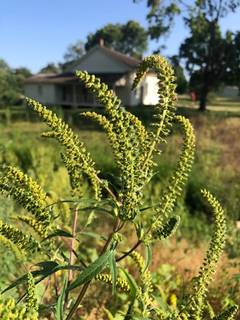
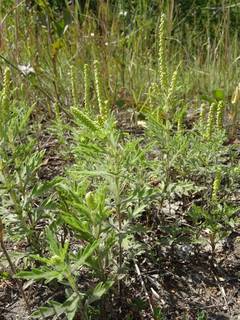
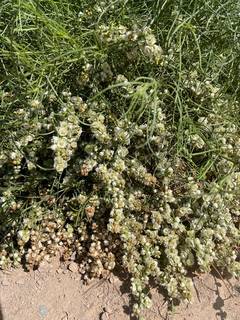
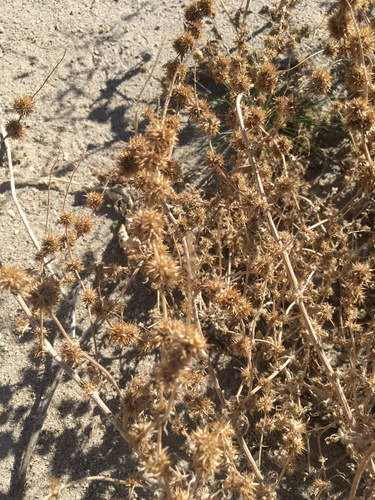
Ambrosia acanthicarpa is an erect, branching annual herb growing 8 to 36 inches (20 to 90 cm) tall, with rough, hairy, gray-green stems. The deeply two- to three-times divided leaves are 1 to 3 inches (2.5 to 8 cm) long, giving the plant a ferny, gray-green look. It is monoecious and wind-pollinated: slender spikes of small male heads top the stems, while female flowers sit in the leaf axils below. The female heads harden into oval burs about 0.2 to 0.4 inch (5 to 10 mm) long, armed with a ring of flattened, hooked spines that cling to fur and clothing. The plant grows on dry, sandy, disturbed ground such as fields, roadsides, dunes, and washes across western North America. Like other ragweeds, it releases wind-borne pollen in late summer and autumn that is a frequent cause of hay fever. It completes its life cycle in one season and dies at frost. The spiny burs can catch on skin and animal coats.
Native Range
Native to western North America, from British Columbia and the western Great Plains south through the western United States into northern Mexico. It grows on dry, sandy, disturbed ground including fields, roadsides, dunes, and washes.Suggested Uses
Rarely planted on purpose, it occurs mainly as a pioneer weed on disturbed, sandy ground. It has a role in early soil stabilization on bare sites, and its seeds feed some birds and small mammals. Its allergenic pollen and clinging burs limit any garden use.How to Identify
Appearance
Size & Dimensions
Height8" - 3'
Width/Spread8" - 1'6"
Bloom Information
Flowering occurs from midsummer into autumn, generally July through October. Wind-pollinated male heads release pollen from terminal spikes, while female flowers develop in the leaf axils. There are no showy petals. The female heads mature into hooked burs through autumn.
Detailed Descriptions
Foliage Description
gray-greenGrowing Conditions
Sun Requirements
Requires 6-12 hours of direct sunlight daily
• Full Sun: 6+ hours of direct sunlight
• Partial Shade: 3-6 hours of direct sunlight
• Full Shade: Less than 3 hours of direct sunlight
Water & Climate
Water Needs
Drought Tolerance
Drought tolerant when established
Care & Maintenance
Care Guide
As a warm-season annual, Ambrosia acanthicarpa grows in full sun in dry, sandy, or rocky soil with good drainage. It tolerates heat, drought, and low fertility, and needs little water. A soil pH from 6.0 to 8.0 suits it. The plant self-seeds and can spread as a weed on disturbed ground. It dies at frost and does not persist, so no winter care applies. The wind-borne pollen contributes to seasonal hay fever.Pruning
Pruning is not generally practiced on this annual. Cutting or pulling plants before the female burs mature limits seed spread and pollen release. Plants can be removed at the end of the season. Growth restarts from seed rather than from cut stems.Toxicity
Non-toxicPlanting Guide
Planting Methods & Timing
Planting Method
direct sow
Direct Sow Timing
spring after the last frost (rarely cultivated)
Days to Maturity
60–100 days
Plant Spacing
12 inches