Ambrosia, Genus, deltoidea, Species,
- Genus & species
triangle-leaf bursage
Overview
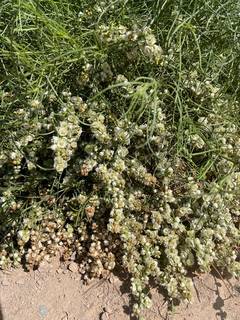
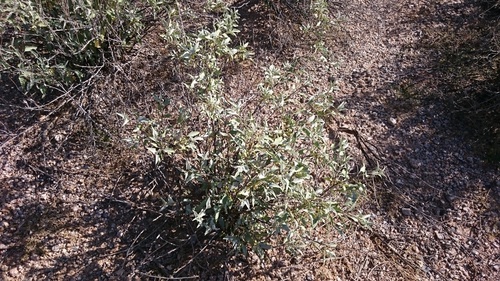
Ambrosia deltoidea is a low, rounded desert shrub 1-2 feet (30-60 cm) tall and 1.5-3 feet (45-90 cm) wide, with many slender branches from the base. Leaves are triangular, 0.4-1.2 inches (1-3 cm) long, with toothed or shallowly lobed margins, dark gray-green above and white-woolly beneath. Flower heads are small, greenish, and clustered along upright spikes, with male and female heads separate on the same plant. The plant is wind-pollinated and the flowers carry no petals. Bloom occurs mainly from January to April, with timing set by winter rains. The fruit is a small bur 0.1-0.2 inch (3-5 mm) long covered in short straight spines. Foliage is drought-deciduous, dropping in dry periods and regrowing after rain. The pollen is airborne and is a known allergen in the Sonoran Desert region. In desert plant communities it acts as a nurse plant, with cactus and other seedlings establishing in the shade beneath its canopy.
Native Range
Native to the Sonoran Desert of southern Arizona and northwestern Mexico, including Baja California and Sonora. Grows on rocky slopes, gravelly flats, and desert bajadas, often a dominant low shrub, from near sea level to about 3,000 feet (900 m).Suggested Uses
Used in desert restoration and habitat plantings as a nurse plant for cactus and other seedlings, and in xeriscape gardens on dry slopes, spaced 3-4 feet (90-120 cm) apart. The wind-borne pollen makes it a poor option near patios and windows in allergy-prone households. Not suited to irrigated or humid garden settings.How to Identify
Appearance
Size & Dimensions
Height1' - 2'
Width/Spread1'6" - 3'
Bloom Information
Flowers mainly from January to April, with timing driven by winter rainfall. Flowering can begin as early as December in warm, wet winters and may be sparse or skipped in dry years. The wind-pollinated flower heads release pollen over a period of several weeks.
Detailed Descriptions
Foliage Description
gray-greenGrowing Conditions
Sun Requirements
Requires 6-12 hours of direct sunlight daily
• Full Sun: 6+ hours of direct sunlight
• Partial Shade: 3-6 hours of direct sunlight
• Full Shade: Less than 3 hours of direct sunlight
Care & Maintenance
Care Guide
Grows in full sun in coarse, gravelly or sandy, sharply drained desert soil. Water is needed only to establish; mature plants are adapted to extended drought and decline under regular irrigation. Alkaline desert soils suit it. Foliage drops during dry spells and regrows after rain, so the shrub is bare for part of the year. Root rot develops in soils that stay wet. The plant produces wind-borne pollen that contributes to seasonal hay fever in desert cities.Pruning
Little pruning is needed. Dead or broken branches can be removed at any time. Cutting back in late spring after bloom keeps a denser form, though the natural habit is open and rounded.Pruning Schedule
Prune: May
late spring