Ambrosia, Genus, psilostachya, Species,
- Genus & species
western ragweed
Overview
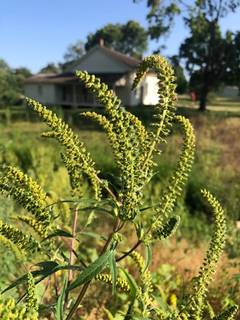
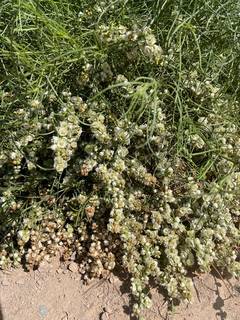
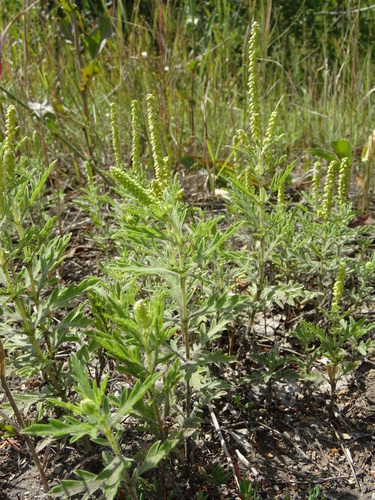
Ambrosia psilostachya is a rhizomatous perennial in the daisy family, growing 1-3 feet (30-90 cm) tall and spreading by deep, creeping roots to form colonies. The stems are rough and hairy, carrying grey-green, deeply pinnately lobed leaves 1-5 inches (2.5-13 cm) long, hairy on both sides. From late summer into autumn, slender terminal spikes bear many small, nodding, greenish male flower heads above a few inconspicuous female flowers tucked in the leaf axils. The wind-borne pollen is a major cause of late-season hay fever. Single-seeded burs with short spines develop from the female flowers. The plant grows on prairies, plains, fields, roadsides, and disturbed ground across much of North America and tolerates drought, heat, poor soil, and grazing. Its deep rhizomes let it spread aggressively and resprout after cutting or cultivation, so it behaves as a persistent weed in many settings. Top growth dies back to the ground in winter.
Native Range
Native to North America, occurring across most of the United States, southern Canada, and northern Mexico. It grows on prairies, plains, open fields, roadsides, and disturbed ground, often on dry or sandy soils.Suggested Uses
It is rarely grown as an ornamental and appears mainly as a wild and weedy plant of prairies and disturbed ground. Where it occurs naturally, its seeds feed birds and small mammals through autumn and winter. In restoration settings it stabilises bare, dry soil, though its pollen and spreading habit limit its use near homes and gardens.How to Identify
Appearance
Size & Dimensions
Height1' - 3'
Width/Spread2' - 4'
Bloom Information
Detailed Descriptions
Foliage Description
grey-greenGrowing Conditions
Sun Requirements
Requires 6-12 hours of direct sunlight daily
• Full Sun: 6+ hours of direct sunlight
• Partial Shade: 3-6 hours of direct sunlight
• Full Shade: Less than 3 hours of direct sunlight