Ambrosia, Genus, spp., Multiple species,
- Genus
- Multiple species
ragweeds
The Americas, especially North America, with species introduced widely elsewhere
Overview
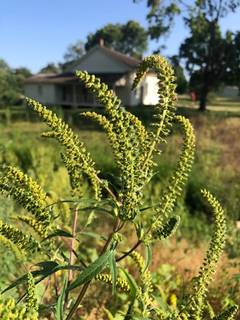
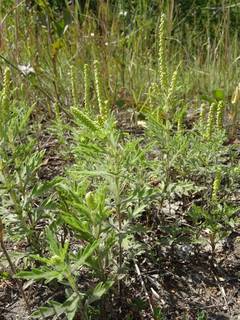
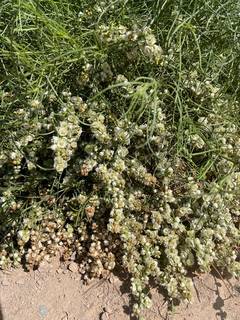
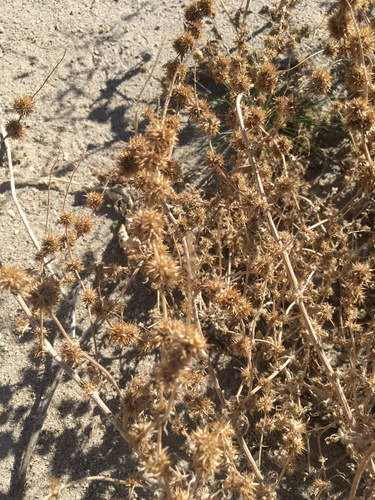
Ambrosia is a genus of about 50 species of wind-pollinated herbs in the aster family (Asteraceae), the ragweeds, native mainly to North America and now spread across much of the world. The genus includes annuals such as common ragweed A. artemisiifolia, at 1 to 3 ft (30 to 90 cm), and giant ragweed A. trifida, which can reach 12 ft (3.7 m), as well as perennial species like A. psilostachya that spread by creeping roots. Stems are erect and branched, carrying deeply cut, fern-like leaves that are green and roughened with short hairs. Unlike most of the aster family, the flowers have no showy rays; instead, small greenish male heads hang in slender spikes at the stem tips and release large amounts of light, dry pollen on the wind, while inconspicuous female flowers sit lower on the plant. This wind-borne pollen is a leading cause of late-summer and autumn hay fever across North America and Europe. Ragweeds are pioneer plants of disturbed ground, fields, roadsides, and waste places, tolerating drought and poor soil. Their seeds are an important food for game birds and songbirds in autumn and winter.
Native Range
Ambrosia is native mainly to North America, where the genus is most diverse, with additional native species in South America. Common and giant ragweed have spread as weeds through Europe, Asia, and beyond, where their pollen has become a new source of seasonal allergy.Suggested Uses
Ambrosia is rarely planted on purpose and is managed mainly as a weed of farmland, roadsides, and vacant ground. In native plantings and restorations the seeds are valued as autumn and winter food for quail, doves, and songbirds, so some stands are left for wildlife. Control near homes, schools, and paths is common because of the allergenic pollen.How to Identify
Appearance
Size & Dimensions
Height1' - 12'
Width/Spread1' - 3'
Bloom Information
Flowering runs from late summer into autumn, roughly August to October, timed with shortening days. The greenish male spikes release clouds of dry pollen on the wind, peaking in the morning, while the small female flowers below ripen into seed. The bloom has no scent and draws no insects, as the genus is wind-pollinated.
Detailed Descriptions
Flower Description
greenish-yellow, inconspicuousFoliage Description
greenGrowing Conditions
Sun Requirements
Requires 6-10 hours of direct sunlight daily
• Full Sun: 6+ hours of direct sunlight
• Partial Shade: 3-6 hours of direct sunlight
• Full Shade: Less than 3 hours of direct sunlight
Water & Climate
Water Needs
Drought Tolerance
Drought tolerant when established