Alnus, Genus,
- Genus
alder
Northern Hemisphere (North America, Europe, Asia)
Overview
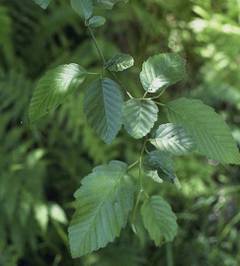
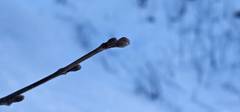
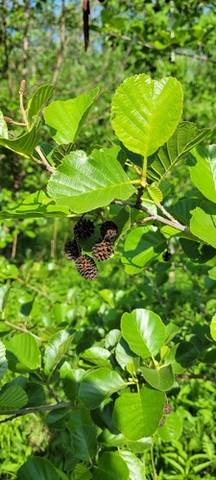
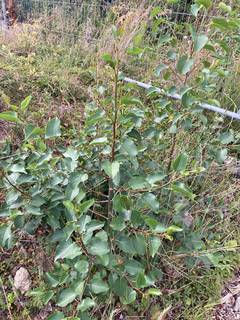
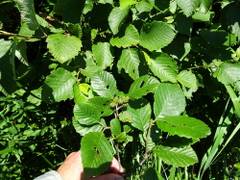
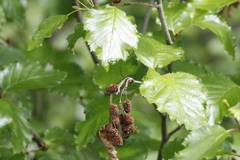
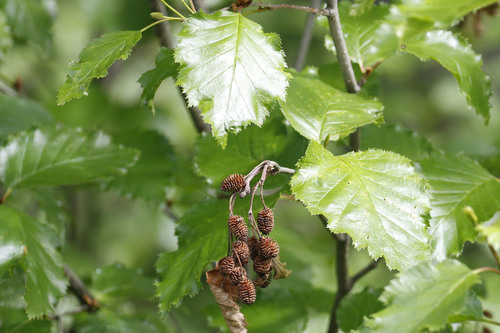
Alnus is a genus of approximately 35 species of deciduous trees and large shrubs in the family Betulaceae, reaching 30–60 feet (9–18 m) tall and 20–40 feet (6–12 m) wide depending on species. Bark is smooth and gray on young trees, becoming dark and fissured with age in most species. Leaves are alternate, ovate to elliptic, 2–5 inches (5–13 cm) long with toothed margins and prominent parallel veins. Male and female flowers are borne as separate catkins on the same tree (monoecious). Male catkins are pendulous, 2–4 inches (5–10 cm) long, yellowish-brown, appearing in late winter before leaf emergence. Female catkins develop into small, woody, cone-like strobili 0.5–1 inch (1.3–2.5 cm) long that persist on branches through winter. Root nodules containing nitrogen-fixing bacteria (Frankia species) enable growth in nutrient-poor soils. Growth rate is rapid at 24–36 inches (60–90 cm) annually; many species reach 30 feet (9 m) within 10 years. Alders are typically short-lived, with lifespans of 40–60 years depending on species. Foliage drops green to brown in fall without significant color change. Wood is weak and brittle; branch breakage occurs in ice storms and high winds.
Native Range
The genus Alnus is distributed across the Northern Hemisphere, with species native to North America, Europe, and Asia. North American species include A. rubra (Pacific Northwest), A. incana ssp. rugosa (eastern wetlands), and A. rhombifolia (western stream banks). Grows along streams, riverbanks, bogs, and wet lowlands from sea level to 8,000 feet (2,400 m) elevation.Suggested Uses
Commonly planted for streambank stabilization, wetland restoration, and riparian buffers at 15–25 foot (4.5–7.5 m) spacing. Nitrogen-fixing ability improves soil fertility in reclamation sites. Not suited to dry, well-drained garden soils or sites where a long-lived specimen tree is needed.How to Identify
Appearance
Size & Dimensions
Height30' - 60'
Width/Spread20' - 40'
Bloom Information
Male catkins expand and release pollen February through April depending on species and zone. Female catkins are pollinated by wind at the same time. Catkin emergence occurs before leaf-out, 2–4 weeks ahead of foliage. In zone 8, catkins may expand as early as January.
Detailed Descriptions
Flower Description
Male catkins yellowish-brown; female catkins green maturing to brownFoliage Description
Dark green, ovate to elliptic, toothed marginsGrowing Conditions
Sun Requirements
Requires 6-10 hours of direct sunlight daily
• Full Sun: 6+ hours of direct sunlight
• Partial Shade: 3-6 hours of direct sunlight
• Full Shade: Less than 3 hours of direct sunlight
Care & Maintenance
Care Guide
Alders tolerate saturated soils and seasonal flooding that would damage most trees. Established trees are intolerant of prolonged summer drought and decline rapidly on dry, well-drained sites. Nitrogen-fixing root nodules reduce or eliminate the need for supplemental fertilization. Tent caterpillars, alder flea beetles, and woolly alder aphids are common insect pests. Phytophthora root rot affects trees in waterlogged soils with poor oxygen exchange. Wood is weak; prune to develop a strong central leader. Lifespan is short compared to other hardwood trees, typically 40–60 years.Pruning
Prune during winter dormancy (November–January) to establish a central leader and remove dead, crossing, or structurally weak branches. Alders bleed sap heavily when pruned in late winter or spring; early dormancy pruning minimizes sap flow. Mature trees require minimal pruning beyond dead wood removal. Suckers at the base can be removed annually if a single-trunk form is desired.Pruning Schedule
Prune: November–January
winter