Alnus, Genus, alnobetula, Species,
- Genus & species
green alder
Circumboreal northern North America, Europe, and Asia
Overview
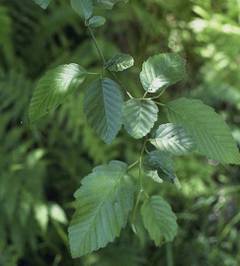
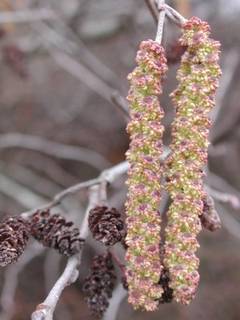
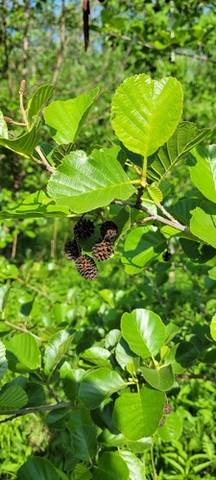
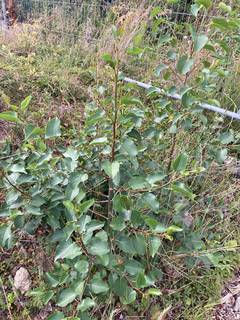
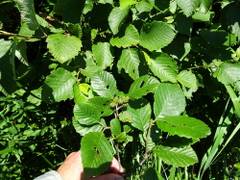
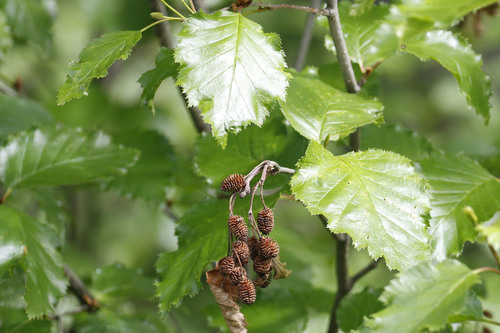
Alnus alnobetula, the green alder, is a deciduous shrub or small tree in the Betulaceae, typically 10-40 feet (3-12 m) tall and 10-20 feet (3-6 m) wide, often multi-stemmed and forming dense thickets. The bark is smooth and grey-brown, marked by pale horizontal lenticels. Alternate leaves are ovate to elliptic, 1-3 inches (3-8 cm) long, with sharply double-serrate margins, glossy dark green above and paler beneath, and slightly sticky when young. Yellow-brown male catkins 1.5-3 inches (4-7 cm) long open in spring as the leaves expand; shorter female catkins ripen into woody, cone-like strobiles about 0.5 inch (12 mm) long that persist through winter and release small winged nutlets. The roots carry nodules housing nitrogen-fixing Frankia bacteria, allowing the species to colonise bare gravel, avalanche tracks, and disturbed streambanks where nitrogen is scarce. It acts as a pioneer on cold, unstable slopes from the subarctic to high mountains. The thicket-forming, suckering habit makes it hard to contain in small gardens, and individual stems are short-lived, with older trunks dying back as new shoots replace them.
Native Range
Native across the cool temperate and boreal Northern Hemisphere, including northern and montane North America, northern Europe, and northern Asia. In North America the species and its subspecies range from Alaska across Canada and south through the Rocky Mountains and Pacific ranges, growing along streams, on avalanche slopes, and near treeline.Suggested Uses
Used for erosion control, streambank stabilisation, and revegetation of disturbed or low-nitrogen sites, as well as in cold-climate naturalistic and wildlife plantings. Spaced 6-10 feet (1.8-3 m) apart for screening thickets. The suckering, thicket-forming habit makes it poorly suited to small or formal gardens.How to Identify
Appearance
Size & Dimensions
Height10' - 40'
Width/Spread10' - 20'
Bloom Information
Male and female catkins open in spring, generally April to May, as or just before the new leaves emerge. The flowers are wind-pollinated and without petals, so there is no floral display. Female catkins mature over summer into woody cones that shed seed the following autumn and winter.
Detailed Descriptions
Foliage Description
glossy dark greenGrowing Conditions
Sun Requirements
Requires 6-12 hours of direct sunlight daily
• Full Sun: 6+ hours of direct sunlight
• Partial Shade: 3-6 hours of direct sunlight
• Full Shade: Less than 3 hours of direct sunlight
Care & Maintenance
Care Guide
Grows in full sun to partial shade on moist to wet soils, including poor, gravelly, and acidic ground where its nitrogen-fixing roots give it an edge. It tolerates seasonal flooding and cold, exposed sites but grows poorly in hot, dry climates. Soil pH from 5.0 to 7.5 suits it, and added fertiliser is unnecessary because the root nodules supply nitrogen. Water regularly until established, after which streamside and high-rainfall sites need little attention. Hardy in USDA zones 1-6.Pruning
Tolerates hard pruning during dormancy. Stems are cut back in late winter to renew thickets or limit spread, and dead or crossing stems are removed at the base. Coppicing every few years keeps multi-stemmed plants dense and within bounds.Pruning Schedule
Prune: February–March
winter