Image 1 of 10
1 / 10
US NPS Santa Monica Mountains National Recreation Area [2], no rights reserved (CC0) · Wikimedia Commons
Alnus, Genus, rhombifolia, Species,
- Genus & species
white alder
Overview
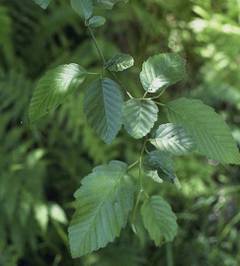
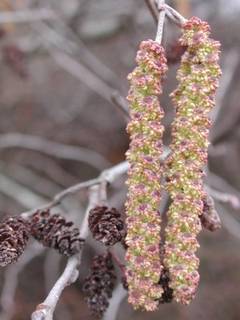
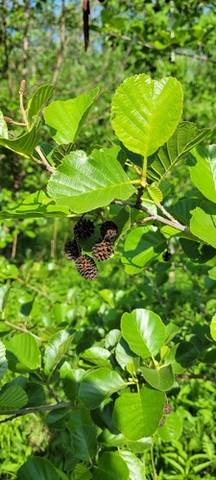
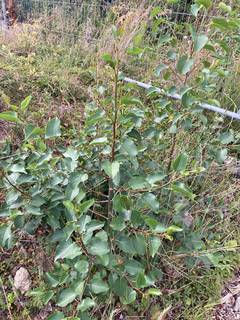
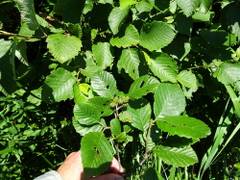
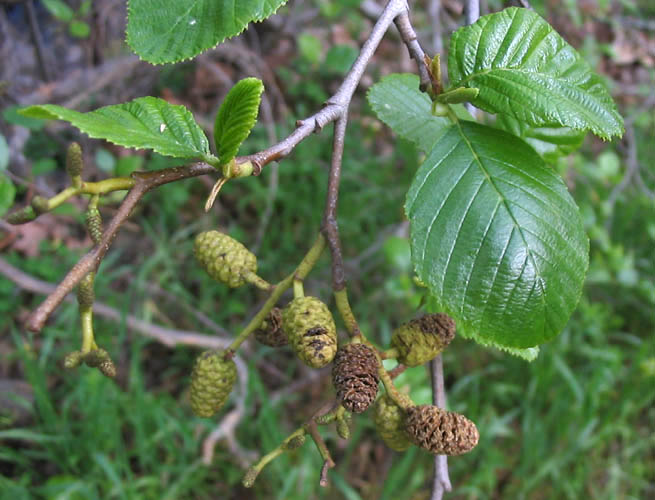
Alnus rhombifolia is a deciduous tree reaching 50-80 feet (15-25 m) tall with a trunk to 24 inches (60 cm) in diameter, native to riparian corridors of western North America. The crown is upright to rounded, carried on smooth gray-white bark that darkens and furrows with age. Leaves are ovate to rhombic, 1.5-4 inches (4-10 cm) long, with doubly serrate margins and flat undersides that are not rolled under, unlike the revolute margins of A. rubra. The species is monoecious: pendulous male catkins 2-6 inches (5-15 cm) long release pollen in late winter, while smaller female catkins mature into woody cone-like strobiles 0.4-0.6 inch (10-15 mm) long that persist through winter. Roots host Frankia bacteria that fix atmospheric nitrogen, allowing establishment on poor mineral soils along streams. Growth is rapid, often 3-5 feet (0.9-1.5 m) per year when young, but the tree is short-lived, typically declining after 50-100 years. It depends on a consistent water table and does not tolerate prolonged drought, which restricts it to streamsides, irrigated sites, and floodplains. Foliage is subject to aphids, tent caterpillars, and flatheaded borers.
Native Range
Native to western North America, from Washington and Idaho south through Oregon, California, and western Nevada into northern Baja California, Mexico. It grows along permanent streams, springs, and riparian floodplains below 8,000 feet (2,400 m).Suggested Uses
Used for streambank stabilization and riparian restoration, where the nitrogen-fixing roots improve disturbed mineral soils. Planted as a fast-growing shade tree beside ponds, ditches, and watercourses on large properties. The brittle wood and high water demand restrict its placement near pavement and buildings.How to Identify
Appearance
Size & Dimensions
Height50' - 80'
Width/Spread30' - 40'
Bloom Information
Monoecious flowers open in late winter to early spring, generally January through April depending on elevation. Male catkins elongate to 2-6 inches (5-15 cm) and shed yellow pollen before the leaves expand; wind carries pollen to the shorter female catkins. Pollinated female catkins ripen into woody strobiles over the following summer.
Detailed Descriptions
Foliage Description
GreenGrowing Conditions
Sun Requirements
Requires 6-12 hours of direct sunlight daily
• Full Sun: 6+ hours of direct sunlight
• Partial Shade: 3-6 hours of direct sunlight
• Full Shade: Less than 3 hours of direct sunlight
Care & Maintenance
Care Guide
Full sun and consistently moist to wet soil suit this tree, including seasonally flooded ground and streambanks. It tolerates a soil pH from about 5.5 to 7.5 and fixes its own nitrogen through root symbionts, so added fertilizer is seldom needed. Young trees lengthen 3-5 feet (0.9-1.5 m) per year and reach mature height within 20-30 years. Shallow roots decline without a dependable water table, and foliage wilts in prolonged drought. Aphids, tent caterpillars, flatheaded borers, and mistletoe affect the leaves and branches. The brittle wood sheds limbs in storms.Pruning
Cuts made in late winter bleed heavily as sap rises, so pruning is typically done in late summer or early autumn. Removal of dead, crossing, or storm-damaged limbs reduces breakage. Mature trees need little routine shaping.Pruning Schedule
Prune: August–September
summerfall