Alnus, Genus, cordata, Species,
- Genus & species
Italian alder
Southern Italy, Corsica, and Sardinia
Overview
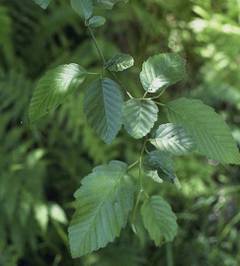
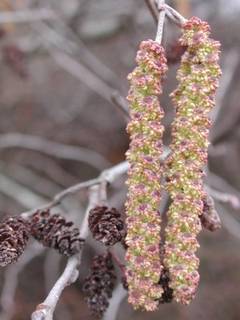
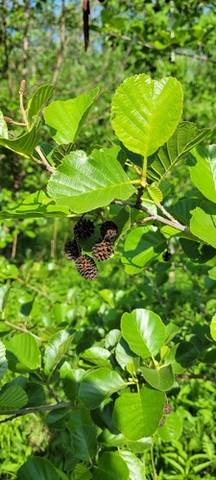
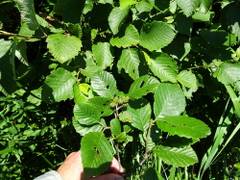
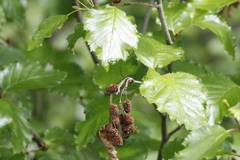
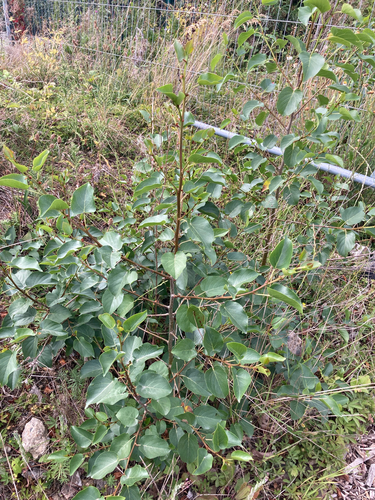
Alnus cordata is a deciduous tree in the birch family, reaching 49-82 feet (15-25 m) tall with a conical to broadly columnar crown 20-30 feet (6-9 m) wide. The glossy leaves are heart-shaped to rounded, 2-4 inches (5-10 cm) long, with finely toothed margins and dark green upper surfaces that hold late into autumn without strong color change. Tufts of pale brown hairs mark the vein axils on the leaf undersides. Male catkins form in autumn and expand to 2-4 inches (5-10 cm) in late winter, releasing yellow pollen before the leaves emerge; the smaller female catkins mature into woody, cone-like structures 0.8-1.2 inches (2-3 cm) long that persist through winter. Like other alders, it fixes atmospheric nitrogen through root nodules containing Frankia bacteria, allowing growth on poor and compacted soils. It tolerates drought, wet ground, and chalky substrates more readily than most alders, though it can self-seed and naturalize beyond planted sites in mild regions. Native to southern Italy and Corsica, it is widely planted as a street and screening tree in temperate climates. The wood is soft and pale, darkening to orange-brown when cut.
Native Range
Native to southern Italy, Corsica, and Sardinia, where it grows in mountain stream valleys and moist woodland. It has naturalized in parts of Britain, northern Europe, and scattered areas of North America following amenity planting.Suggested Uses
Used as a street tree, windbreak, and screening tree in parks and along roads. Nitrogen fixation suits it to reclamation planting on poor or disturbed soils, and it is planted to stabilize riverbanks and damp ground.How to Identify
Appearance
Size & Dimensions
Height49' - 82'
Width/Spread20' - 30'
Bloom Information
Male and female catkins form in autumn and remain dormant over winter. They expand and shed yellow pollen from late winter to early spring, typically February to March, before the leaves unfold. Wind carries the pollen; the tree is not insect-pollinated.
Detailed Descriptions
Foliage Description
dark greenGrowing Conditions
Sun Requirements
Requires 6-12 hours of direct sunlight daily
• Full Sun: 6+ hours of direct sunlight
• Partial Shade: 3-6 hours of direct sunlight
• Full Shade: Less than 3 hours of direct sunlight
Care & Maintenance
Care Guide
Grows in full sun to part shade on a wide range of soils, including dry, compacted, chalky, and seasonally waterlogged ground. Nitrogen fixation through root nodules supports establishment on infertile sites without supplemental feeding. Young trees need watering through their first two summers; established trees tolerate both drought and standing water. Hardy to USDA zones 5-8, it withstands wind and coastal exposure. Self-sown seedlings can appear in damp ground nearby and may need removal where spread is unwanted.Pruning
Pruning in late summer or autumn limits sap bleeding, since alders bleed heavily when cut in late winter and early spring. Dead, damaged, or crossing branches can be removed at that time. A central leader maintains a single-trunk form for street use, or lower limbs can be removed to raise the crown.Pruning Schedule
Prune: August–September
summerfall