Alnus, Genus, incana, Species,
- Genus & species
mountain alder
Cool temperate Northern Hemisphere; Mountain Alder subspecies in western North America
Overview
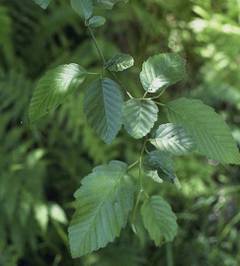
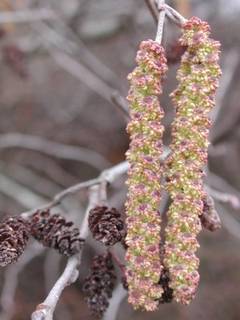
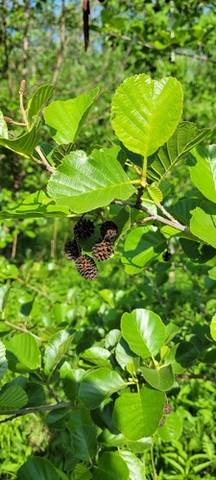
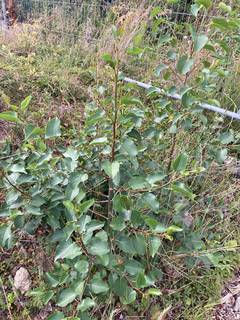
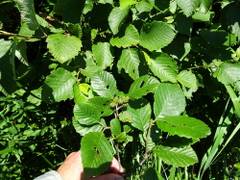
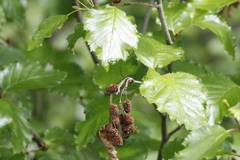
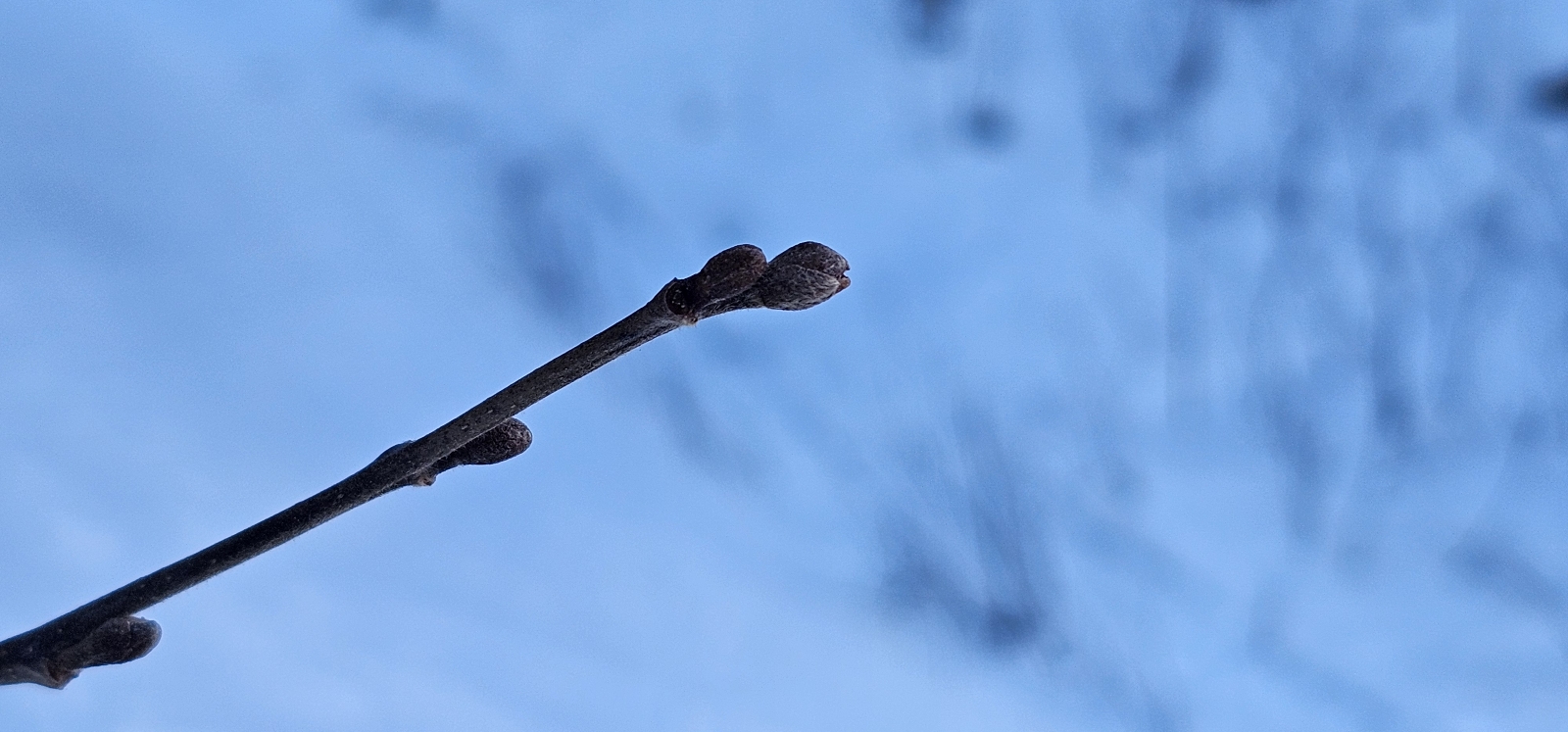
Alnus incana is a deciduous shrub or small tree reaching 15-30 feet (4.5-9 m) tall and 10-20 feet (3-6 m) wide at maturity over 15-25 years; in mountain habitats it often forms multi-stemmed thickets. Bark is smooth gray to red-brown on young stems, developing horizontal lenticels and persisting smooth on older trunks. Leaves are alternate, ovate to elliptic, 2-4 inches (5-10 cm) long, with doubly serrated margins and 8-12 pairs of straight parallel veins; foliage is dark green above and gray-green to pale green below with hairs on the veins. Inconspicuous flowers appear before leaf emergence in late winter to early spring as catkins: male catkins 1.5-3 inches (4-7.5 cm) long and pendulous in groups of 3-5; female catkins 0.4-0.6 inch (1-1.5 cm) long and upright. Female catkins develop into woody cone-like structures 0.5-0.75 inch (1.3-1.9 cm) long that persist on the tree through winter. The species fixes atmospheric nitrogen through symbiotic Frankia bacteria in root nodules, building soil fertility on disturbed sites. Plants are short-lived in cultivation (30-50 years) and intolerant of dry compacted soils.
Native Range
Alnus incana occurs across the cool temperate regions of the Northern Hemisphere. In North America, two subspecies are recognized: A. incana ssp. tenuifolia (Mountain Alder) in western North America and A. incana ssp. rugosa (Speckled Alder) in eastern North America. The species grows in riparian zones, fens, lakeshores, and mountain meadows from Alaska south to California, Colorado, and New Mexico in the west and from Newfoundland south to West Virginia in the east, at elevations from sea level to 11,000 feet (3,350 m).Suggested Uses
Used in riparian restoration plantings, wetland buffers, and rain gardens at 8-15 foot (2.5-4.5 m) spacing. Planted as a windbreak species in cold regions where soils are too wet for many alternative trees. Container culture is uncommon due to the spreading root system and nitrogen-fixing relationship with soil bacteria.How to Identify
Appearance
Size & Dimensions
Height15' - 30'
Width/Spread10' - 20'
Bloom Information
Catkins emerge from late February through early April in zones 3-6, depending on temperature accumulation. In zones 7-8 west of the Cascades, catkins may open in late January. Pollen release lasts 1-2 weeks per tree; mature stands extend the pollen season to 3-4 weeks. Flowers are wind-pollinated and produce no nectar; alder pollen is recognized as a significant springtime allergen for sensitive individuals.
Detailed Descriptions
Flower Description
Pendulous yellow-green to brown male catkins; small upright female catkins maturing to woody conesFoliage Description
Dark green above, gray-green below; ovate to elliptic, doubly serratedGrowing Conditions
Sun Requirements
Requires 5-12 hours of direct sunlight daily
• Full Sun: 6+ hours of direct sunlight
• Partial Shade: 3-6 hours of direct sunlight
• Full Shade: Less than 3 hours of direct sunlight
Care & Maintenance
Care Guide
Establish in moist to wet soil at pH 5.0-7.5 in full sun to part sun. Water weekly during the first 2 growing seasons; established plants tolerate seasonal flooding for 4-8 weeks but show drought stress during prolonged dry periods. The species fixes nitrogen and rarely benefits from fertilization; planting adjacent to nitrogen-demanding species shares the benefit. Tent caterpillars and woolly aphids may colonize foliage in spring; populations are typically controlled by predatory insects without intervention. Heart rot fungi enter through pruning wounds in older stems; pruning during dormancy reduces infection risk. Plants are commonly used in restoration plantings of disturbed riparian zones; lifespan in such settings is 30-50 years before stems senesce and resprout.Pruning
Prune in late autumn or winter during dormancy to reduce sap flow and infection risk; cuts made during active spring sap flow may bleed but heal normally under typical growing conditions. Remove dead, crossing, or damaged branches at the trunk. Coppicing to ground level in late winter every 7-10 years maintains multi-stemmed shrub form in landscape plantings.Pruning Schedule
Prune: January–February
winter