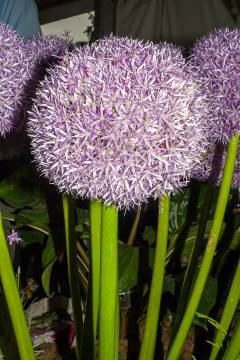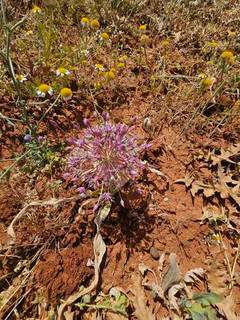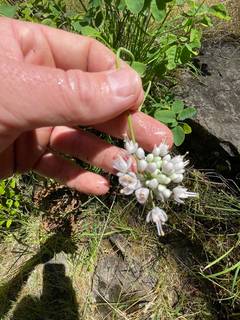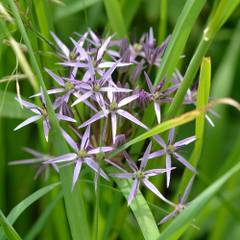
Allium, Genus, unifolium, Species,
- Genus & species
one-leaved onion
Pacific coast of North America: southwestern Oregon through California Coast Ranges to San Francisco Bay Area
Overview
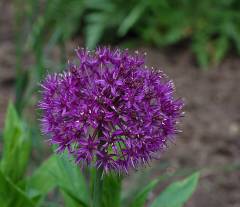
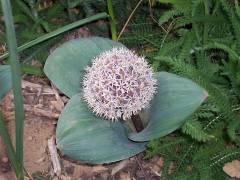
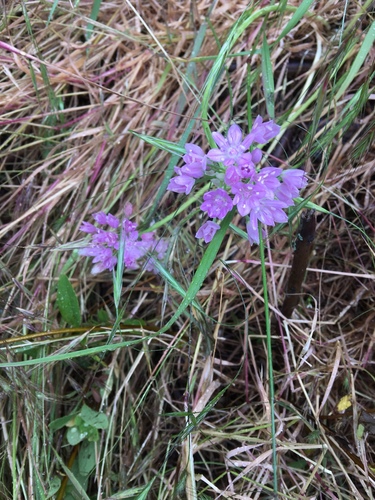
Allium unifolium is a bulbous perennial in the family Amaryllidaceae native to coastal and near-coastal areas of Oregon and California. Plants grow 12-24 inches (30-60 cm) tall from a small ovoid bulb 0.5-0.75 inch (12-18 mm) in diameter. Despite the epithet unifolium (one-leaved), plants typically produce 2-3 flat strap-shaped bright green leaves 8-14 inches (20-35 cm) long and 0.3-0.5 inch (8-12 mm) wide; the name refers to the single leaf at each growing point in some populations. The inflorescence is a compact dome-shaped umbel 2-3 inches (5-8 cm) across, bearing 15-30 bell-shaped to star-shaped flowers, each 0.4-0.6 inch (10-15 mm) long, in soft pink to rose-pink with a darker midvein. Flower color is consistently pink, separating the species from many other Allium species that come in white, purple, or yellow. Flowers carry a mild sweet scent without the typical pungent onion odor. The species occurs in heavy clay soils in seasonally wet grasslands and open woodland, a habitat type that is wet in winter-spring and dry-baked in summer. The adaptation to clay and seasonal moisture makes the species more garden-friendly in Pacific Northwest culture than most native Allium species. Bulbs go dormant after flowering, with foliage dying back by midsummer. Multiplies readily by offset bulbs, forming dense colonies over 3-5 years.
Native Range
Allium unifolium is native to the Pacific coast of North America, from southwestern Oregon through the California Coast Ranges and into the San Francisco Bay Area. The species occurs in heavy clay soils in seasonally wet meadows, grasslands, and open woodland from near sea level to approximately 2,500 feet (750 m).Suggested Uses
Planted in native plant gardens, meadow plantings, and perennial borders, spaced 3-4 inches (8-10 cm) apart in groups of 15-25 for a drift effect. Suited to heavy clay soils where other bulbs fail. Used in Pacific Northwest native plant restoration in seasonally wet grassland habitats. Combines with Camassia, Sidalcea, and native grasses in spring meadow plantings. Suitable for containers (minimum 2 gallons / 7.5 L). Not suited to permanent dry soils or to gardens that require summer foliage interest.How to Identify
Appearance
Size & Dimensions
Height1' - 2'
Width/Spread3" - 6"
Bloom Information
Flowers open from late April through June, depending on location and season. Each umbel of 15-30 flowers opens over 2-3 weeks. Individual flowers last 5-7 days. Bloom period is approximately 3 weeks. Pollinated by native bees and other insects. Foliage begins to yellow shortly after flowering and is fully dormant by midsummer.
Detailed Descriptions
Flower Description
Soft pink to rose-pink with a darker midvein; bell-shaped to star-shaped 0.4-0.6 inch (10-15 mm); 15-30 flowers in a dome-shaped umbel 2-3 inches (5-8 cm) acrossFoliage Description
Bright green; flat strap-shaped 8-14 inches (20-35 cm) long and 0.3-0.5 inch (8-12 mm) wide; 2-3 leaves per growing point; deciduousGrowing Conditions
Sun Requirements
Requires 5-10 hours of direct sunlight daily
• Full Sun: 6+ hours of direct sunlight
• Partial Shade: 3-6 hours of direct sunlight
• Full Shade: Less than 3 hours of direct sunlight
Care & Maintenance
Care Guide
Bulbs are planted 3-4 inches (8-10 cm) deep and 3-4 inches (8-10 cm) apart in autumn. Sited in full sun to light shade in moist heavy clay to loam soil at pH 5.5-7.0; the species is one of few ornamental alliums that thrives in clay. Watered regularly during the growing season (autumn through spring); soil is allowed to dry during summer dormancy. No fertilization is needed. Bulbs multiply readily, and congested clumps are divided every 4-5 years in autumn after dormancy. In the Pacific Northwest, the species's clay tolerance and reliable bloom make it more garden-friendly than most native Allium species.Pruning
Foliage is allowed to yellow and die back naturally after flowering; green leaves are not removed. Dead foliage is cut at ground level in midsummer. No other pruning is required.Pruning Schedule
Prune: July
summer
Container Growing
Suitable for container growing
Minimum container size: 2 gallons