Image 1 of 2
1 / 2
© Photograph by Mike Peel (www.mikepeel.net)., some rights reserved (CC-BY-SA) · Wikimedia Commons
Allium, Genus, ×, Hybrid, 'Pinball Wizard', Cultivar,
- Genus
- Hybrid
- Cultivar
pinball wizard allium
Garden hybrid of central Asian parentage
Overview
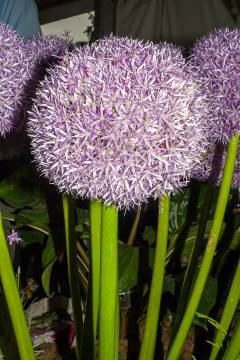
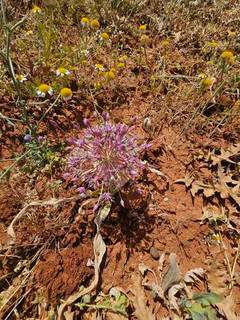
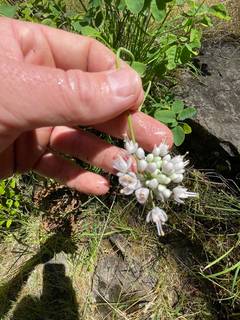
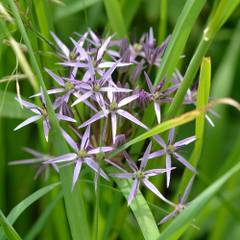
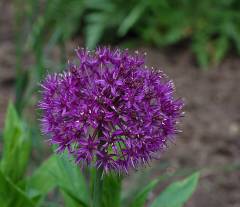
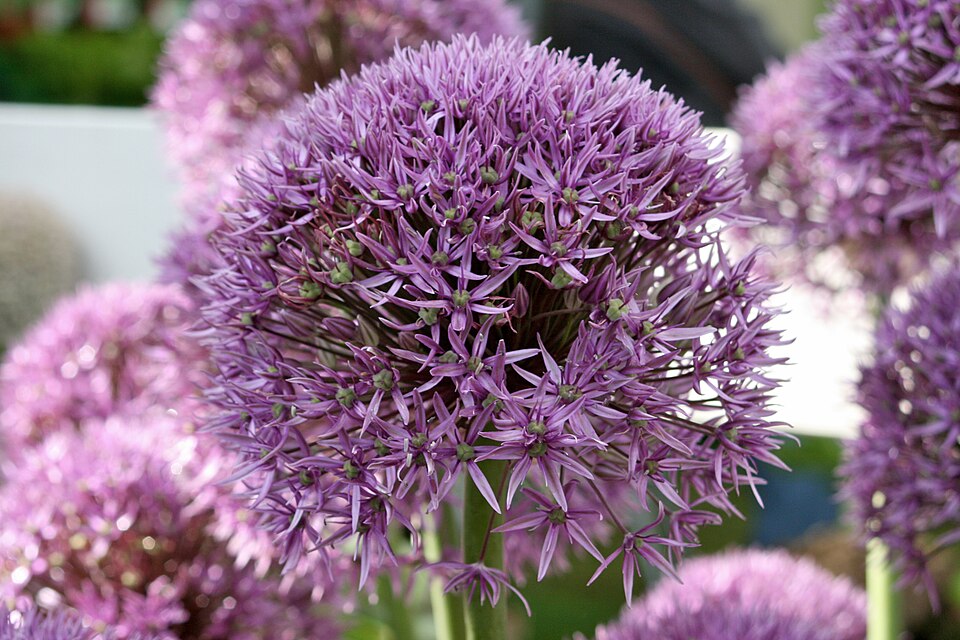
Allium × 'Pinball Wizard' is a tall ornamental allium hybrid that produces dense, spherical umbels 6–8 inches (15–20 cm) in diameter on stems 36–48 inches (90–120 cm) tall. Individual star-shaped florets are violet-purple with a darker midrib on each tepal, opening over a 2–3 week period in late May through June. Gray-green, broad, strap-shaped basal leaves emerge in early spring and die back as the flower stems reach full height, leaving smooth bare stalks topped by the large globes. Dried seed heads maintain their round form through summer, turning straw-colored. Bulbs are large, 3–4 inches (8–10 cm) in diameter, planted 6–8 inches (15–20 cm) deep in fall. The bare stems below the flower heads benefit from interplanting with companion perennials 18–24 inches (45–60 cm) tall to conceal the lower stalks. In wet or heavy clay soils, bulb rot during summer dormancy is the primary cause of loss. Bulbs multiply slowly by offset division over several years. Bloom duration is approximately 3 weeks per umbel, with no rebloom in the same season. All parts contain organosulfur compounds (n-propyl disulfide and related thiosulfinates) that cause oxidative damage to red blood cells in dogs and cats; ingestion can result in hemolytic anemia.
Native Range
Allium × 'Pinball Wizard' is a garden hybrid of uncertain exact parentage, derived from central Asian Allium species. It was selected for large umbel size, tall stature, and consistent flower color.Suggested Uses
Planted in groups of 3–7 in mixed perennial borders alongside catmint, salvia, and ornamental grasses 18–24 inches (45–60 cm) tall to mask the bare lower stems. Cut stems hold up well in water for indoor arrangements. Dried seed heads are used in floral design. Container culture requires deep pots of 7 gallons (26 L) or more.How to Identify
Appearance
Size & Dimensions
Height3' - 4'
Width/Spread8" - 10"
Colors
Bloom Information
Flowering occurs from late May through June. Each umbel remains colored for 2–3 weeks as florets open from the outside inward. Dried seed heads persist on stems through summer and into fall. No reblooming occurs; the bulb enters dormancy after flowering.
Detailed Descriptions
Foliage Description
Gray-green, broad, strap-shapedGrowing Conditions
Sun Requirements
Requires 6-10 hours of direct sunlight daily
• Full Sun: 6+ hours of direct sunlight
• Partial Shade: 3-6 hours of direct sunlight
• Full Shade: Less than 3 hours of direct sunlight
Care & Maintenance
Care Guide
Plant bulbs 6–8 inches (15–20 cm) deep and 10–12 inches (25–30 cm) apart in fall, in full sun (6+ hours direct sun) and well-drained soil. Wet summer conditions rot the dormant bulbs, so heavy clay sites are unsuitable. Water during active spring growth, then withhold irrigation after foliage yellows. Fertilization is not typically required in average garden soils. Foliage dies back naturally during bloom and should remain in place until brown. Hardiness ranges across USDA zones 4–8.Pruning
Foliage dies back naturally; dead leaves can be removed at ground level once fully brown. Dried flower heads may be left for visual interest or removed in midsummer once seed heads form. No other pruning is required.Pruning Schedule
Prune: July
summer
Container Growing
Suitable for container growing
Minimum container size: 7 gallons