Image 1 of 8
1 / 8
Plant Reference
Acer, Genus, palmatum, Species, var., Variety, dissectum, Variety,
- Genus & species
- Variety
laceleaf Japanese maple
Parent species {Acer palmatum} native to Japan, Korea, and eastern China; variety dissectum does not have a distinct native range separate from the species
Overview
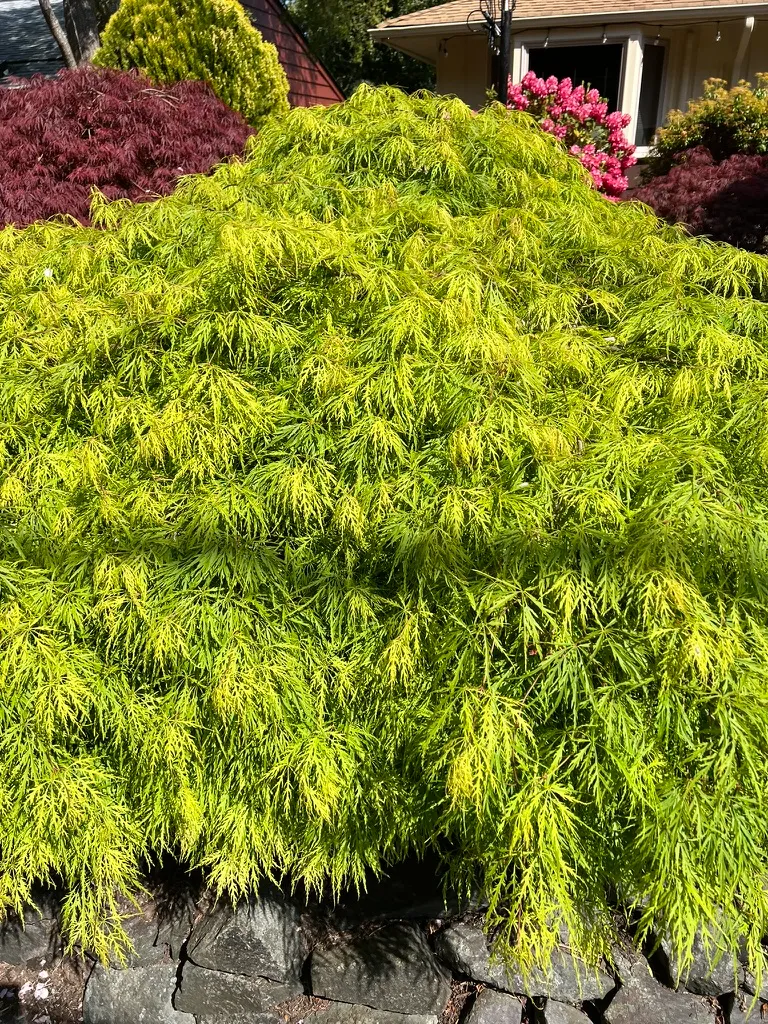
Acer palmatum var. dissectum is a botanical variety of Japanese maple in the family Sapindaceae with deeply dissected, lacy leaves and a low cascading habit. Plants reach 6-10 feet (1.8-3 m) tall and 8-12 feet (2.4-3.7 m) wide over many years and form a broad mound with weeping outer branches. Leaves are palmate with 7-9 lobes, each lobe itself deeply cut into narrow toothed segments, 2-4 inches (5-10 cm) across, producing a feathery lace-like texture. The species-type variety has green summer foliage that turns yellow to orange-red in fall. The variety encompasses seedling populations as well as numerous named cultivars — individual plant size, vigor, and fall color vary. Leaf tissue is thinner and more susceptible to scorch in hot, dry, or windy conditions than that of the species type. Growth is slow — 3-6 inches (8-15 cm) per year in youth, increasing to 6-12 inches (15-30 cm) once established. A significant trunk does not develop for many years; early growth is supported primarily by the cascading branch framework and young plants generally require staking or training to establish a stem.
Native Range
Acer palmatum var. dissectum has no distinct native range separate from the species. Acer palmatum is native to Japan, Korea, and eastern China, where it grows as a forest understory tree from near sea level to 4,900 feet (1,500 m) elevation on moist well-drained soils under mixed deciduous and coniferous canopies.Suggested Uses
Planted as a specimen in Japanese gardens, woodland borders, and mixed shrub plantings. Sited near water features, on slopes where the cascading branch tips approach the ground, and in containers of 25 gallons (95 L) or more. Horizontal clearance of 8-12 feet (2.4-3.7 m) is allowed for mature spread. The slower growth rate makes it more suited to smaller residential spaces than the species type. Combined with Hosta, Hakonechloa macra, and moss underplantings in shaded sites in zones 5-8. Not suited to hot-afternoon sun in zones 7 and warmer, exposed windy positions, or frost pockets where emerging spring foliage is damaged.How to Identify
Appearance
Size & Dimensions
Height6' - 10'
Width/Spread8' - 12'
Bloom Information
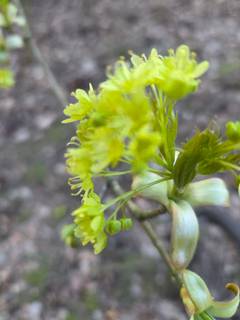
Small red-purple flowers open in drooping clusters 1-2 inches (2.5-5 cm) long in March and April before or with leaf emergence, averaging 2-3 weeks of bloom. Individual flowers are not an ornamental feature. Paired samaras 0.5-1 inch (1.5-2.5 cm) long mature and disperse from July through October.
Detailed Descriptions
Flower Description
red-purple; small flowers in drooping clusters 1-2 inches (2.5-5 cm) long; not ornamentally prominentFoliage Description
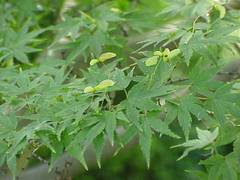
green in spring and summer; yellow to orange-red in fall; palmate leaves 2-4 inches (5-10 cm) across with 7-9 lobes each deeply cut into narrow toothed segmentsGrowing Conditions
Sun Requirements
Requires 4-6 hours of direct sunlight daily
• Full Sun: 6+ hours of direct sunlight
• Partial Shade: 3-6 hours of direct sunlight
• Full Shade: Less than 3 hours of direct sunlight
Care & Maintenance
Care Guide
Plant in moist, well-drained, humus-rich soil with a pH of 5.5-6.5 in part sun; tolerated soil types include loam, sand, and silt. Water weekly through the first 2-3 growing seasons — the thinner leaf tissue of var. dissectum scorches and wilts faster under moisture stress than the species type. Mulch 2-3 inches (5-8 cm) deep outward from the drip line, keeping 4-6 inches (10-15 cm) clear of the trunk. Afternoon shade is required in zones 7 and warmer because leaf scorch on the narrow leaf segments does not reverse mid-season. High-nitrogen fertilizers are avoided; a slow-release balanced fertilizer can be applied in early spring. Verticillium wilt can cause branch dieback — affected limbs are removed promptly. Frost pockets damage emerging spring foliage at temperatures below 28°F (-2°C).Pruning
Pruning is done in dormancy (November through January) or in summer (July-August) when sap flow is lowest. Dead or crossing branches are traced to their origin and cut at the branch collar. The mounding cascading form calls for minimal intervention, and heavy pruning disrupts the characteristic habit. Interior branches are thinned lightly every 3-5 years to improve air circulation. Leader branches that define the mound shape are retained. Upright growth cannot be forced through pruning because the weeping habit is genetic.Pruning Schedule
Prune: July–August & November–January
wintersummer
Container Growing
Suitable for container growing
Minimum container size: 25 gallons