Abelmoschus, Genus, esculentus, Species,
- Genus & species
Okra
Northeast Africa, Ethiopian highlands and Sudan
Overview
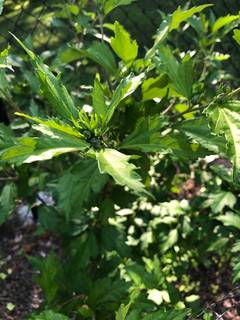
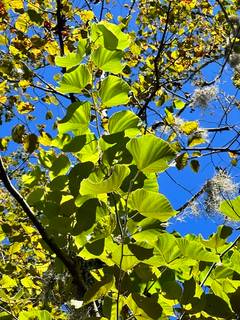
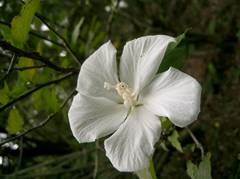
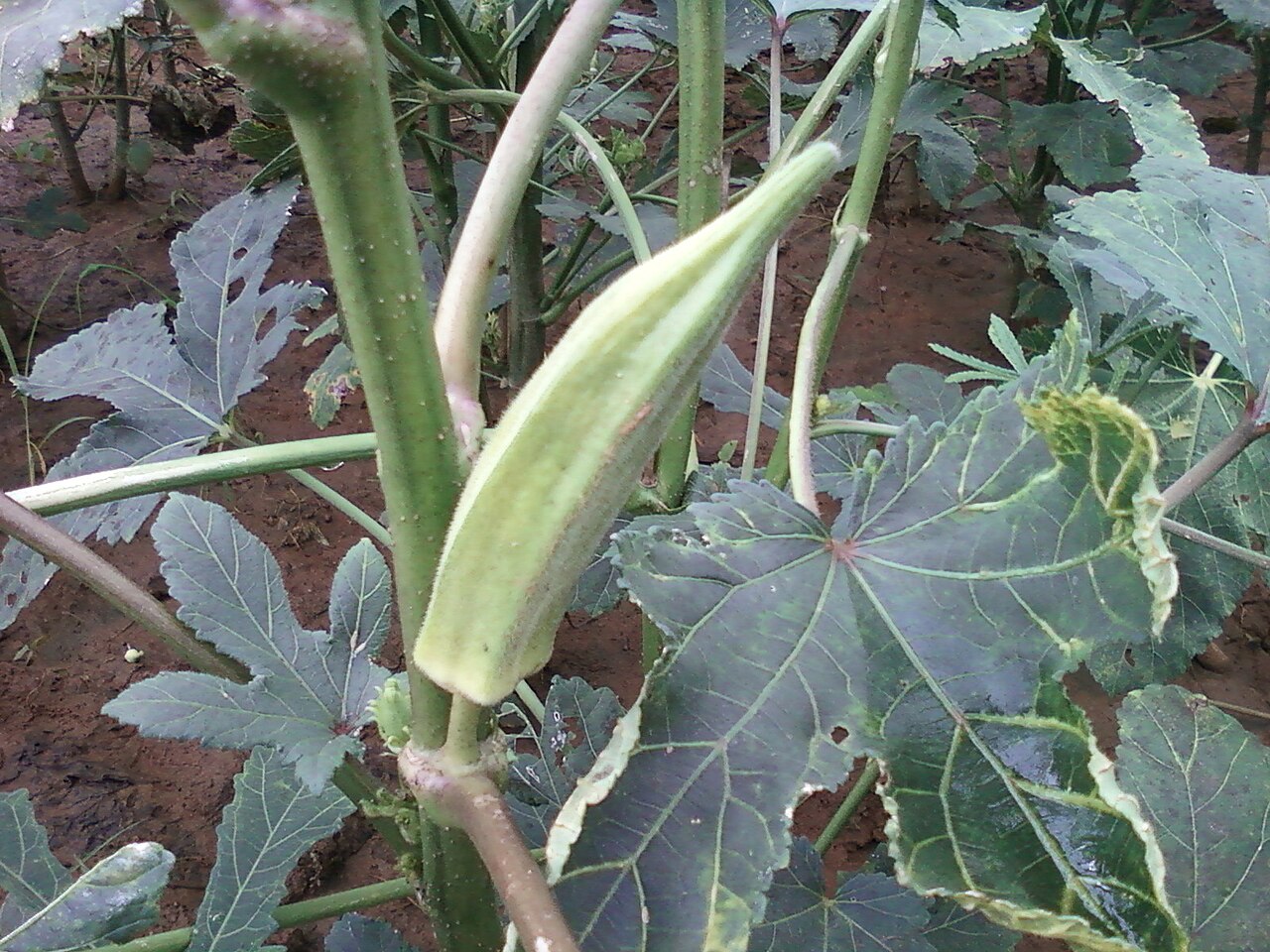
Abelmoschus esculentus is a frost-tender annual in the mallow family grown for its immature seed pods, carrying an upright sparsely branched stem 3-6 feet (0.9-1.8 m) tall and reaching 8 feet (2.4 m) in long tropical seasons. Stems are green or red-flushed, ridged, and clothed in short prickly hairs that irritate skin on contact. Leaves are alternate, palmately three to seven-lobed, 4-12 inches (10-30 cm) across, on long petioles. Flowers sit singly in the leaf axils, 2-3 inches (5-8 cm) across, pale yellow with a maroon throat, and open for one day before shedding. Pods are five to eight-ridged capsules that reach picking size at 3-4 inches (8-10 cm) within 4-6 days of flowering; past about 5 inches (13 cm) the walls turn fibrous and woody. Cropping runs continuously from the lowest node upward, with a new pod set every 1-2 days on an established plant. Growth halts below 60F (16C) and seed germinates poorly under 65F (18C), so the crop calls for 60-70 warm days to finish. Root-knot nematode and fusarium wilt accumulate where okra follows itself, and the taproot is easily damaged in transplanting once seedlings pass two true leaves.
Native Range
Abelmoschus esculentus arose in cultivation in northeast Africa, most likely in the Ethiopian highlands and adjacent Sudan, from wild Abelmoschus relatives; no wild population of the crop itself is known. It moved into Egypt, Arabia and India in antiquity and reached the Americas through the Atlantic slave trade during the 17th century. It is now grown across the tropics and in warm temperate regions including the southern United States, India and West Africa.Suggested Uses
Grown in vegetable beds and raised beds at 12-18 inch (30-45 cm) spacing, and in containers of 5 gallons (19 litres) for compact cultivars near 3 feet (90 cm) tall. The upright form and 2-3 inch (5-8 cm) mallow flowers place it in kitchen gardens and mixed borders alongside Hibiscus and Malva. Red-podded cultivars are grown for red stem and pod colour, which reverts to green during cooking.How to Identify
Appearance
Size & Dimensions
Height3' - 6'
Width/Spread1'6" - 3'
Bloom Information
Flowering starts 50-65 days after sowing and runs until frost, spanning roughly July to October in warm temperate gardens. Each flower opens at dawn and drops by the following morning, with a pod showing within 24 hours of petal fall. Flowers appear in sequence up the stem, one at each successive leaf axil, so bloom and harvest overlap for 8-12 weeks. Flower production slows once night temperatures fall below 60F (16C).
Detailed Descriptions
Flower Description
pale yellow with a maroon throatFoliage Description
medium to dark green, red-veined on some cultivarsGrowing Conditions
Sun Requirements
Requires 8-12 hours of direct sunlight daily
• Full Sun: 6+ hours of direct sunlight
• Partial Shade: 3-6 hours of direct sunlight
• Full Shade: Less than 3 hours of direct sunlight
Water & Climate
Water Needs
Drought Tolerance
Drought tolerant when established
Care & Maintenance
Care Guide
Grows in full sun with about 8 hours of direct light in free-draining loam at pH 6.0-6.8, and calls for sustained summer heat. Seed is sown direct 0.5-1 inch (1.3-2.5 cm) deep once soil reaches 70F (21C), at 12-18 inch (30-45 cm) spacing in rows 3 feet (90 cm) apart, with a 12 hour soak beforehand raising germination of the hard-coated seed. Water use runs 1 inch (25 mm) per week, and established plants carry through short dry spells on a taproot descending 4 feet (1.2 m). One balanced feed at planting followed by a side-dressing after the first pods form covers the crop, since heavy nitrogen pushes back flowering. Aphids and stink bugs feed on growing tips and pods, while root-knot nematode causes stunting in sandy southern soils. Pods cut every 1-2 days with secateurs hold the plant in flower, whereas one pod left to mature its seed shuts down new bloom on that stem.Pruning
Plants reaching 5-6 feet (1.5-1.8 m) by midseason are cut back to 12-18 inches (30-45 cm) above a leaf node, from which new shoots break and flower within 3-4 weeks. This ratoon cut returns a crop only where 8 or more warm weeks remain in the season. Lower leaves are taken off as pods are harvested from those nodes, opening the base of the plant to air movement.Pruning Schedule
Prune: July
summer
Container Growing
Suitable for container growing
Minimum container size: 5 gallons
Toxicity
Non-toxicPlanting Guide
Planting Methods & Timing
Planting Method
direct sow
Direct Sow Timing
2-3 weeks after the last spring frost, once soil at 2 inches (5 cm) depth holds 70F (21C)
Days to Maturity
50–65 days
Plant Spacing
15 inches
Companion Planting
Good Companions
Avoid Planting With