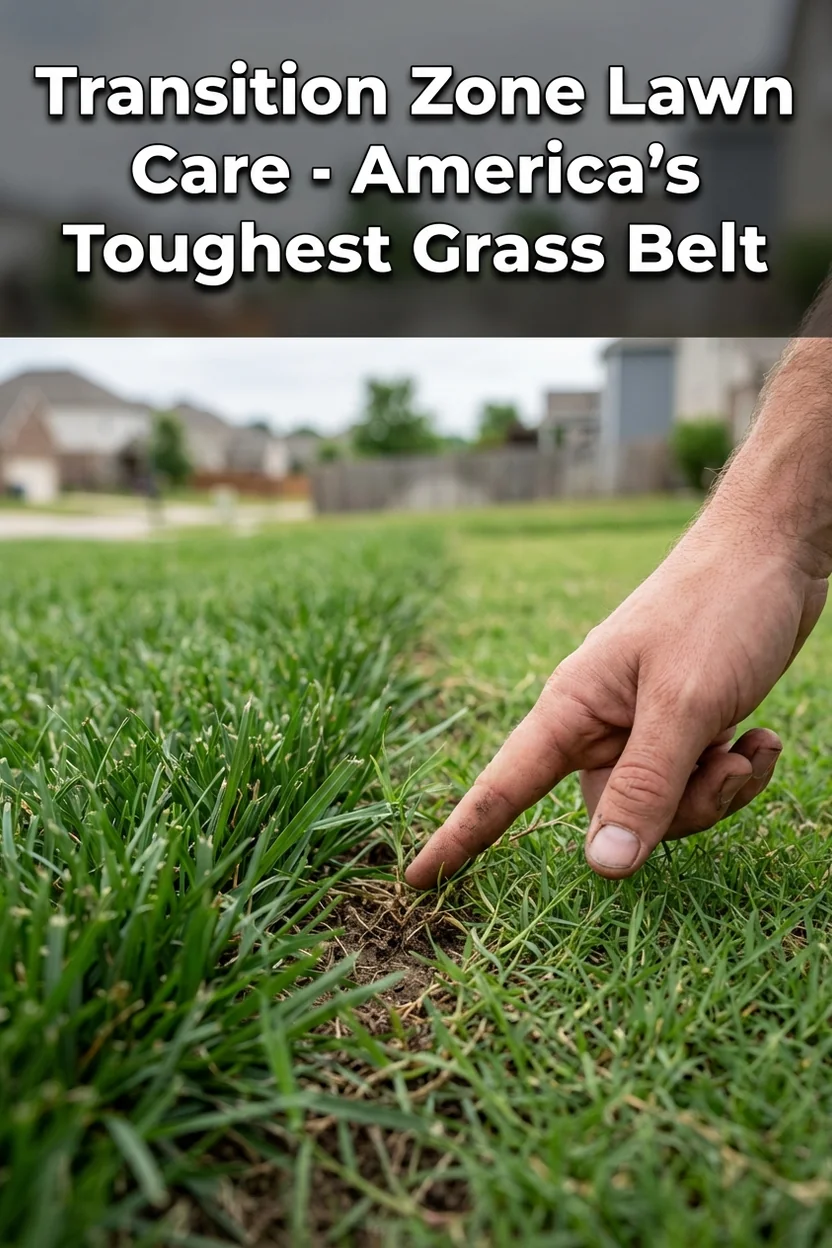
Transition Zone Lawn Care: Growing Grass in America's Toughest Climate Belt
Pets & Toxicity
Recorded toxicity for plants linked in this guide. An unknown status is not a safety assessment.
No linked plant is recorded as toxicDetailsHide
— Image © Plant Reference 2026
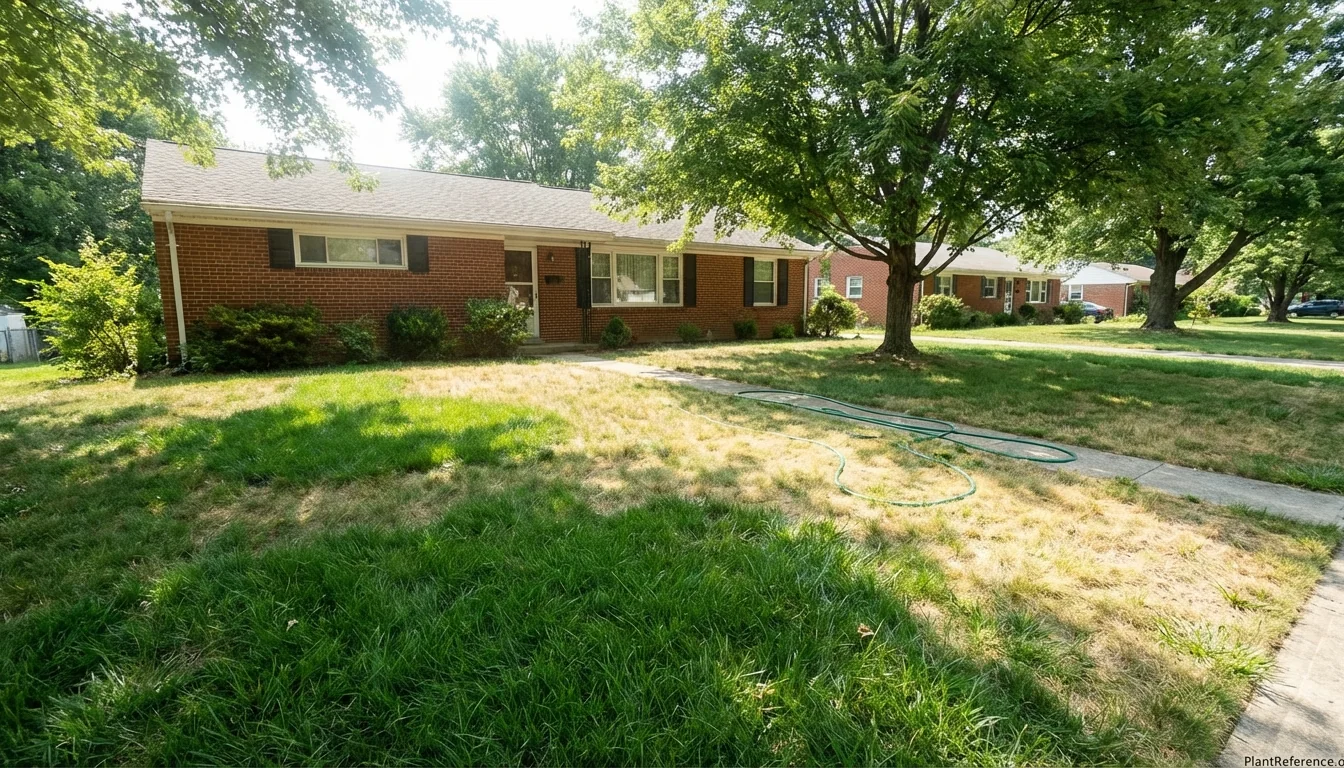
I run my business in Dallas, which sits right on the edge of the transition zone. Half my clients have bermuda lawns that brown out in January; the other half have tall fescue that melts in August. Neither group is wrong — they just picked different strategies for the same impossible climate. The transition zone does not have a perfect grass. What it has are trade-offs, and the homeowners who succeed are the ones who pick a trade-off they can live with and maintain accordingly.
What Makes the Transition Zone So Difficult
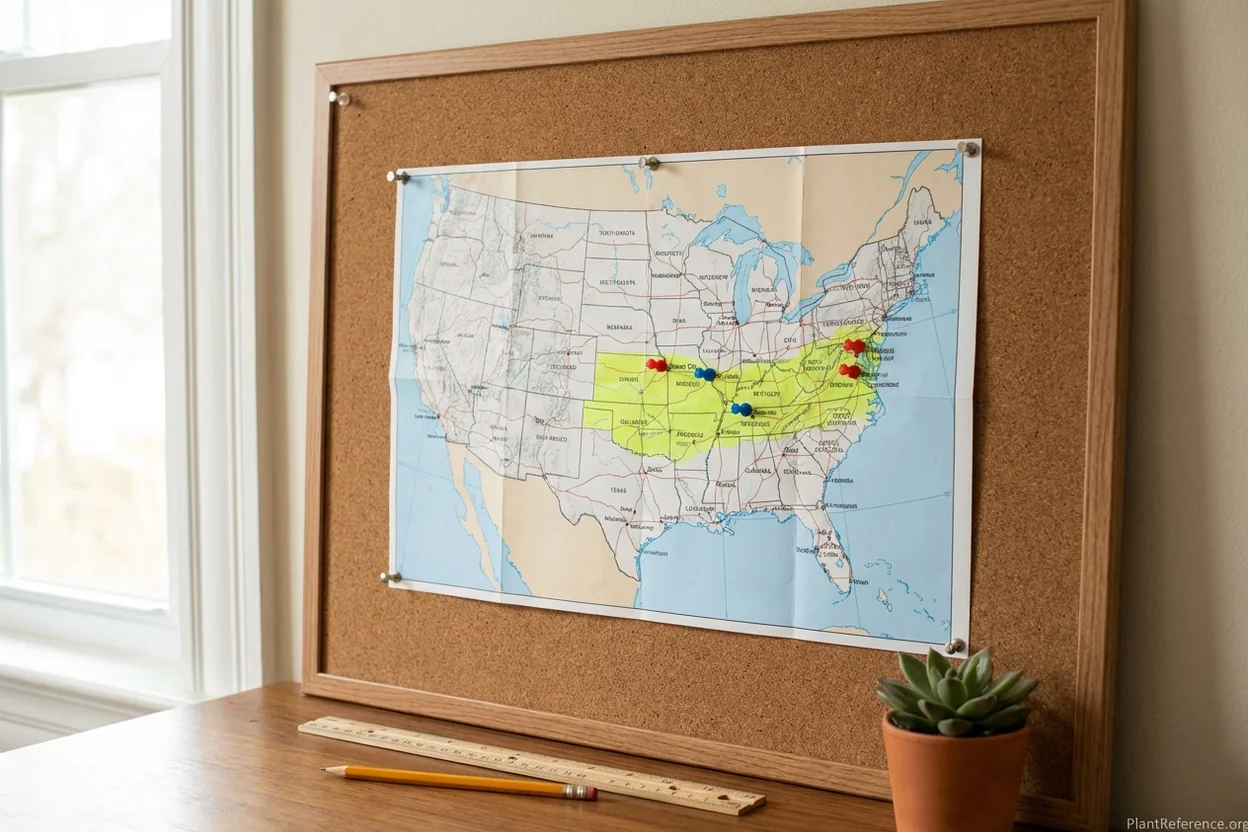
The transition zone is a belt running roughly from Virginia and the Carolinas westward through Kentucky, Tennessee, Missouri, Kansas, and into Oklahoma. It spans USDA Zones 6b through 7b, though local microclimates can push conditions a half-zone in either direction. The core problem is simple: summers regularly exceed 90°F (32°C) for weeks at a time — hot enough to shut down cool-season grasses — while winters drop well below freezing for extended periods, potentially killing warm-season species that lack cold hardiness.
🌿Poa pratensis (poh-uh prah-TEN-sis) Kentucky bluegrass, the default lawn grass across the North, has a shallow root system that cannot sustain the plant through transition zone summers without heavy irrigation. It thins out, invites crabgrass, and often requires complete renovation by fall. Meanwhile, common 🌿Cynodon dactylon bermudagrass — the Southern standard — can suffer winterkill in Zones 6b and 7a when soil temperatures drop below 25°F (-4°C) for sustained periods. Cool-Season vs Warm-Season Grass: Which Type Is Right for Your Lawn?
The result is a region where most homeowners feel like their lawn looks good for about four months and mediocre-to-terrible for the other eight. That frustration is real, but it is solvable. The answer is not finding a grass that thrives year-round — no such grass exists for this climate — but choosing a species whose weak season you can tolerate and whose strong season rewards the effort.
The Three Winning Grass Strategies
Every successful transition zone lawn follows one of three approaches. Pick one and commit to its maintenance calendar — mixing strategies creates more problems than it solves.
Strategy | Species | Best For | Weak Season | Winter Color |
|---|---|---|---|---|
Cool-season workhorse | 🌿Festuca arundinacea Tall Fescue | Shade tolerance, deep roots, fall seeding | Summer heat stress (July-Aug) | Green year-round |
Warm-season carpet | 🌿Zoysia japonica Zoysiagrass | Low maintenance, drought tolerance, density | Slow spring green-up, brown Nov-Mar | Brown/dormant |
Maximum performance | Hybrid 🌿Cynodon dactylon Bermudagrass | Traffic, sports, full sun | Brown Nov-Mar, high maintenance | Brown/dormant (or overseed) |
The choice comes down to priorities. If you want green grass twelve months a year, tall fescue is your only option — but you accept summer stress and annual overseeding. If you want a dense, low-input lawn and can tolerate winter brown, zoysiagrass delivers. If you want the tightest, most durable turf surface and are willing to mow twice a week in summer, hybrid bermuda is the answer. What Type of Grass Do I Have? Identify Your Lawn in 5 Steps
Tall Fescue: The Cool-Season Workhorse
🌿Festuca arundinacea tall fescue is the most widely planted grass in the transition zone, and for good reason. Modern turf-type cultivars like 'Rebel,' 'Titan,' and 'Rhizing Moon' have finer blade texture, darker green color, and better heat tolerance than older forage-type varieties like 'Kentucky 31.' The key advantage is root depth — 🌿Festuca arundinacea tall fescue pushes roots 2-3 feet (60-90 cm) into the soil, reaching moisture that shallow-rooted grasses like 🌿Poa pratensis Kentucky bluegrass cannot access during summer drought.
Summer Survival
Even with deep roots, tall fescue struggles when air temperatures stay above 90°F (32°C) for consecutive weeks. The grass slows growth, thins in sunny areas, and becomes vulnerable to brown patch disease — triggered by nighttime temperatures above 65°F combined with humid air. Your summer survival protocol has three parts: raise mowing height to 4 inches (10 cm) to shade soil, water deeply at 1-1.5 inches (2.5-4 cm) per week in early morning only, and do not fertilize between June and August. Lawn Care Schedule by Month: Your Complete Cool-Season Grass Calendar
Fall Renovation
The defining maintenance event for transition zone tall fescue is the September overseeding. Because tall fescue is a bunch-type grass with no lateral spread, it cannot self-repair thin areas the way 🌿Poa pratensis Kentucky bluegrass or 🌿Cynodon dactylon bermudagrass can. Every fall, core aerate and overseed at 5-8 lbs per 1,000 sq ft to replace plants lost to summer stress. This annual renovation is not optional — skip it and the lawn thins progressively each year, opening space for crabgrass and weeds.
Zoysiagrass: The Warm-Season Carpet
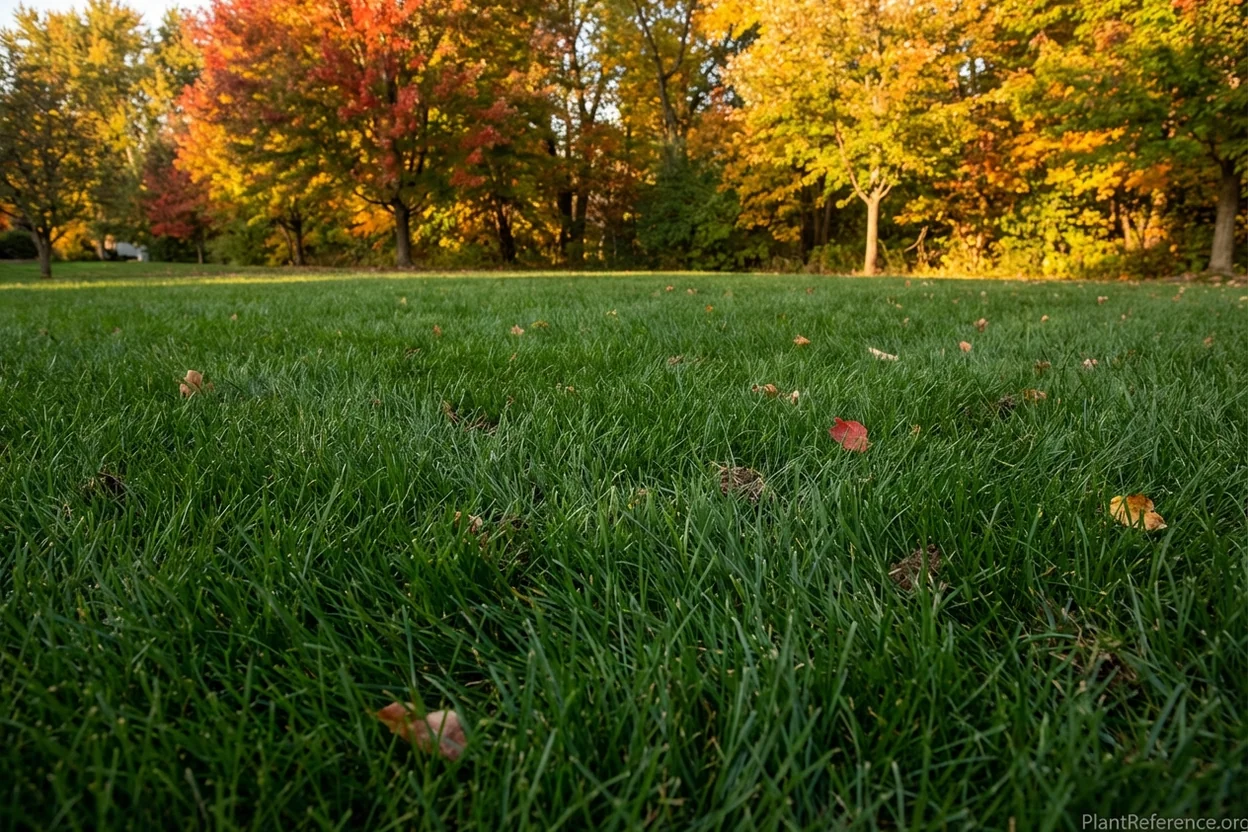
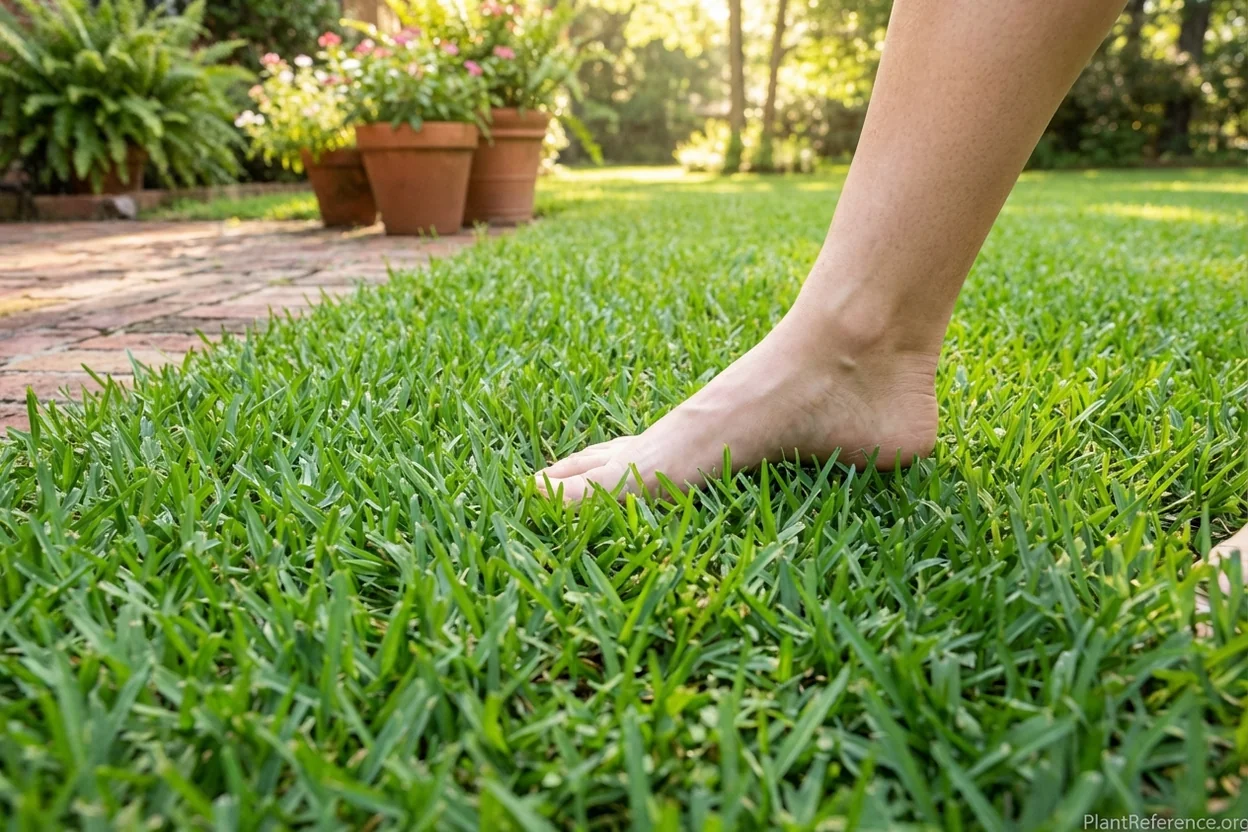
🌿Zoysia japonica zoysiagrass is the most cold-hardy warm-season grass, performing reliably through Zone 6b and even into Zone 6a with improved cultivars like 'Meyer,' 'Zenith,' and 'Compadre.' It forms a dense, carpet-like turf that requires roughly 50% less water than 🌿Poa pratensis Kentucky bluegrass and significantly less mowing than 🌿Cynodon dactylon bermudagrass.
The Slow Establishment Trade-Off
The biggest drawback of zoysiagrass is patience. From seed, it takes 14-21 days to germinate and 1-2 full growing seasons to fill in completely. From sod, establishment is faster but more expensive ($300-800 per 1,000 sq ft installed). During the fill-in period, aggressive weed control is essential because the sparse zoysia canopy cannot outcompete weeds on its own.
Winter Dormancy
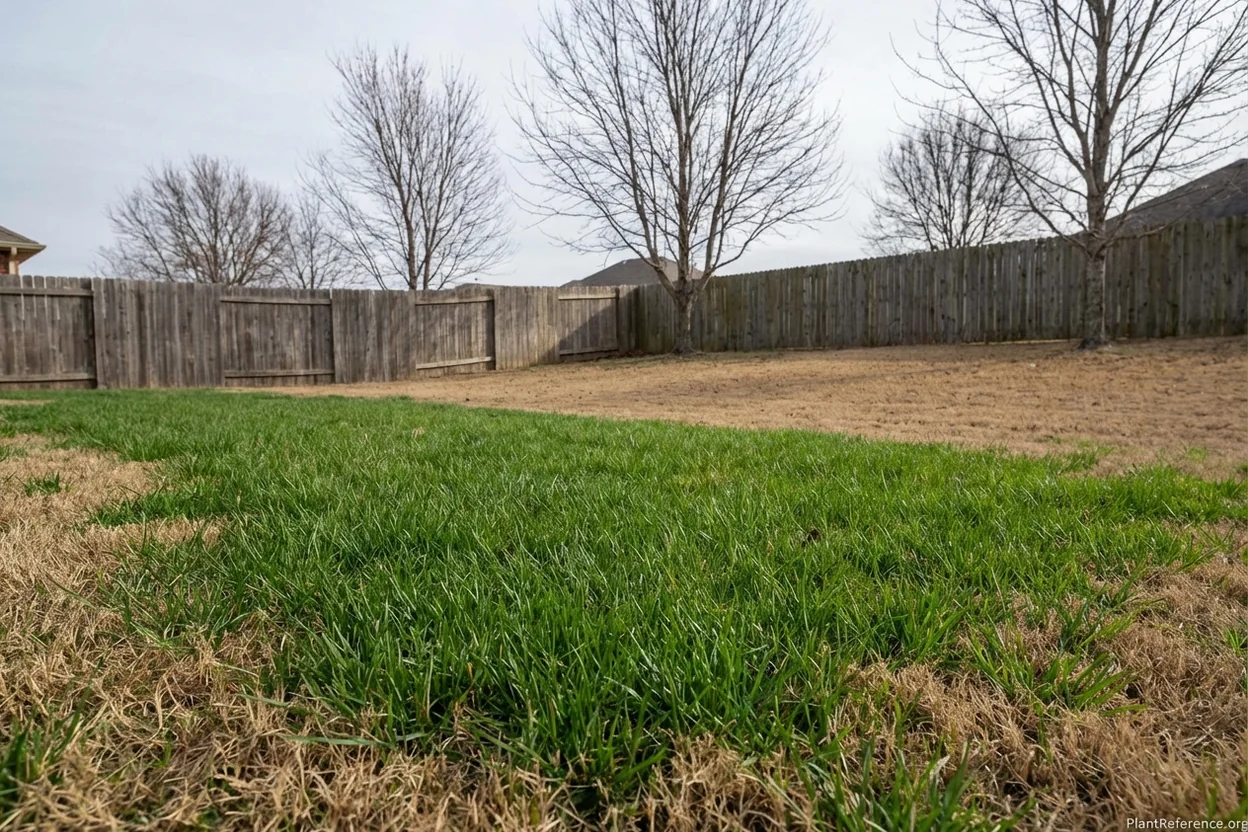
🌿Zoysia japonica Zoysiagrass goes dormant after sustained soil temperatures drop below 55°F, turning a distinctive straw-tan color from roughly November through March in most of the transition zone. This is the trade-off for low summer maintenance — you get a brown lawn for 4-5 months. Some homeowners accept the dormant color; others find it unacceptable. If year-round green matters to you, zoysia is the wrong choice. Best Grass for Your Climate Zone: The Complete Selection Guide
Maintenance Advantages
Once established, zoysia requires less of almost everything: 2-3 lbs of nitrogen per 1,000 sq ft per year (compared to 3-4 for tall fescue), mowing every 7-10 days at 1-2 inches (3-5 cm), and 1 inch (2.5 cm) of water per week. Its dense growth habit crowds out most weeds without herbicide, and it tolerates moderate shade better than bermuda. For transition zone homeowners who want a low-effort lawn and accept winter dormancy, zoysia is hard to beat.
Hybrid Bermudagrass: Maximum Performance, Maximum Commitment
Hybrid 🌿Cynodon dactylon bermudagrass cultivars developed for cold tolerance — 'TifTuf,' 'Tahoma 31,' 'Latitude 36,' and 'NorthBridge' — have expanded bermuda's viable range deep into the transition zone, performing reliably through Zone 7a and sometimes into Zone 6b with proper management. These hybrids deliver the tightest, most traffic-resistant turf surface available, which is why they dominate athletic fields and golf courses in the region.
Cold Hardiness Considerations
Common bermudagrass frequently winterkills in the upper transition zone. Hybrid cultivars improve cold tolerance significantly, but they are not invincible. 'Tahoma 31' has survived temperatures down to -10°F (-23°C) in university trials. Still, late-season nitrogen fertilization, poor drainage, and sudden temperature drops before the grass fully hardens can cause winterkill even in improved varieties. Apply a potassium-heavy winterizer (e.g., 0-0-25) in September to harden cell walls, and avoid any nitrogen after August in Zones 6b-7a.
High Maintenance Reality
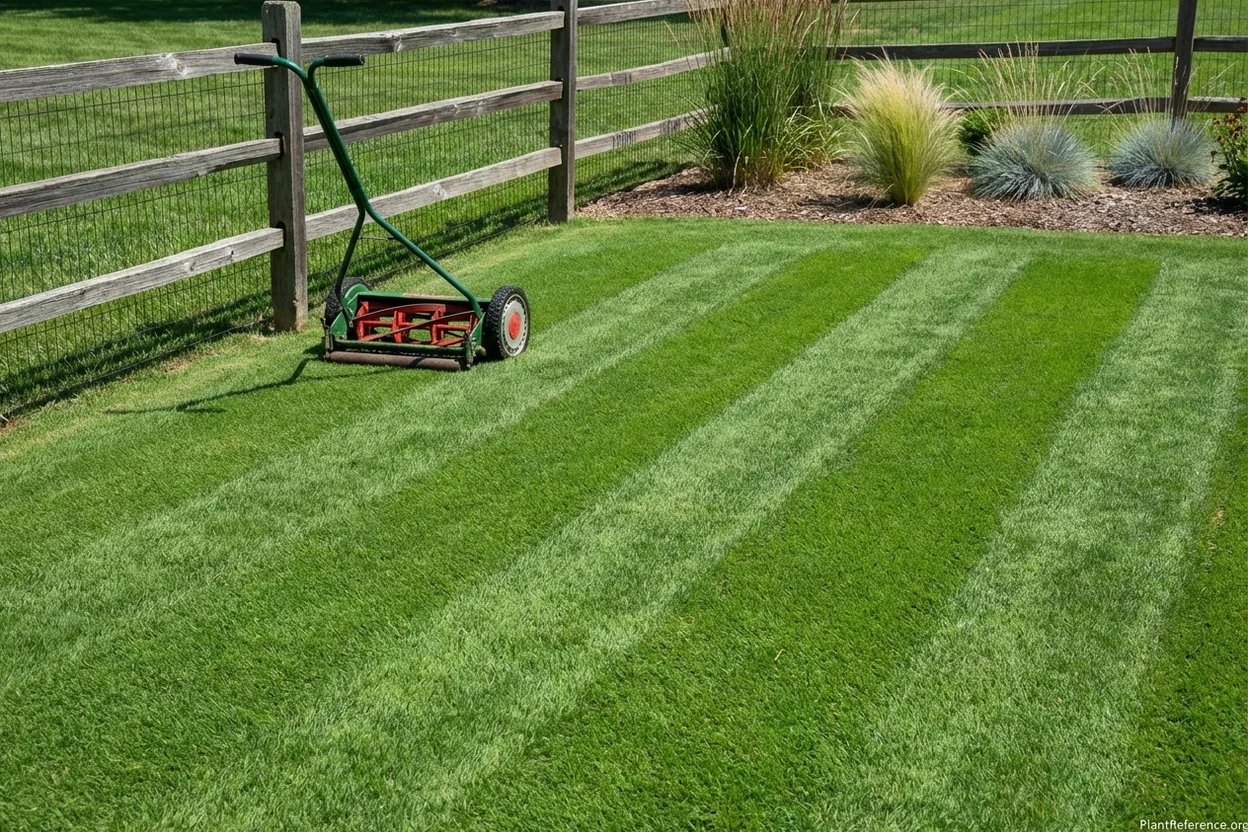
Hybrid bermuda in the transition zone demands more from you than any other grass option. During peak summer growth, expect to mow every 3-5 days at 0.5-2 inches (1-5 cm). It requires 3-5 lbs of nitrogen per 1,000 sq ft per year, applied monthly from May through August. It is completely intolerant of shade — even 3-4 hours of shade per day degrades performance. And it goes fully dormant in winter, turning brown from November through March or April. Raised Bed Soil pH Problems: Testing, Adjusting, and Maintaining Balance
Overseeding Bermuda With Ryegrass: The Year-Round Green Play
Some transition zone homeowners overseed dormant bermudagrass with 🌿Lolium perenne perennial ryegrass in October to maintain green color through winter. The ryegrass germinates quickly (5-10 days), provides a green lawn from November through April, and then dies off in late spring heat as the bermuda resumes growth.
This sounds ideal on paper but requires precise management. The critical challenge is the spring transition — the period in April and May when bermuda needs to break through the ryegrass canopy. If ryegrass is too thick or healthy, it shades and smothers the bermuda, delaying green-up by weeks and potentially thinning the permanent turf.
Spring Transition Management
To ensure clean spring transition, stop fertilizing and watering the ryegrass in late March. Lower your mowing height aggressively — scalp the ryegrass down to 0.5-1 inch (1-3 cm) — to expose bermuda crowns to sunlight and warmth. The ryegrass will yellow and die as temperatures rise above 80°F. The bermuda pushes through the declining ryegrass canopy, filling in by mid-May in most of the transition zone.
Overseed at a conservative rate: 5-8 lbs of 🌿Lolium perenne perennial ryegrass per 1,000 sq ft. Heavier rates produce a denser winter stand but make spring transition harder. Many professionals have moved away from overseeding entirely, preferring to let bermuda go dormant and accepting the brown color rather than risking damage to the primary turf. Best Wood for Raised Garden Beds: Material Comparison and Longevity Test
Transition Zone Maintenance Calendar
The transition zone calendar depends entirely on which grass strategy you chose. Here is a simplified side-by-side comparison of the three approaches.
Month | Tall Fescue | Zoysiagrass | Hybrid Bermuda |
|---|---|---|---|
Jan-Feb | Dormant. Sharpen mower, soil test | Dormant. No activity | Dormant. No activity |
March | Monitor soil temp for pre-emergent | Monitor for green-up (soil >65°F) | Scalp ryegrass if overseeded |
April | Pre-emergent at 50-55°F soil, first mow | First mow when 50% green | Pre-emergent, first nitrogen when 50% green |
May | Mow every 5 days, optional light fertilizer | First nitrogen, mow at 1-2 in | Nitrogen monthly begins, mow every 3-5 days |
June-Aug | Raise to 4 in, deep water, NO fertilizer | Mow every 7-10 days, 1 in water/wk | Peak maintenance: mow 2x/wk, nitrogen monthly |
Sept | AERATE + OVERSEED + fall fertilizer | Last nitrogen, apply potassium winterizer | Stop nitrogen, apply potassium winterizer |
Oct | Second fertilizer, broadleaf herbicide | Dormancy begins, no activity | Overseed ryegrass (optional), dormancy begins |
Nov-Dec | Final mow at 3 in, winterizer, mulch leaves | Brown/dormant | Brown/dormant (or green ryegrass if overseeded) |
Raised Bed Weeds: Prevention Strategies and Control Methods
Common Transition Zone Mistakes
Planting Kentucky Bluegrass as a Primary Lawn
🌿Poa pratensis Kentucky bluegrass looks fantastic in April and October in the transition zone. By July, it is a brown, thin, crabgrass-infested mess unless you irrigate heavily — 1.5-2 inches (4-5 cm) per week through the entire summer. Its shallow root system (6-8 inches / 15-20 cm) simply cannot compete with 🌿Festuca arundinacea tall fescue's 2-3 foot roots during heat stress. If you want a cool-season lawn in the transition zone, plant tall fescue. Save bluegrass for blending in small amounts (10-15% of a seed mix) for its self-repair capability.
Fertilizing Cool-Season Grass in Summer
This mistake causes more lawn damage in the transition zone than any pest or disease. Nitrogen applied to 🌿Festuca arundinacea tall fescue during 90°F weather drives succulent leaf growth that the plant cannot support with its heat-stressed root system. The new growth is immediately attacked by brown patch, and the weakened plant enters fall in worse condition than if you had simply left it alone. Save your nitrogen for September. The Complete Guide to Raised Bed Gardening for Beginners (2025)
Choosing the Wrong Bermuda Cultivar
Common (seeded) bermudagrass winterkills frequently in Zones 6b and 7a. If you want bermuda in the upper transition zone, you must invest in cold-hardy hybrid cultivars — 'Tahoma 31,' 'TifTuf,' or 'Latitude 36' — installed as sod or sprigs. The upfront cost is higher, but replacing a dead common bermuda lawn after a hard winter costs more. Ask your sod supplier for cold-hardiness trial data specific to your zone before purchasing.
Mixing Cool and Warm-Season Grasses
Planting 🌿Festuca arundinacea tall fescue and 🌿Cynodon dactylon bermudagrass in the same lawn creates a management nightmare. They require opposite fertilization schedules, opposite mowing heights, and opposite seasonal strategies. The bermuda invades the fescue areas via stolons, and the fescue clumps stand out as coarse patches in the bermuda. Pick one species and maintain the entire lawn accordingly. If bermuda is creeping into your fescue, treat it as a weed with a selective grassy weed herbicide (fenoxaprop). How to Build a Raised Garden Bed: Step-by-Step Construction Guide
Frequently Asked Questions
Reading about plants and recognising them are different skills. These three build the second.
- Daily PlantIdentify the day’s mystery plant from a close-up photograph.
- Keyed OutWork a dichotomous key, lead by lead, to name a hidden specimen.
- Name That PlantName a specimen from botanical clues dealt hardest first.
Free to play, no account needed
Tagged with
James is a lawn care professional in Dallas who runs a small residential maintenance company. He started mowing lawns as a teenager and worked his way up to running crews for a large landscaping firm before going out on his own. James specializes in warm-season turf grasses—Bermuda, St. Augustine, and Zoysia—and knows how to keep a lawn alive through Texas summers without wasting water. He's also experienced with the transition zone challenges that Dallas faces, where warm-season and cool-season grasses overlap. James takes a practical, science-informed approach to lawn care and pushes back on the idea that a good lawn requires heavy chemical inputs.