Yucca, Genus, rupicola, Species,
- Genus & species
twisted-leaf yucca
Overview
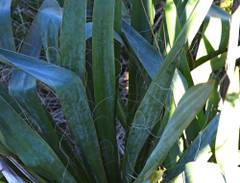
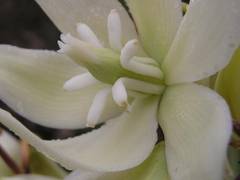
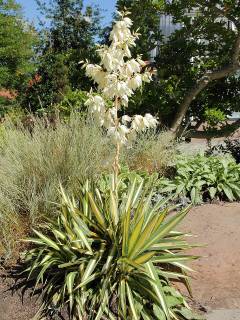
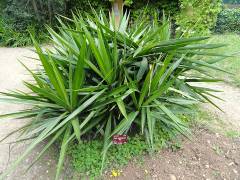
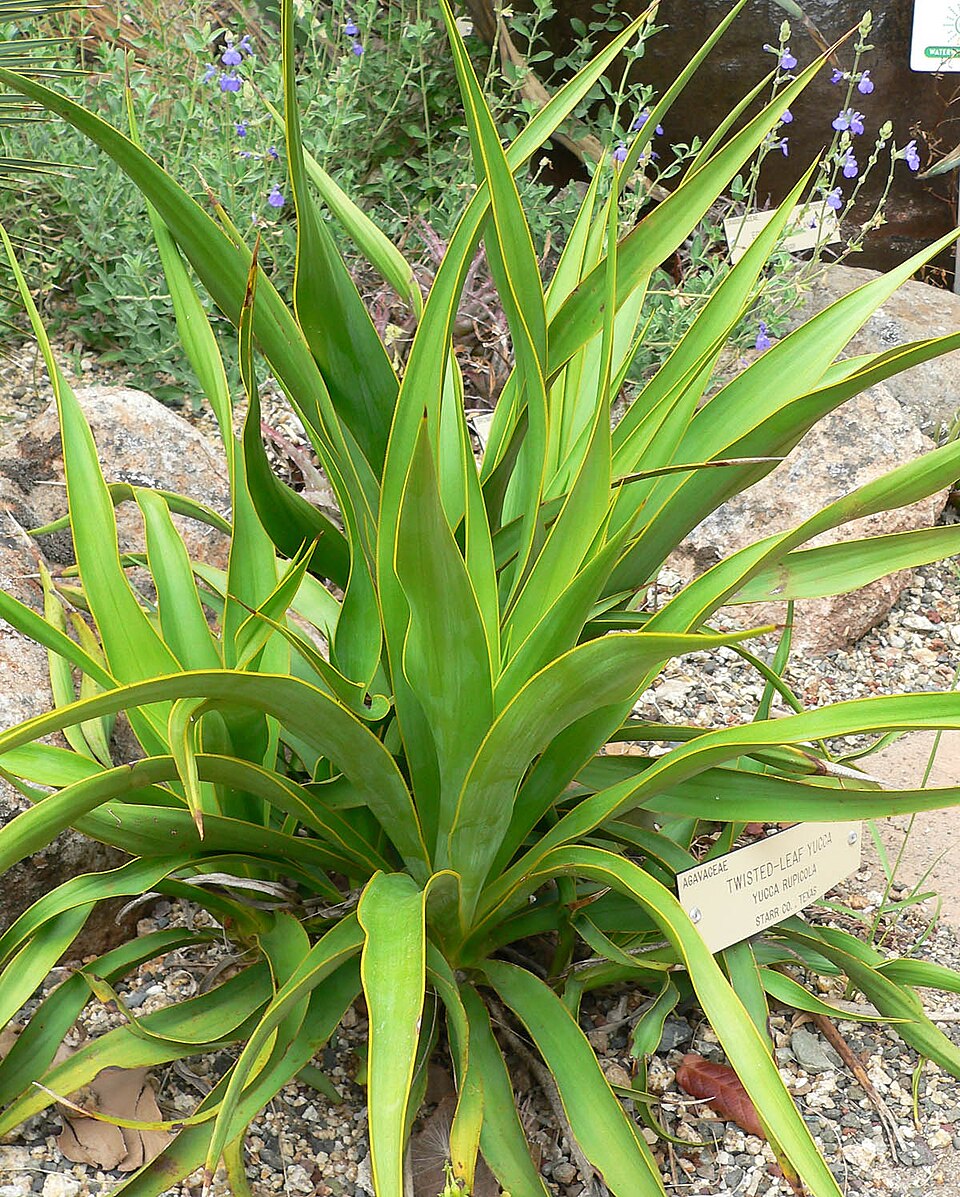
Yucca rupicola is an evergreen, stemless succulent in the asparagus family, forming a low rosette 1-2 feet (30-60 cm) tall and 2-3 feet (60-90 cm) wide. The leaves are stiff but twist and curl as they age, 1-2 feet (30-60 cm) long and about 1 inch (2.5 cm) wide, green to blue-green with pale, finely toothed, often reddish margins. Mature rosettes send up a flowering stalk 3-5 feet (0.9-1.5 m) tall in late spring to summer, carrying many nodding, bell-shaped white to cream flowers. The fruit is a dry capsule. It grows on thin, rocky limestone soils of the Edwards Plateau in central Texas, in full sun to light shade. The rosette spreads slowly by offsets to form small clumps. The leaf tips are sharp, so the plant is set back from paths and seating, and it declines in wet or poorly drained soil.
Native Range
Yucca rupicola is native to central Texas, mainly the Edwards Plateau, where it grows on thin, rocky limestone soils, bluffs, and open woodland.Suggested Uses
Used in rock gardens, xeriscapes, gravel beds, and dry borders on well-drained soil. The flower stalks draw bees and night-flying moths. The sharp leaf tips suit it to spots away from paths and seating; space plants 2-3 feet (60-90 cm) apart.How to Identify
Appearance
Size & Dimensions
Height1' - 2'
Width/Spread2' - 3'
Bloom Information
Detailed Descriptions
Flower Description
white to creamFoliage Description
green to blue-greenGrowing Conditions
Sun Requirements
Requires 6-12 hours of direct sunlight daily
• Full Sun: 6+ hours of direct sunlight
• Partial Shade: 3-6 hours of direct sunlight
• Full Shade: Less than 3 hours of direct sunlight
Care & Maintenance
Care Guide
Grows in full sun to light shade on thin, rocky, sharply drained soil with a pH near 7.0-8.5, and tolerates heat, drought, and alkaline ground. It needs little to no supplemental water once established and no routine feeding. Wet or poorly drained soil causes root and crown rot, the main cause of failure. It is hardy to about 0F (-18C) in well-drained sites. The rosette spreads slowly by offsets, which can be separated to make new plants.Pruning
Remove the spent flower stalk after bloom by cutting it near the base. Dead lower leaves can be trimmed to tidy the rosette. No other pruning is needed.Container Growing
Suitable for container growing
Minimum container size: 3 gallons