Image 1 of 7
1 / 7
Plant Reference
Yucca, Genus, gloriosa, Species, var., Variety, tristis, Variety,
- Genus & species
- Variety
weeping yucca
Southeastern United States — North Carolina south to Florida along the Atlantic and Gulf coasts; coastal dunes, maritime forests, and sandy soils
Overview
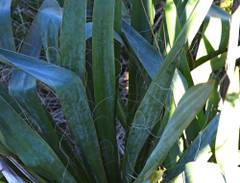
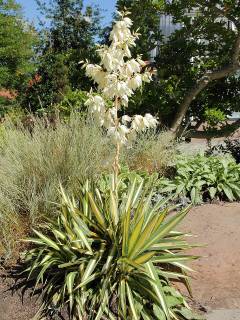
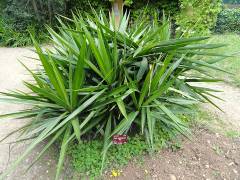
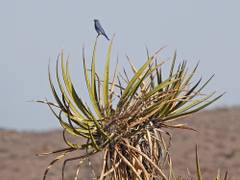
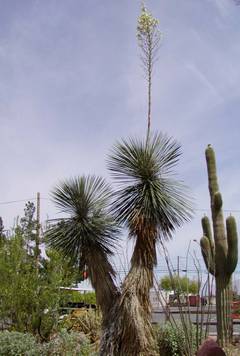
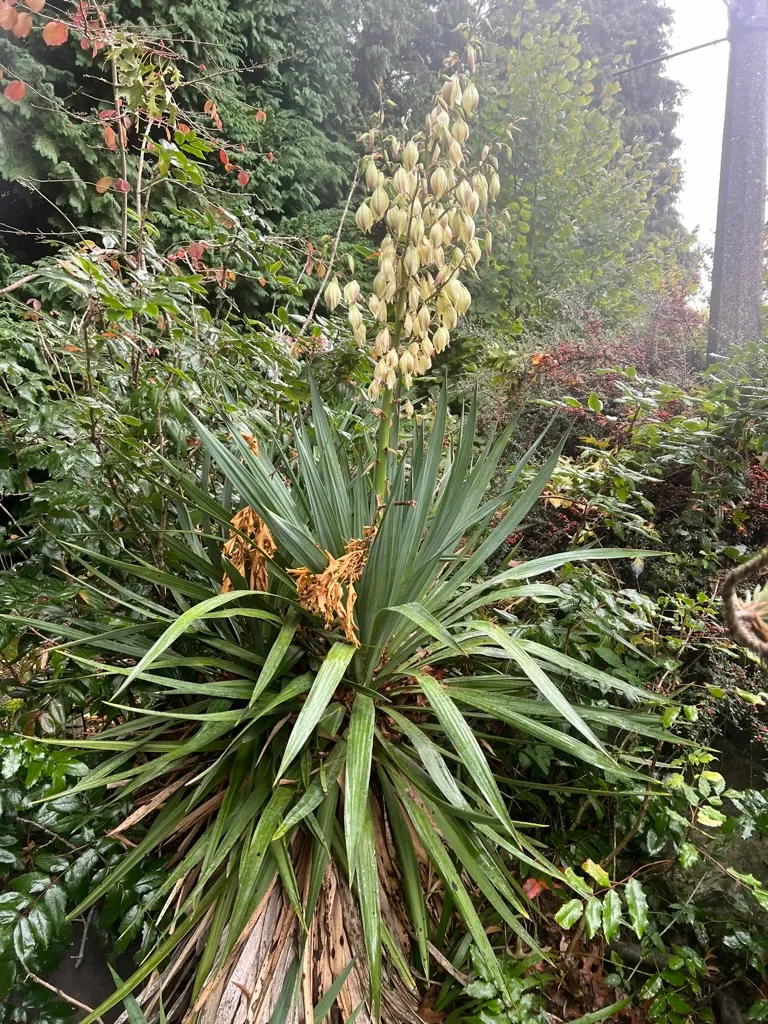
Yucca gloriosa var. tristis is an upright evergreen perennial growing 4–6 feet (1.2–1.8 m) tall and 4–6 feet (1.2–1.8 m) wide, with flower stalks rising to 8–12 feet (2.4–3.7 m). The plant develops a short woody trunk 1–3 feet (30–90 cm) tall over time, topped by a rosette of rigid sword-shaped leaves. Leaves are blue-green to gray-green, 18–30 inches (45–75 cm) long and 2–3 inches (5–7 cm) wide, with pendulous (weeping) tips that curve downward — the trait that gives the variety its name (tristis = drooping) — and a sharp terminal spine 0.25–0.5 inch (6–13 mm) long. In July through September, dense upright panicles 3–5 feet (0.9–1.5 m) long carry creamy-white to pale pink-tinged bell-shaped flowers 2–3 inches (5–7 cm) across, fragrant most strongly at night. Pollination is exclusively by yucca moths (Tegeticula spp.) in an obligate mutualism: the moth is the only pollinator, and moth larvae feed only on yucca seeds. Growth rate is moderate. The plant rots in wet winter soils, and the sharp terminal leaf spines pose a puncture hazard at face and eye level as the trunk develops.
Native Range
Native to the southeastern United States — North Carolina south to Florida along the Atlantic and Gulf coasts. Found on coastal dunes, maritime forests, and sandy soils.Suggested Uses
Grown as a coastal specimen, in xeriscape gardens, and in dry borders, spaced 4–6 feet (1.2–1.8 m). Standard placement is 4–6 feet (1.2–1.8 m) from walkways and play areas due to the sharp terminal leaf spines. Tolerates coastal salt spray and sandy soils. Native to the southeastern US Atlantic and Gulf coasts.How to Identify
Appearance
Size & Dimensions
Height4' - 6'
Width/Spread4' - 6'
Colors
Bloom Information
Blooms July through September in zones 6–10. Creamy-white to pale pink-tinged bell-shaped flowers 2–3 inches (5–7 cm) across appear in dense upright panicles 3–5 feet (0.9–1.5 m) long on stalks 8–12 feet (2.4–3.7 m) tall. Individual flowers last 3–5 days; the full panicle display extends 4 weeks. Flowers open and release fragrance at night, when pollinating yucca moths (Tegeticula spp.) are active.
Detailed Descriptions
Flower Description
creamy white to pale pink-tingedFoliage Description
blue-green to gray-green sword-shaped leaves 18-30 inches (45-75 cm) long with pendulous tips and a sharp terminal spineGrowing Conditions
Sun Requirements
Requires 6-12 hours of direct sunlight daily
• Full Sun: 6+ hours of direct sunlight
• Partial Shade: 3-6 hours of direct sunlight
• Full Shade: Less than 3 hours of direct sunlight
Care & Maintenance
Care Guide
Plant in full sun (6–12 hours direct sun) in well-drained sandy or rocky soil with pH 5.5–7.5. Wet winter soils cause root rot, so sharp drainage is essential, particularly in clay or low-lying sites. Established plants need no supplemental irrigation in most climates. Sharp terminal leaf spines are a puncture hazard at face and eye level once the trunk develops; standard placement is 4–6 feet (1.2–1.8 m) from walkways and play areas. Spent flower stalks are cut at the base after bloom. The plant tolerates coastal salt spray and sandy poor soils.Pruning
Spent flower stalks are cut at the base after bloom. Dead or browning lower leaves are removed in early spring (March), using puncture-resistant gloves and eye protection due to the sharp terminal spines. No other regular pruning is needed.Pruning Schedule
Prune: March
early spring