Yucca, Genus, baccata, Species,
- Genus & species
banana yucca
Southwestern United States and northern Mexico
Overview
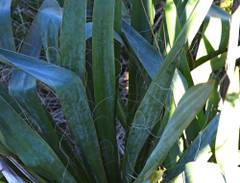
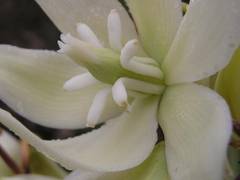
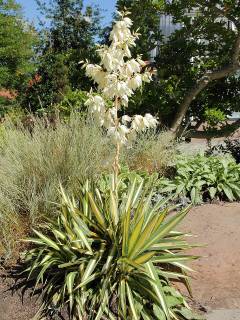
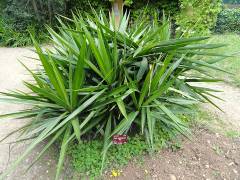
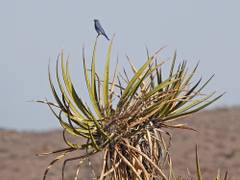
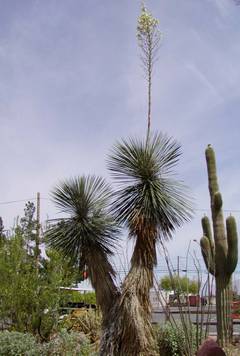
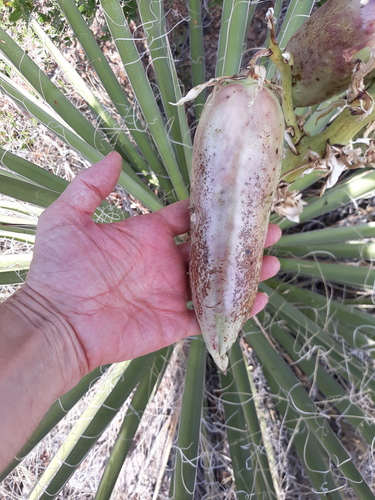
Yucca baccata is an evergreen, stemless to short-stemmed succulent of the southwestern United States and northern Mexico, forming rosettes 2-3 feet (60-90 cm) tall and wide, often clustering into broader clumps. The stiff, sword-shaped blue-green leaves are 16-40 inches (40-100 cm) long, edged with curling white fibers and tipped with a sharp spine. In spring a thick flower stalk rises within or just above the foliage, carrying a dense cluster of waxy, bell-shaped cream to white flowers 2-5 inches (5-12 cm) long, sometimes tinged purple-brown outside. Pollinated only by yucca moths, the flowers form fleshy, banana-shaped fruit 3-7 inches (8-18 cm) long that ripen sweet and were a traditional food of Indigenous peoples. Native to dry slopes, mesas, and desert grassland from California to Texas and Mexico, it grows on rocky, sandy, well-drained ground between about 3,000 and 8,000 feet (900-2,400 m). It withstands intense heat, cold, and drought, and is hardy in USDA zones 5-10. Growth is slow, and rosettes flower only every few years. It is intolerant of wet, heavy soil and shade. The rigid spine-tipped leaves limit where it is placed near paths. Leaf fibers were used for cordage and the roots as soap.
Native Range
Native to the southwestern United States and northern Mexico, from southern California and Nevada east to western Texas and south into Chihuahua. It grows on dry rocky slopes, mesas, and desert grassland.Suggested Uses
Used as a structural accent in desert, gravel, and rock gardens, on dry slopes, and in xeriscape plantings, spaced 3-4 feet (0.9-1.2 m) apart. Placed back from walkways because of the sharp leaf tips. Grown for its bold form, edible fruit, and drought tolerance.How to Identify
Appearance
Size & Dimensions
Height2' - 3'
Width/Spread3' - 5'
Colors
Bloom Information
Flowering occurs in spring, April to June. A stout stalk of waxy cream to white bells opens within or just above the leaf rosette. Yucca moths pollinate the flowers, which then form fleshy fruit ripening in summer.
Detailed Descriptions
Flower Description
cream to whiteFoliage Description
blue-greenGrowing Conditions
Sun Requirements
Requires 6-12 hours of direct sunlight daily
• Full Sun: 6+ hours of direct sunlight
• Partial Shade: 3-6 hours of direct sunlight
• Full Shade: Less than 3 hours of direct sunlight
Care & Maintenance
Care Guide
Grow in full sun on dry, rocky or sandy, sharply drained soil; the plant rots in wet or heavy ground. Water sparingly once established, as it survives on desert rainfall. Heat, cold, wind, and drought are all tolerated, and no feeding is needed. It grows slowly and may take several years between flowerings. Hardy in USDA zones 5-10, it suits high desert and xeric gardens. Old rosettes die after flowering but are replaced by offsets.Pruning
Remove spent flower stalks after fruiting and cut away dead lower leaves to keep the rosette clean. Offsets can be separated in spring to start new plants. No other pruning is needed.Pruning Schedule
Prune: July–August
summer
Container Growing
Suitable for container growing
Minimum container size: 7 gallons