Image 1 of 12
1 / 12
Plant Reference
Yucca, Genus, filamentosa, Species,
- Genus & species
yucca
Southeastern United States, from New Jersey to Florida and west to Mississippi
Overview
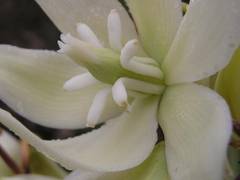
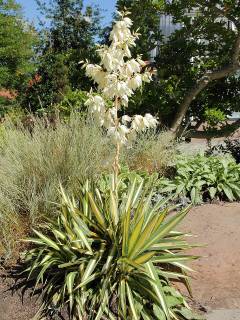
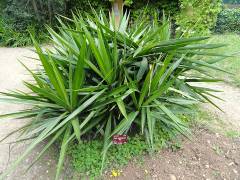
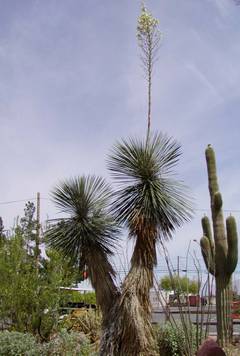
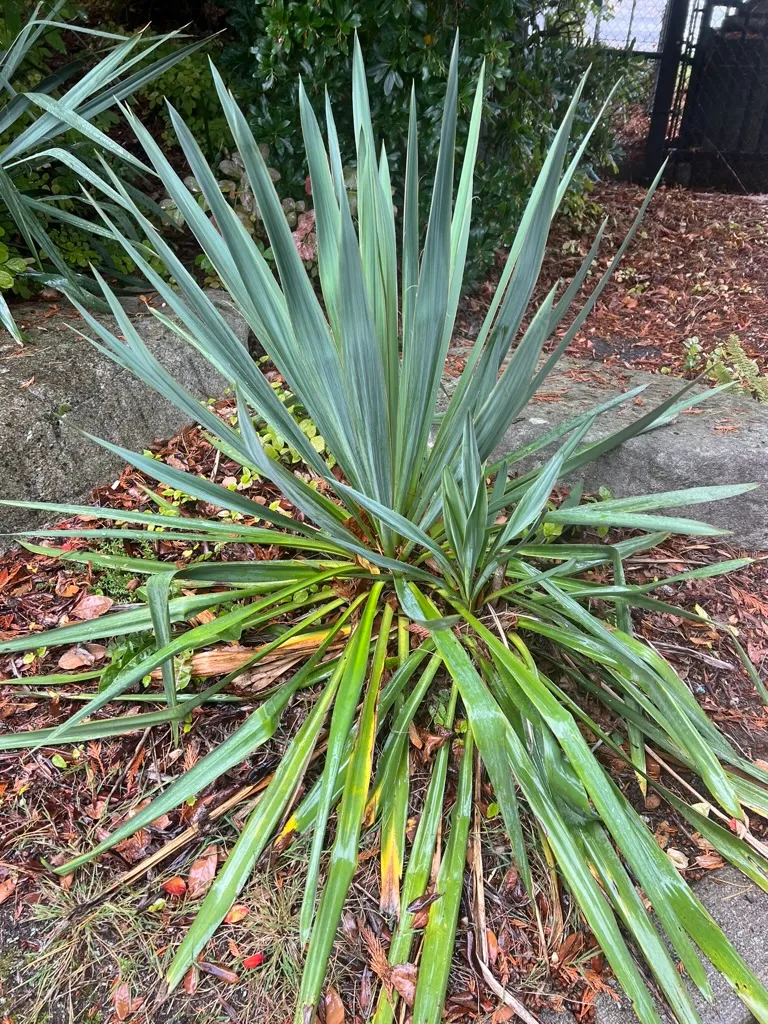
Yucca filamentosa is an acaulescent evergreen perennial forming dense rosettes of sword-shaped leaves at ground level, without a significant trunk. Leaf rosettes reach 2–3 feet (60–90 cm) tall and 3–4 feet (90–120 cm) wide. Leaves are stiff, lance-shaped, 18–30 inches (45–75 cm) long and 0.75–1.5 inches (2–4 cm) wide, blue-green to gray-green, with a sharp terminal spine and curling white filaments fraying from the leaf margins — the feature that gives the species its name. Offsets (pups) form around the base over time, gradually expanding the clump. In summer, typically every 1–2 years, a single flowering stalk rises 4–8 feet (1.2–2.4 m) above the rosette bearing a panicle of nodding, bell-shaped, creamy-white flowers 1.5–2 inches (4–5 cm) long. Pollination in the wild is accomplished exclusively by yucca moths (Tegeticula spp.); plants set seed capsules 1.5–2 inches (4–5 cm) long only when the moth is present. After flowering, the central rosette dies back and is replaced by offsets. The plant tolerates drought, poor soils, and heat once established but rots in waterlogged soils — the wet-soil intolerance is the primary cultural limitation. Sharp terminal leaf spines pose a puncture hazard at planting depth and as the rosette matures.
Native Range
Native to the southeastern United States, from New Jersey south to Florida and west to Mississippi. Found in coastal plains, sandy barrens, roadsides, and open woodland edges in well-drained, often poor soils at low elevations.Suggested Uses
Used as a structural specimen in dry gardens, gravel gardens, and xeriscape plantings. Grown in mixed borders for year-round foliage architecture. Standard spacing is 4–5 feet (1.2–1.5 m) from walkways and play areas due to the sharp terminal leaf spines. Tolerates coastal exposure and sandy soils.How to Identify
Appearance
Size & Dimensions
Height2' - 3'
Width/Spread3' - 4'
Colors
Bloom Information
Blooms June through August in zones 4–9, with peak flowering in July. Flowering occurs every 1–3 years from each individual rosette; newly planted specimens begin flowering within 2–5 years. The flowering stalk develops over 4–6 weeks; individual flowers last 3–5 days, and the full panicle extends the display to 3–4 weeks. Flowers open in the evening and are most receptive to pollination overnight.
Detailed Descriptions
Foliage Description
blue-green to gray-green with white curling filaments on marginsGrowing Conditions
Sun Requirements
Requires 6-12 hours of direct sunlight daily
• Full Sun: 6+ hours of direct sunlight
• Partial Shade: 3-6 hours of direct sunlight
• Full Shade: Less than 3 hours of direct sunlight
Care & Maintenance
Care Guide
Plant in full sun in well-drained to dry soil; standing water and poorly drained clay soils cause crown rot and plant death. No supplemental irrigation is needed once established in most climates; excessive watering shortens plant life. Dead lower leaves can be removed annually from the base of the rosette using thick puncture-resistant gloves due to the sharp terminal spines. After the central rosette flowers and dies back, the spent rosette is removed and offsets at the base continue growth. Soil amendments of organic matter increase moisture retention and promote rot, so planting holes are filled with native sandy soil rather than amended mixes. In humid climates, leaf spot diseases mark the foliage; affected leaves are removed and air circulation is improved.Pruning
Dead or browning lower leaves are pulled downward sharply or cut at the base, using puncture-resistant gloves due to the sharp terminal leaf spines. The spent flower stalk is cut to the base after seed capsules have matured or once the stalk begins to brown. Pups (offsets) are removed from around the base with a sharp spade if space is limited; detached pups with roots can be replanted. No other regular pruning is needed.Pruning Schedule
Prune: March
early spring