Yucca, Genus, spp., Multiple species,
- Genus
- Multiple species
yuccas
Overview
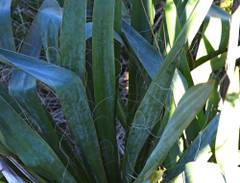
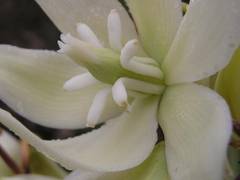
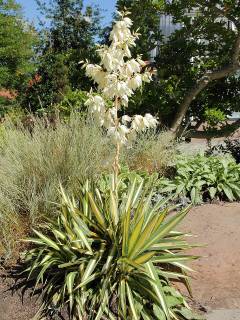
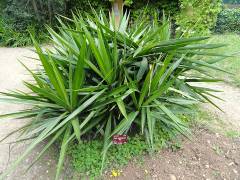
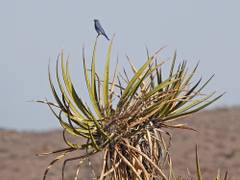
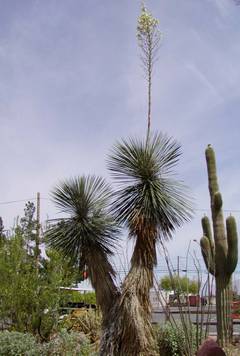
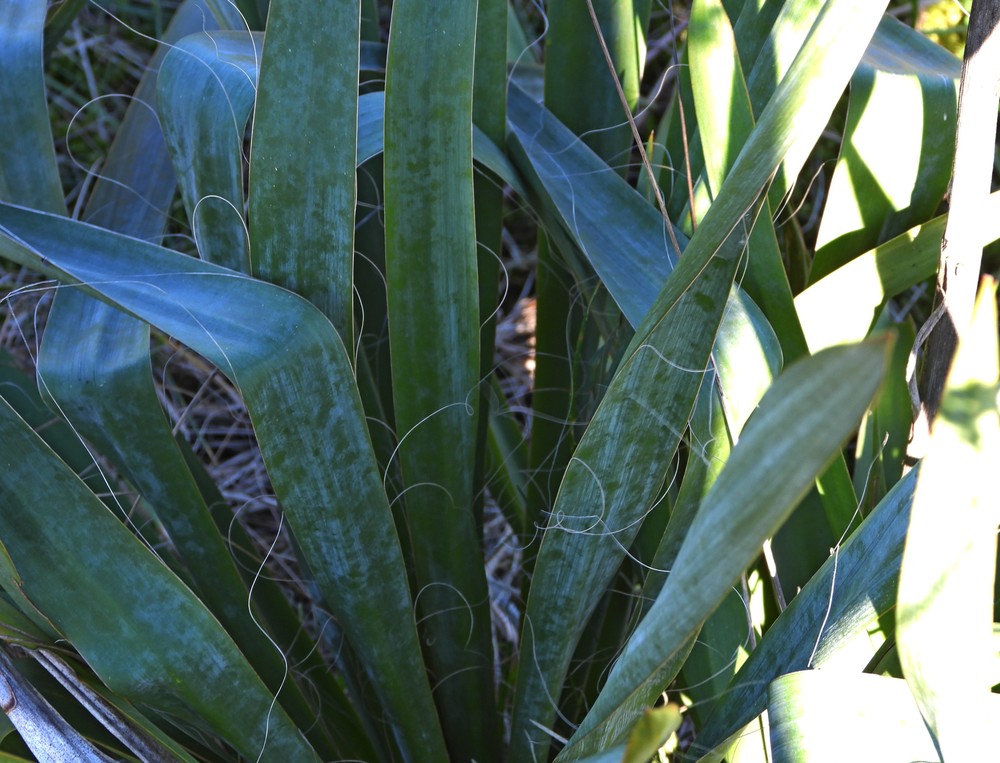
Yucca is a genus of about 50 species of evergreen perennials, shrubs, and small trees in the family Asparagaceae, native to the hot, dry regions of North and Central America and the Caribbean. Plants form rosettes of stiff, sword-shaped leaves 30–100 cm (12–40 in) long, many tipped with a sharp spine and edged with curling fibers. Stemless species sit at ground level, while others develop woody trunks, and tree forms such as Y. brevifolia reach 9 m (30 ft). In summer, a tall panicle rises above the foliage carrying dozens of pendent, bell-shaped white to cream flowers, each 3–5 cm (1.2–2 in) long. The flowers are pollinated solely by yucca moths, which pack pollen onto the stigma and lay eggs in the ovary, a mutual dependence found nowhere else. Leaves are rigid and the spine-tipped foliage can injure on contact. After flowering, a rosette of stemless species often dies but is replaced by offsets at the base. Plants withstand intense heat and drought but rot in wet or poorly drained soils.
Native Range
The genus is native to the Americas, centered on Mexico and the southwestern United States, with species extending east to the Atlantic coast, north into the Great Plains, and south through Central America into the Caribbean.Suggested Uses
Used in xeriscape, gravel, and desert-themed plantings, as architectural specimens, and in containers in colder regions. The bold rosettes anchor dry borders and rock gardens. The spine-tipped leaves limit placement near paths, seating, and play areas.How to Identify
Appearance
Size & Dimensions
Height2' - 30'
Width/Spread2' - 5'
Bloom Information
Flowering occurs mainly in late spring and summer, broadly May to July, though timing shifts with species and climate. A single tall panicle holds dozens of bell-shaped flowers that open over two to three weeks. Many plants flower only after several years of growth, and some species bloom irregularly from year to year.
Detailed Descriptions
Flower Description
white to creamFoliage Description
blue-green to gray-greenGrowing Conditions
Sun Requirements
Requires 6-12 hours of direct sunlight daily
• Full Sun: 6+ hours of direct sunlight
• Partial Shade: 3-6 hours of direct sunlight
• Full Shade: Less than 3 hours of direct sunlight
Care & Maintenance
Care Guide
Most species grow in full sun and fast-draining, sandy or rocky soil with a pH of 6.0 to 7.5. Established plants are deeply drought-tolerant and store water in their roots and stems. Wet, heavy soils and winter moisture cause root and crown rot, the main cause of loss in cultivation. Hardiness spans USDA zones 4–10 across the genus, with plains species tolerating the lowest temperatures and desert species limited to mild, frost-free areas. Plants need little feeding and decline in rich, moist conditions. Offsets can be separated to propagate stemless species.Pruning
Removing spent flower stalks after bloom keeps plants tidy and directs energy to offsets. Cutting away dead lower leaves exposes the trunk on tree forms. Foliage needs no routine pruning beyond removing damaged leaves.Pruning Schedule
Prune: July
summer
Container Growing
Suitable for container growing
Minimum container size: 5 gallons