Vriesea, Genus, spp., Multiple species,
- Genus
- Multiple species
vriesea
Overview
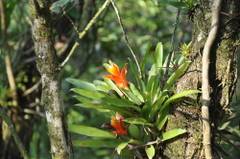
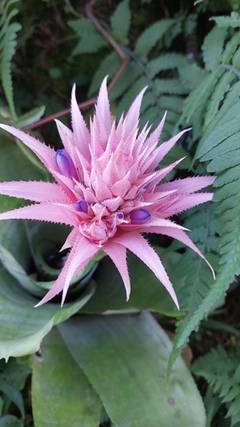
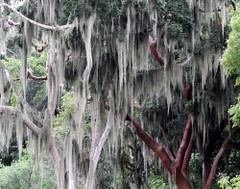
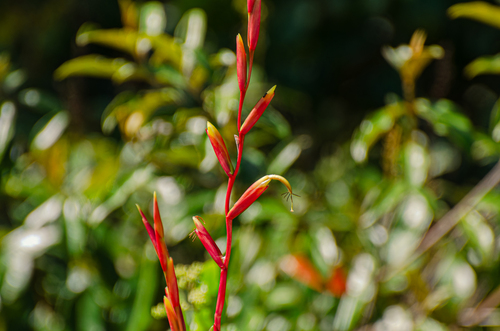
Vriesea is a genus of about 250 evergreen bromeliads in the family Bromeliaceae, native to the tropical Americas from Mexico and the Caribbean to Brazil and Argentina. Most are epiphytes growing on trees, with some on rocks or the ground, forming rosettes 8-36 inches (20-90 cm) tall and wide. The strap-shaped leaves are smooth-edged and spineless, arching outward from a central cup that holds rainwater, often glossy green and in some species banded, mottled, or purple-marked. From the center rises a flower spike, in many species flattened and sword-like, with overlapping bracts in red, orange, yellow, or green that hold their color for weeks to months; the small tubular flowers are shorter-lived. Each rosette flowers once, then slowly dies as it produces offsets, called pups, around its base. The genus needs warmth, humidity, and bright filtered light, and the foliage scorches in direct sun and rots if the central cup stays stale or the roots stay waterlogged. Most species are frost-tender and grown indoors or under glass outside the tropics.
Native Range
Native to the tropical Americas, from southern Mexico and the West Indies south through Central America to Brazil, Bolivia, and northern Argentina. Species grow mainly as epiphytes in humid rainforest and cloud forest, with some on rocks and forest floors, from lowlands to mountain elevations.Suggested Uses
Grown as a houseplant, mounted on bark, and in terrariums and shaded, frost-free tropical gardens, where it can be set in tree forks or grouped at 8-18 inches (20-45 cm) spacing. The long-lasting bract color suits warm, humid rooms and indoor displays. In the tropics it is naturalized onto trees and rocks in shaded, humid positions.How to Identify
Appearance
Size & Dimensions
Height8" - 3'
Width/Spread8" - 3'
Bloom Information
Bloom timing varies by species and growing conditions rather than a fixed season, and indoor plants are often brought into flower by suppliers. The colorful bracts last from several weeks to a few months, far longer than the small tubular flowers held between them. Each rosette flowers only once in its life, then produces offsets.
Detailed Descriptions
Flower Description
red, orange, or yellow bractsFoliage Description
green, often banded or mottledGrowing Conditions
Sun Requirements
Tolerates up to 4 hours of direct sunlight daily
• Full Sun: 6+ hours of direct sunlight
• Partial Shade: 3-6 hours of direct sunlight
• Full Shade: Less than 3 hours of direct sunlight
Care & Maintenance
Care Guide
Grows in bright, filtered light in a coarse, free-draining, bark-based epiphyte mix with a pH from 5.0 to 6.5, or mounted on bark. Warmth between 60 and 80 F (16 and 27 C) and high humidity suit it, and the plant is damaged below about 45 F (7 C). The central cup is kept topped with water, ideally rainwater or filtered water, and flushed regularly so it does not go stale; the potting mix is kept lightly moist but never waterlogged. Direct midday sun scorches the leaves, while deep shade weakens the rosette and dulls any leaf markings. Light feeding is applied to the mix or as a dilute foliar spray in the growing season. After flowering the parent rosette is left to feed its pups, which are separated once they reach about one-third its size.Pruning
The spent flower spike is cut out near its base once the bracts fade. As the parent rosette declines after flowering, its outer leaves are trimmed away as they brown. Offsets are detached with a clean cut when they reach about one-third the size of the parent and potted on.Container Growing
Suitable for container growing
Minimum container size: 1 gallons