Guzmania, Genus, lingulata, Species,
- Genus & species
scarlet star
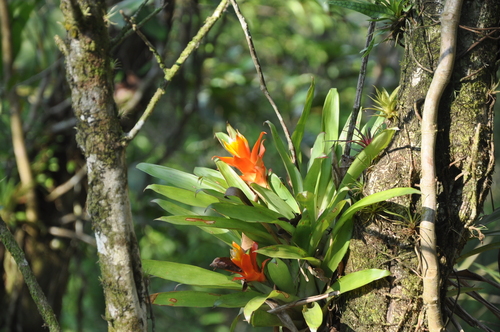
Central and South America — from southern Mexico south to Brazil, epiphytic in rainforest canopy
Overview
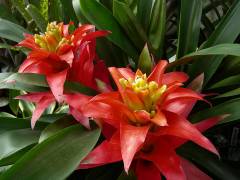
Guzmania lingulata is a tank-type bromeliad, growing 12–18 inches (30–45 cm) tall and wide. Dark green, glossy, strap-shaped leaves form a rosette with a central cup (tank) that holds water — a characteristic of tank bromeliads. The colorful central display in red, orange, yellow, or pink consists of bracts (modified leaves), not petals; the true flowers are small, white, and short-lived within the bracts. The bract display persists for 3–5 months. Each rosette is monocarpic: it flowers once, then the mother rosette gradually declines over several months while producing 1–3 basal offsets (pups). Offsets can be separated when they reach one-third the mother's size. Epiphytic in the wild — grows on tree branches in Central and South American rainforests, absorbing moisture through leaf bases and the central cup rather than relying heavily on roots. Requires an airy, fast-draining potting mix (orchid bark or bromeliad mix). Fill the central cup with water and refresh weekly to prevent stagnation. Non-toxic to cats and dogs. Sensitive to cold below 55°F (13°C), and prolonged waterlogging of the potting mix causes root rot.
Native Range
Guzmania lingulata is native to Central and South America, from Costa Rica through Brazil, where it grows as an epiphyte in tropical rainforest canopy.Suggested Uses
Grown as an indoor flowering plant in containers of 1–2 gallons (4–8 liters) using bromeliad or orchid bark mix. Suitable for bright windowsills, offices, and bathroom counters with indirect light. In zones 10–12, used as an epiphytic landscape plant mounted on trees or placed in shaded garden beds.How to Identify
Appearance
Size & Dimensions
Height1' - 1'6"
Width/Spread1' - 1'6"
Bloom Information
Bract display lasts 3–5 months. True flowers are small and white, emerging sequentially from within the bracts over several weeks. Each rosette blooms once (monocarpic); offsets replace the spent mother.
Detailed Descriptions
Flower Description
Brilliant red, orange, yellow, or pink long-lasting bracts (the colored 'flower' is bracts — the true flowers are tiny and hidden)Foliage Description
Dark green, glossy, strap-shaped, forming a central rosette with a water-holding cup (tank)Growing Conditions
Sun Requirements
Requires 4-6 hours of direct sunlight daily
• Full Sun: 6+ hours of direct sunlight
• Partial Shade: 3-6 hours of direct sunlight
• Full Shade: Less than 3 hours of direct sunlight
Care & Maintenance
Care Guide
Bright indirect light; direct sun may bleach the bract color. Water into the central cup and refresh weekly to prevent stagnation. Keep the potting mix lightly moist but not saturated — overwatering causes root rot in the limited root system. Fertilize monthly at quarter strength through the cup or foliar spray. Maintain temperatures above 55°F (13°C). Non-toxic to pets.Pruning
Remove the spent mother rosette after it browns. Separate offsets at one-third mother size. No other pruning required.Container Growing
Suitable for container growing
Minimum container size: 1 gallons