Aechmea, Genus, fasciata, Species,
- Genus & species
silver vase bromeliad
Overview
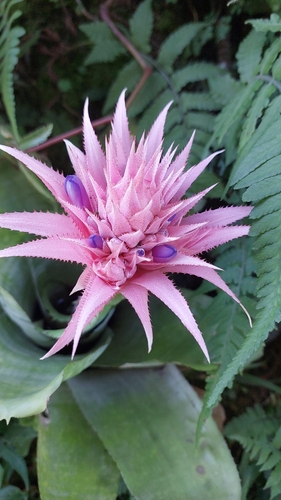
Aechmea fasciata is a tank bromeliad with banded foliage and a persistent pink inflorescence, growing 18-24 inches (45-60 cm) tall and wide. Stiff, silvery-gray-green leaves with horizontal gray-white crossbands form a rigid urn-shaped rosette — the species name 'fasciata' means 'banded.' The inflorescence is a compound spike of pink bracts with small blue-purple true flowers that emerge sequentially; the pink bract structure persists for 3-6 months after the true flowers fade. Leaf margins have small, sharp serrations (0.5-1 mm teeth) that can scratch skin — gloves are recommended during handling. Monocarpic: each rosette flowers once, then declines over several months while producing 1-3 basal offsets (pups). More drought-tolerant than Guzmania lingulata due to thicker, waxier leaf surfaces that reduce transpiration. Epiphytic in the Brazilian Atlantic Forest — requires airy, fast-draining potting mix. Fill the central urn with water; refresh weekly. Non-toxic, though the spiny leaf margins are a handling hazard. Sensitive to temperatures below 55°F (13°C). Overwatering the potting mix (rather than the cup) leads to root rot.
Native Range
Aechmea fasciata is native to southeastern Brazil, where it grows as an epiphyte in the Atlantic Forest.Suggested Uses
Grown in containers of 2-3 gallons (8-12 liters) using bromeliad or orchid bark mix. Positioned on tabletops, shelves, or plant stands in bright indirect light. In zones 10-12, mounted on trees or placed in shaded garden beds as an epiphytic landscape plant.How to Identify
Appearance
Size & Dimensions
Height1'6" - 2'
Width/Spread1'6" - 2'
Bloom Information
Pink bract inflorescence with blue-purple true flowers persists 3-6 months. True flowers emerge sequentially over several weeks. Each rosette blooms once; offsets replace the spent mother.
Detailed Descriptions
Flower Description
Pink to coral spiky inflorescence with small blue-purple true flowers — the pink spike lasts 3-6 MONTHSFoliage Description
Silvery-gray-green with horizontal gray-white banding, stiff, urn-shaped rosette with SPINY leaf marginsGrowing Conditions
Sun Requirements
Requires 4-6 hours of direct sunlight daily
• Full Sun: 6+ hours of direct sunlight
• Partial Shade: 3-6 hours of direct sunlight
• Full Shade: Less than 3 hours of direct sunlight
Care & Maintenance
Care Guide
Bright indirect light; tolerates more light than Guzmania. Water into the central urn and refresh weekly. The potting mix is kept barely moist — the limited root system rots in saturated media. Fertilize monthly at quarter strength through the urn. Maintain temperatures above 55°F (13°C). Serrated leaf margins can scratch skin — gloves are recommended during handling. Non-toxic.Pruning
The spent mother rosette is removed after browning. Offsets are separated when they reach one-third mother size. Gloves are recommended due to serrated leaf margins.Container Growing
Suitable for container growing
Minimum container size: 3 gallons