Tillandsia, Genus, spp., Multiple species,
- Genus
- Multiple species
air plant
Southern United States through Central and South America
SunPart Shade – Full Sun
Overview
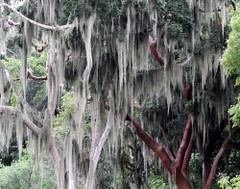
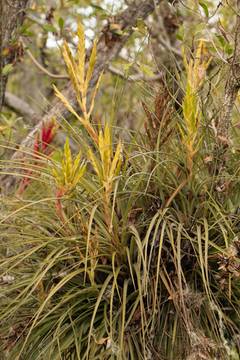
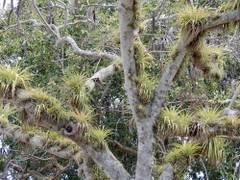
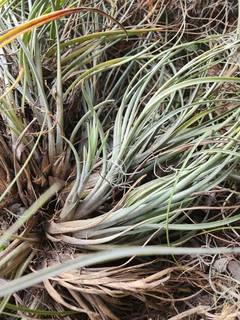
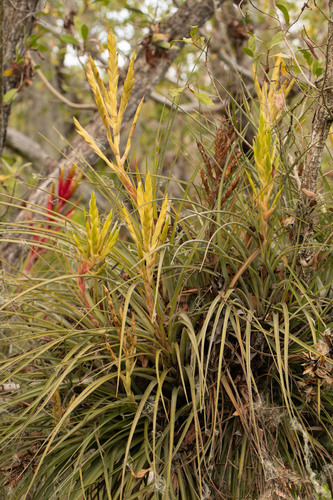
Tillandsia (air plants) are epiphytic bromeliads, ranging from 2–12 inches (5–30 cm) depending on the species (the genus contains 650+ species). Require no soil — the roots function only for attachment, not nutrient or water absorption. Water and mineral nutrients are absorbed through specialized leaf scales called trichomes, which are visible as a silvery or gray coating on xeric (dry-adapted) species. Two growth types: xeric species (silvery-gray leaves, thick trichome coating, tolerate drier conditions, more sun) and mesic species (bright green leaves, thinner trichome layer, need more moisture and shade). Water by soaking the entire plant in room-temperature water for 20–30 minutes, 1–2 times per week; shake off excess water after soaking — water trapped in the leaf base causes rot. Good air circulation after watering is critical. Monocarpic: each rosette blooms once at maturity, then gradually dies while producing 1–3 pup offsets at the base. Flower colors include pink, purple, red, and orange bracts with small tubular true flowers — hummingbird-pollinated in the wild. Native from the southern United States (Spanish moss, T. usneoides, is a Tillandsia) through Central and South America. Non-toxic to cats and dogs. Bright indirect light for mesic types; full sun for xeric types. No soil — mounted on driftwood, shells, wire, or placed in open containers. Growth rate is slow. Frost-tender.
Native Range
The Tillandsia genus (650+ species) is native from the southern United States (Florida, Texas, Louisiana) through Central and South America to Argentina. Spanish moss (T. usneoides) is the northernmost species.Suggested Uses
Mounted on driftwood, shells, wire frames, or placed in open glass containers (terrariums without lids). No soil needed. Non-toxic to cats and dogs. The soilless epiphytic habit suits creative display. Frost-tender.How to Identify
Appearance
Size & Dimensions
Height2" - 1'
Width/Spread2" - 1'
Bloom Information
Variable by species. Each rosette blooms once at maturity. Colored bracts (pink, purple, red, orange) with small tubular true flowers. Hummingbird-pollinated in the wild. The rosette dies after blooming; pups replace it.
Detailed Descriptions
Flower Description
Variable: pink, purple, red, orange bracts with small tubular flowersFoliage Description
Gray-green to silvery (xeric types) or bright green (mesic types)Growing Conditions
Sun Requirements
Requires 4-8 hours of direct sunlight daily
• Full Sun: 6+ hours of direct sunlight
• Partial Shade: 3-6 hours of direct sunlight
• Full Shade: Less than 3 hours of direct sunlight
Care & Maintenance
Care Guide
Bright indirect light (mesic types) or full sun (xeric types). No soil — mounted or free-standing. Soak in water 20–30 minutes, 1–2 times per week. Shake off excess — water trapped in the base causes rot. Good air circulation. Monocarpic — separate pups at one-third parent size. Non-toxic. Frost-tender.Pruning
Remove browned outer leaves by gently pulling them from the base. After the mother rosette dies post-bloom, separate pup offsets when they reach one-third the parent size.Container Growing
Suitable for container growing
0