Tillandsia, Genus, ×, Hybrid, floridana, Species,
- Genus & species
- Hybrid
Florida airplant
Overview
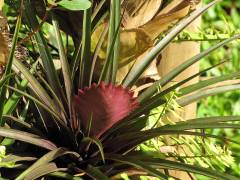
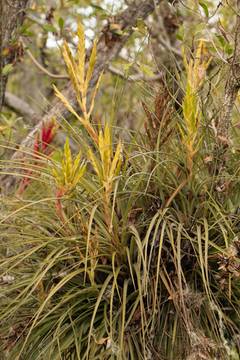
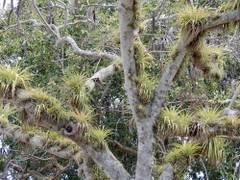
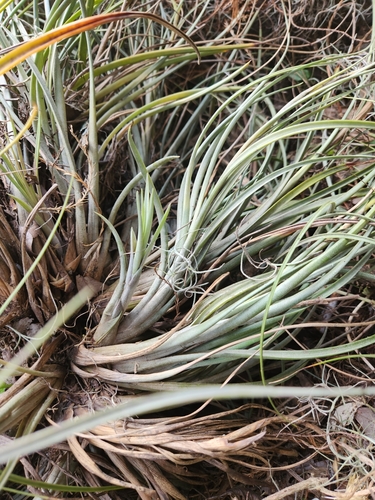
Tillandsia × floridana is a natural hybrid between T. bartramii and T. fasciculata, growing as an epiphyte on tree bark and branches. Plants form a rosette of stiff, narrow, channeled leaves 6-12 inches (15-30 cm) long, grey-green and coated in silvery trichomes that absorb water and nutrients from the air. The rosette spans 4-8 inches (10-20 cm) across. In spring a branched flower spike rises 8-16 inches (20-40 cm) tall, carrying flattened red to rose-pink bracts and tubular violet flowers about 1-1.5 inches (2.5-4 cm) long. After flowering the parent rosette produces 2-4 offsets at its base and slowly dies over 1-2 years. The roots serve mainly for anchorage rather than water uptake. Growth is slow, and rosettes take 2-3 years to reach flowering size. Plants withstand brief dry spells but decline in sustained low humidity, and foliage is damaged below 30°F (-1°C).
Native Range
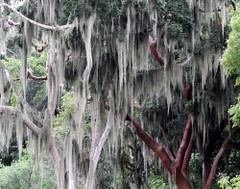
Occurs naturally in central and southern Florida, United States, where the ranges of its parent species overlap. Grows as an epiphyte in hammocks, swamps, and open woodland, attached to the bark of oaks, cypress, and other trees at low elevations.Suggested Uses
Grown mounted on bark or wood, in glass globes, or in open terrariums without soil. Used on frost-free patios and in bright indoor positions, and outdoors year-round in zones 9-11 attached to trees or fences. Clusters of offsets build into groupings 8-12 inches (20-30 cm) wide over several years.How to Identify
Appearance
Size & Dimensions
Height8" - 1'4"
Width/Spread4" - 8"
Colors
Bloom Information
Flowers chiefly in spring, from March to May, with occasional bloom into early summer. Each inflorescence stays colorful for 4-8 weeks as the bracts hold their red tone longer than the short-lived individual flowers. Bloom timing shifts earlier in warm years and in consistently bright positions.
Detailed Descriptions
Foliage Description
grey-greenGrowing Conditions
Sun Requirements
Requires 4-6 hours of direct sunlight daily
• Full Sun: 6+ hours of direct sunlight
• Partial Shade: 3-6 hours of direct sunlight
• Full Shade: Less than 3 hours of direct sunlight
Care & Maintenance
Care Guide
Mount on bark, cork, or driftwood, or rest the plant in an open holder without soil. Water by misting 2-4 times per week or soaking for 20-30 minutes weekly, then shaking out trapped water to limit crown rot. Bright, filtered light suits growth, while direct midday sun through glass scorches the leaves. Daytime temperatures of 65-85°F (18-29°C) support active growth, and exposure below 30°F (-1°C) causes tissue damage. Offsets can be left attached to form a clump or separated once they reach one-third the size of the parent. Spider mites and scale occur in dry indoor air.Pruning
Remove spent flower spikes at the base once the bracts fade and dry. Trim dead outer leaves as they brown at the rosette margin. No other cutting is needed, since the parent rosette declines naturally after flowering and is replaced by offsets.Pruning Schedule
late spring
Container Growing
Suitable for container growing
Minimum container size: 1 gallons