Vitis, Genus, riparia, Species,
- Genus & species
riverbank grape
Overview
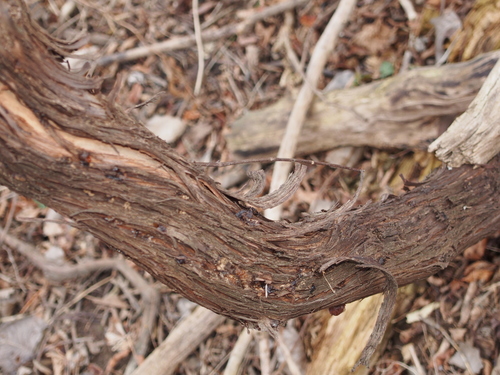
Vitis riparia is a deciduous woody vine in the grape family that climbs 15-75 feet (4.5-23 m) into trees and shrubs using forked tendrils borne opposite the leaves. Stems are reddish when young, becoming grey-brown with shredding bark on older wood. Leaves are alternate, broadly ovate, 3-8 inches (8-20 cm) long, with three shallow lobes and coarse marginal teeth, turning yellow in autumn. Plants are usually dioecious, with male and female flowers on separate vines. Small greenish flowers open in late spring and carry a strong fragrance. Female vines produce clusters of blue-black berries 0.25-0.5 inch (6-12 mm) across, coated with a pale waxy bloom, ripening in late summer. The fruit is tart and high in acid, and is taken by many birds and mammals. Vines grow rapidly and can blanket and shade out smaller plants or weigh down young trees. The species tolerates cold to USDA zone 2, more than most cultivated grapes, and is used as grafting rootstock and in grape breeding. Only female vines bear fruit.
Native Range
Vitis riparia is native to central and eastern North America, ranging from Quebec and Manitoba south to Texas and the Appalachians. It grows along riverbanks, streams, floodplains, fencerows, and woodland edges, often in moist soils.Suggested Uses
Grown on arbors, fences, and trellises for screening, and used in cold-climate grape breeding and as grafting rootstock. The fruit is made into jelly and juice. It also stabilizes streambanks in naturalized plantings.How to Identify
Appearance
Size & Dimensions
Height15' - 75'
Width/Spread10' - 20'
Bloom Information
Greenish, fragrant flowers open in May and June in branched clusters. Male and female flowers occur on separate plants, so only female vines set fruit. Berries ripen from August into September.
Detailed Descriptions
Foliage Description
greenGrowing Conditions
Sun Requirements
Requires 4-10 hours of direct sunlight daily
• Full Sun: 6+ hours of direct sunlight
• Partial Shade: 3-6 hours of direct sunlight
• Full Shade: Less than 3 hours of direct sunlight
Care & Maintenance
Care Guide
Plants grow in full sun to part shade and adapt to a wide range of soils, growing fastest in moist, fertile ground near water. Established vines tolerate flooding, drought, and cold to USDA zone 2. A sturdy fence, arbor, or tree supports the tendrils, since the vine can reach 75 feet (23 m). Annual growth is rapid and may need containment near smaller plantings. The species is sometimes affected by powdery mildew and grape leafhopper but generally grows without intensive care. Both male and female vines are needed for fruit set.Pruning
Pruning is done in late winter while the vine is fully dormant, since cuts made in late spring bleed sap heavily. Vines tolerate hard renewal pruning to control size and remove tangled growth. Thinning congested stems improves air flow and reduces mildew.Pruning Schedule
Prune: February–March
winter