Vitis, Genus, mustangensis, Species,
- Genus & species
mustang grape
Overview
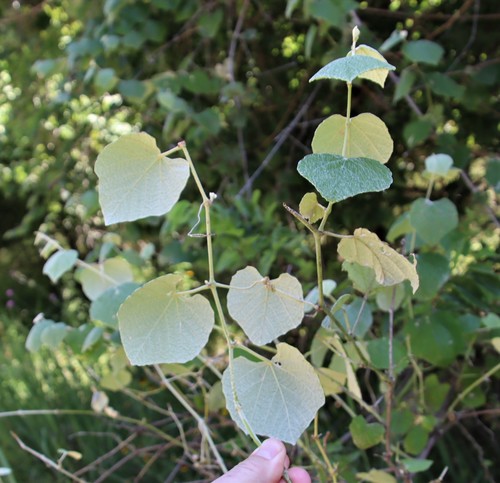
Vitis mustangensis is a vigorous deciduous woody vine in the grape family, climbing 20-40 feet (6-12 m) into trees and over fences by means of forked tendrils. New shoots and the undersides of the leaves are densely coated with white to rusty woolly hairs, a feature that separates it from other grapes in its range. The rounded to shallowly lobed leaves are 3-5 inches (7.5-13 cm) wide. Small greenish flowers appear in spring on plants that are usually either male or female, so fruit set depends on nearby pollen sources. Clusters of thick-skinned purple-black grapes 0.5-0.75 inch (13-19 mm) across ripen in summer; the juice and skins are highly acidic and can irritate skin and lips when raw. The vine grows along woodland edges, fencerows, riverbanks, and roadsides on a range of soils, tolerating heat and drought once rooted. Its vigor can smother small trees and shrubs, so it needs ample space and a strong support. Fruit is used for jelly and wine after cooking.
Native Range
Native to the south-central United States, mainly Texas, Oklahoma, Louisiana, Arkansas, and Mississippi, with scattered populations into the Southeast. It grows along woodland edges, riverbanks, fencerows, and roadsides.Suggested Uses
Grown on arbors, fences, and trellises for screening, and in wildlife plantings where the fruit feeds birds and mammals. The cooked fruit is made into jelly and wine.How to Identify
Appearance
Size & Dimensions
Height20' - 40'
Width/Spread10' - 20'
Bloom Information
Small greenish flowers open in clusters from March to May, before or with the expanding leaves. Plants are usually male or female, so only female vines set fruit. Grapes ripen from June into August.
Detailed Descriptions
Foliage Description
greenGrowing Conditions
Sun Requirements
Requires 6-10 hours of direct sunlight daily
• Full Sun: 6+ hours of direct sunlight
• Partial Shade: 3-6 hours of direct sunlight
• Full Shade: Less than 3 hours of direct sunlight
Care & Maintenance
Care Guide
Grows in full sun to part shade on well-drained soils, including sand, loam, clay, and limestone, and tolerates heat and drought once established. A sturdy trellis, arbor, or fence is needed to carry the heavy growth. Annual dormant pruning controls the size and improves air flow. The vine needs little fertilizer and carries few serious pests in its native range. Both male and female vines are required for fruit. It can resprout from the root after cutting, so removal from unwanted areas takes persistence.Pruning
Pruning in winter while dormant shortens the previous season''s canes and keeps the vine within its support. Hard renewal cuts are tolerated, as the plant resprouts readily from old wood and roots.Pruning Schedule
winter