Viburnum, Genus, lentago, Species,
- Genus & species
nannyberry
Overview
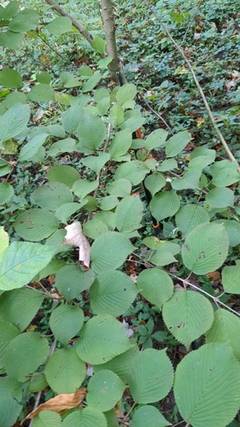
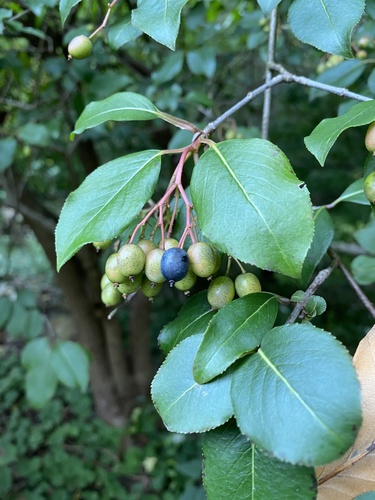
Viburnum lentago is a large deciduous shrub or small tree of eastern and central North America, growing 14-20 feet (4.3-6 m) tall and 6-12 feet (1.8-3.7 m) wide, often with multiple arching stems and a tendency to sucker into a broad colony. The glossy dark green leaves are 2-4 inches (5-10 cm) long, finely toothed, with winged leaf stalks, turning shades of red and purple in autumn. In late spring, flat-topped clusters 3-5 inches (7.5-13 cm) wide carry many small creamy-white flowers. These give way to oval fruits 0.5 inch (13 mm) long that ripen from green through pink-red to blue-black, hanging on red stalks and softening to a sweet, edible pulp. The species grows along stream banks, woodland edges, fence rows, and moist slopes, tolerating shade, varied soils, and seasonal wetness. Birds feed heavily on the fruit, and the flowers draw pollinators. Limitations include a strong suckering habit that forms thickets, susceptibility to powdery mildew on the foliage in humid sites, and a coarse winter form. The plant can be grown as a single-stemmed small tree or left to form a multi-stemmed screen.
Native Range
Viburnum lentago is native to eastern and central North America, from Quebec and the northeastern United States west to Saskatchewan and the Great Plains and south to the central Appalachians. It grows along streams, woodland edges, fence rows, and on moist slopes.Suggested Uses
Grown as a screen, hedge, or specimen in native, wildlife, and woodland-edge plantings. Used in shelterbelts and naturalized borders where its suckering forms a thicket. Suited to moist sites and rain gardens with room for its mature spread.How to Identify
Appearance
Size & Dimensions
Height14' - 20'
Width/Spread6' - 12'
Bloom Information
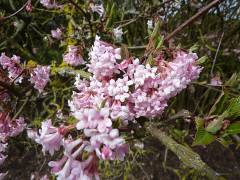
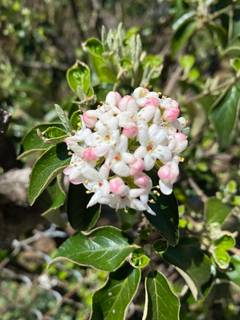
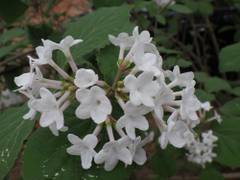
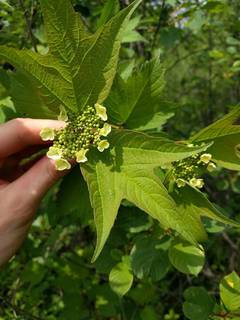
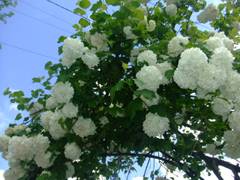
Creamy-white flowers open in late spring, generally May into June, in flat clusters 3-5 inches (7.5-13 cm) across at the branch tips. The flowers last about one to two weeks and carry a light scent. Fruit develops over summer, shifting from green to pink-red and finally blue-black by early fall.
Detailed Descriptions
Foliage Description
Glossy green, red-purple in fallGrowing Conditions
Sun Requirements
Requires 4-8 hours of direct sunlight daily
• Full Sun: 6+ hours of direct sunlight
• Partial Shade: 3-6 hours of direct sunlight
• Full Shade: Less than 3 hours of direct sunlight
Care & Maintenance
Care Guide
Grows in full sun to part shade and adapts to most soils, from clay to sand, at a pH of 5.5-7.5, preferring moist, well-drained ground but tolerating dry and seasonally wet sites. Hardy in USDA zones 2-8, the shrub withstands severe winter cold. It suckers from the roots and forms thickets unless suckers are removed. Powdery mildew can coat the leaves in humid, crowded plantings with poor air movement. Established plants tolerate drought and need little supplemental water. Plants flower and fruit most heavily in full sun.Pruning
Prune after flowering to remove suckers, dead wood, and crossing stems, and to train a single trunk for a tree form. Renewal pruning of the oldest stems keeps a multi-stemmed shrub open. Suckers can be cut to the ground as they emerge.Pruning Schedule
Prune: June–July
late springsummer