Vaccinium, Genus, membranaceum, Species,
- Genus & species
black huckleberry
Overview
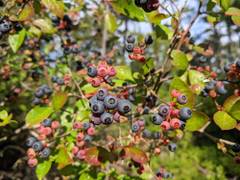
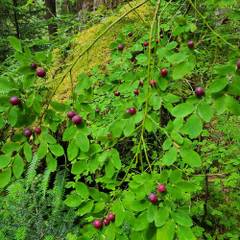
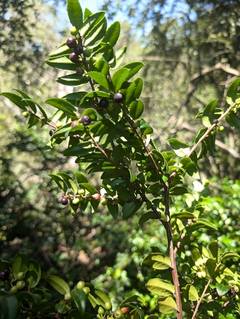
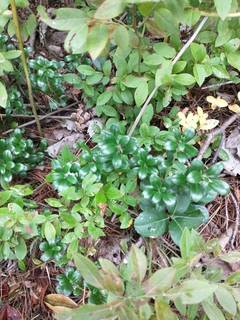
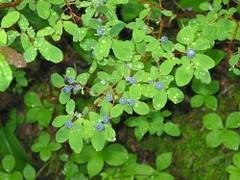
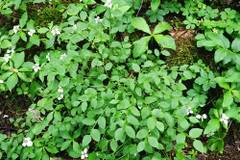
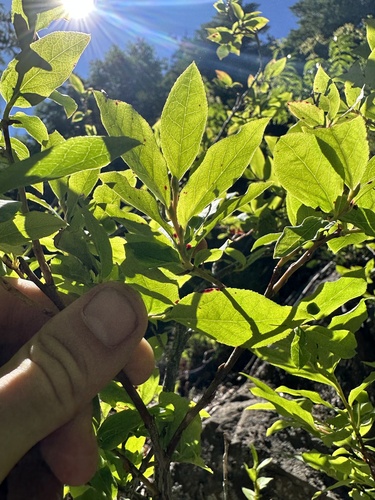
Vaccinium membranaceum is a deciduous shrub reaching 1-5 feet (30-150 cm) tall and 2-4 feet (60-120 cm) wide at maturity, with slender, finely-grooved (angled), green to reddish stems. Leaves are alternate, thin and membranous (giving the species epithet), elliptic to oblong, 1-2 inches (2.5-5 cm) long, with finely toothed margins. Foliage is medium green and turns bright red, orange, and crimson in October before drop. Solitary urn-shaped flowers 0.25-0.4 inches (6-10 mm) long appear in May and June; flowers are creamy yellow with pink tinge, hidden under emerging leaves. Fruit is a round berry 0.25-0.4 inches (6-10 mm) across, ripening from green through red to dark purple-black or rarely red in late July through September; berries lack the waxy bloom of cultivated blueberries and are sweet-tart at ripeness. Plants grow slowly at 2-4 inches (5-10 cm) per year and reach mature size in 8-12 years; lifespan is 20-40 years and longer where wildfire periodically renews the colony. The species supports a major commercial wild-huckleberry harvest in the Pacific Northwest, with tribal members and commercial pickers gathering berries from late summer through early fall.
Native Range
Native to western North America from southeast Alaska south through British Columbia, Washington, Oregon, and northern California, east to Idaho, Montana, Wyoming, and Utah. Found in subalpine forest understory, on open mountain slopes, and on burn sites at 2,000-7,000 feet (600-2,100 m) elevation. Most abundant in moist coniferous forests with acid, well-drained, organic-rich soils derived from volcanic substrate.Suggested Uses
Used in native plant gardens, woodland edge plantings, and dedicated huckleberry patches in zones 3-7 at 24-36 inch (60-90 cm) spacing where soil pH is 4.5-5.5. Berries are eaten by birds, mammals, and humans; wild-harvested huckleberries are the basis for jam, pie, and ice cream specialty products in the Pacific Northwest. Container culture is rarely successful long-term due to mycorrhizal requirements.How to Identify
Appearance
Size & Dimensions
Height1' - 5'
Width/Spread2' - 4'
Bloom Information
Solitary urn-shaped creamy-yellow flowers with pink tinge appear from mid-May through late June in zones 3-7, hidden beneath the expanding foliage. Bloom lasts 2-3 weeks at any single site; bumblebees and native solitary bees are the primary pollinators. Frost during peak bloom can reduce the berry crop by 50-90% in mountain elevations.
Detailed Descriptions
Flower Description
creamy yellow with pink tingeFoliage Description
medium greenGrowing Conditions
Sun Requirements
Requires 4-8 hours of direct sunlight daily
• Full Sun: 6+ hours of direct sunlight
• Partial Shade: 3-6 hours of direct sunlight
• Full Shade: Less than 3 hours of direct sunlight
Care & Maintenance
Care Guide
Grows in part shade to full sun on cool, acid (pH 4.5-5.5), well-drained soils high in organic matter; tolerates neither alkaline soils nor heavy clay. Container-grown plants need 2-3 years of weekly summer water on most sites before establishing the mycorrhizal associations required for berry production. Plants are difficult to transplant from the wild and rarely survive moves; nursery-grown rooted cuttings establish at 60-80% rates. Mature plants in suitable native sites need no supplemental water in zones 3-7 with 25+ inches (63+ cm) annual rainfall. Plants resprout from rhizomes after wildfire and reach pre-fire berry production within 8-12 years; commercial harvest in the western United States depends on fire-renewed stands. Wildlife pressure (bears, grouse, songbirds) commonly removes 60-90% of berry crops in unfenced settings.Pruning
No regular pruning is required; the plant maintains a slender form by shedding older stems naturally. Every 15-20 years, cutting all stems to within 4-6 inches (10-15 cm) of the ground in late winter renews the colony and increases berry production for the following 4-8 years. Single dead stems can be removed at the base any time without affecting next season's bloom.Pruning Schedule
Prune: February–March
winterearly spring