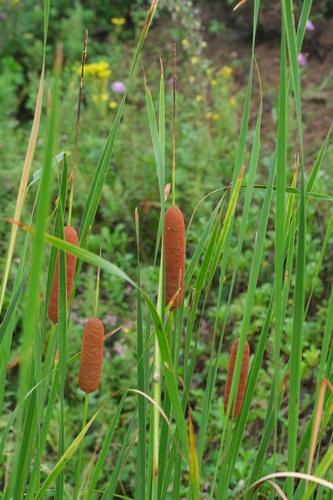
Typha, Genus, orientalis, Species,
- Genus & species
oriental cattail
Eastern Australia, New Zealand, East Asia
Overview
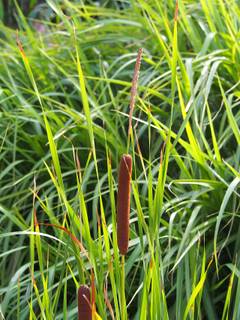
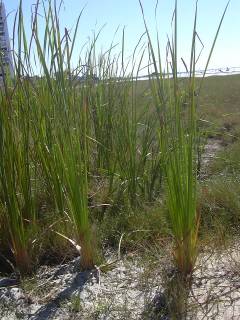
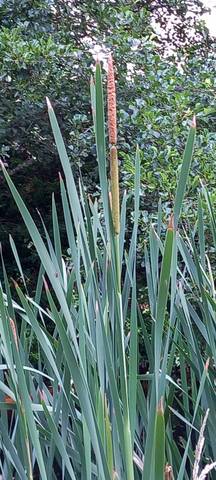
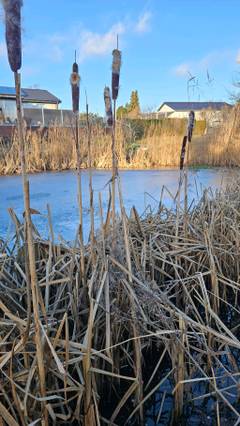
Typha orientalis is a tall, rhizomatous perennial of freshwater wetlands, growing 5-10 feet (1.5-3 m) tall from creeping underground rhizomes. The leaves are flat, strap-like, and spongy, 0.4-0.8 inch (1-2 cm) wide, rising in dense stands from shallow water and saturated mud. In summer, each stem carries the cylindrical flower spike typical of cattails: a dense brown female section below and a narrower male section above, separated by a short gap. The female spike ripens to a soft brown cylinder packed with tiny wind-borne seeds attached to feathery hairs. The species grows across eastern Australia, New Zealand, and parts of eastern Asia, in still or slow-moving freshwater such as pond margins, ditches, and swamps. It spreads rapidly by rhizome and seed and can form dense single-species stands that crowd out other wetland plants, so it is treated as a weed in some regions. Established colonies stabilise banks and shelter wetland wildlife. Its size and spreading habit limit its use to large ponds, dam margins, and constructed wetlands.
Native Range
Typha orientalis is native to eastern and southern Australia, New Zealand, and parts of eastern Asia. It grows in freshwater wetlands, pond and lake margins, slow streams, ditches, and swamps with shallow standing water.Suggested Uses
Used at the margins of large ponds, dams, and constructed wetlands, where it stabilises banks and filters runoff. The brown flower spikes suit naturalistic water plantings and shelter waterbirds. Rapid rhizome spread limits its use in small ponds and formal water features.How to Identify
Appearance
Size & Dimensions
Height5' - 10'
Width/Spread2' - 4'
Bloom Information
Flowering occurs in summer, when the cylindrical brown flower spikes form on tall stems. The upper male section sheds pollen and withers, while the lower female section ripens into a soft brown cylinder. Seeds release on feathery hairs through autumn and winter.
Detailed Descriptions
Foliage Description
green to grey-greenGrowing Conditions
Sun Requirements
Requires 6-12 hours of direct sunlight daily
• Full Sun: 6+ hours of direct sunlight
• Partial Shade: 3-6 hours of direct sunlight
• Full Shade: Less than 3 hours of direct sunlight
Care & Maintenance
Care Guide
Grow Typha orientalis in full sun in shallow fresh water or permanently saturated soil at a pond or dam margin. It accepts water from a few inches deep to saturated mud and tolerates a wide pH range around 6.0 to 8.0. Plant rhizomes in heavy soil in submerged baskets to limit spread, since unconfined plants colonise quickly by rhizome. Cut back old foliage in late winter before new growth begins. Growth is rapid, and regular thinning is needed to stop a stand from overtaking a small pond.Pruning
Cut spent stems and old leaves to the waterline in late winter to make way for new shoots. Remove and divide rhizomes periodically to control the spread of the colony. Seed heads can be cut before they break open to reduce self-seeding.Container Growing
Suitable for container growing
Minimum container size: 5 gallons