Typha, Genus, ×, Hybrid, glauca, Species,
- Genus & species
- Hybrid
hybrid cattail
Overview
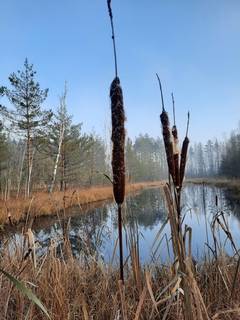
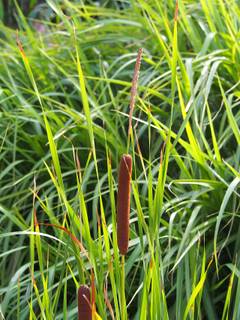
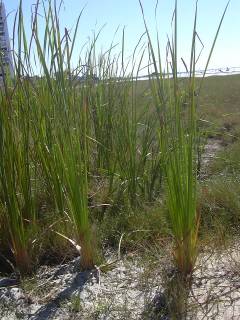
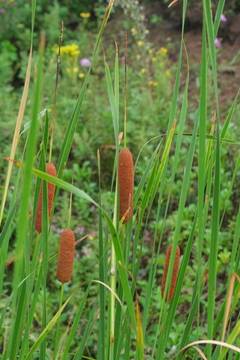
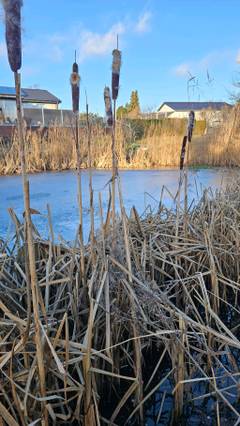
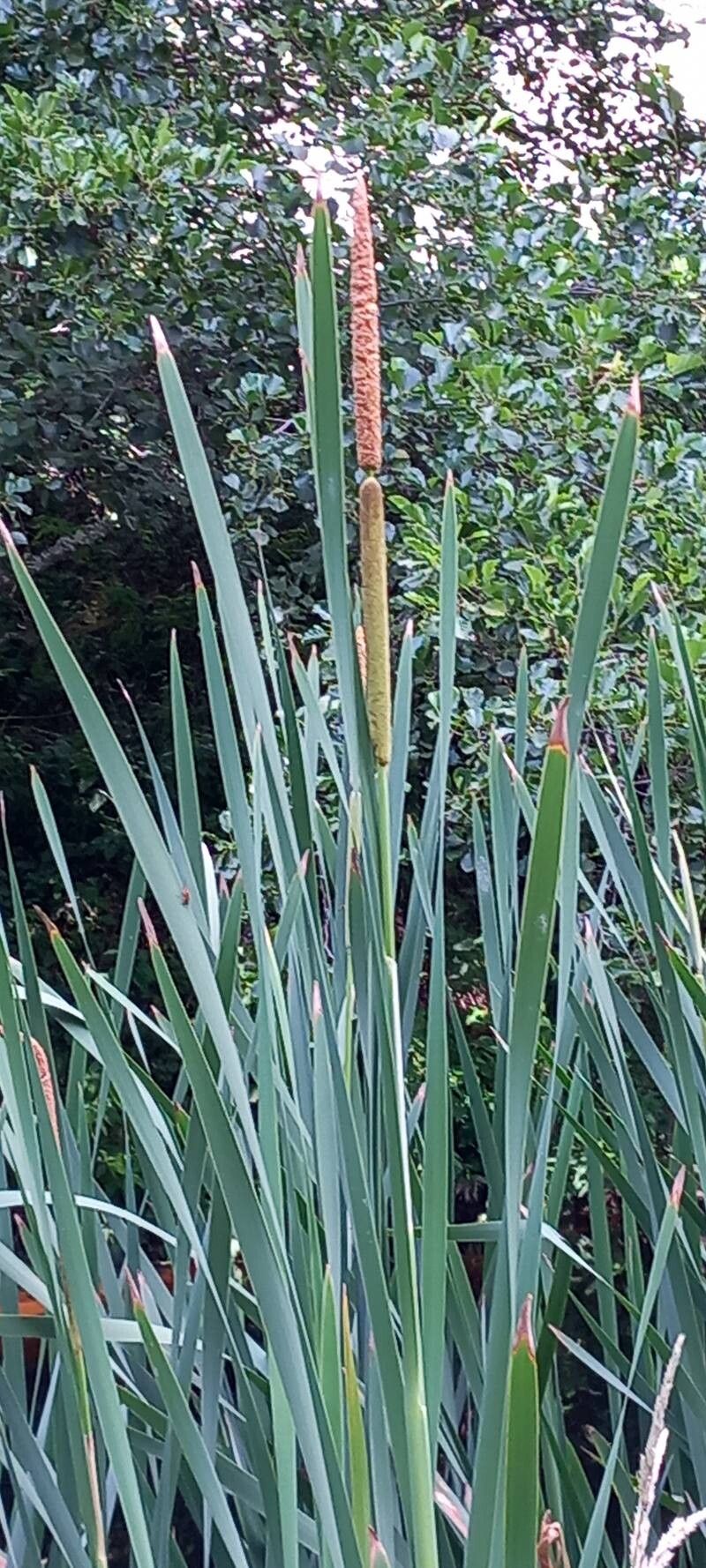
Typha × glauca is a herbaceous emergent perennial of freshwater wetlands, formed by hybridization between the native T. latifolia and the introduced T. angustifolia. It grows 6–10 feet (1.8–3 m) tall, often exceeding both parents, and spreads by thick rhizomes to form dense colonies. The leaves are flat, gray-green, and 0.4–0.8 inch (10–20 mm) wide, arising from the base in fan-like clusters. The brown flowering spike is cylindrical, with the male section above the female section; in this hybrid the two are separated by a gap of 0.04–1.6 inches (1–40 mm), intermediate between the gapless spike of T. latifolia and the wide gap of T. angustifolia. Flowering occurs from June to July, after which the female spike releases wind-borne seed in late summer and fall. The plant tolerates standing water 4–32 inches (10–80 cm) deep and fluctuating water levels. Its rhizomatous spread displaces other wetland vegetation, and Typha × glauca is recorded as invasive across the Great Lakes region and other parts of North America, where it forms monotypic stands that reduce plant diversity. Stems and leaves die back to the waterline after frost, leaving standing brown foliage through winter.
Native Range
The hybrid arises where the ranges of its parents overlap in North America. T. latifolia is native across the continent, while T. angustifolia was introduced from Europe; Typha × glauca now occurs through the northern United States and southern Canada.Suggested Uses
Used in constructed wetlands and stormwater basins for nutrient uptake and bank stabilization, and as cover and nesting habitat for wetland birds. Its aggressive spread limits use in small ornamental ponds without root containment. Stems and leaves have been used in basketry and matting.How to Identify
Appearance
Size & Dimensions
Height6' - 10'
Width/Spread2' - 4'
Bloom Information
Flowering spikes mature from June to July. Wind carries pollen from the upper male section to the lower female section, which then ripens and releases plumed seed in late summer and autumn. The dried spike persists into winter, breaking apart gradually.
Detailed Descriptions
Foliage Description
gray-greenGrowing Conditions
Sun Requirements
Requires 6-12 hours of direct sunlight daily
• Full Sun: 6+ hours of direct sunlight
• Partial Shade: 3-6 hours of direct sunlight
• Full Shade: Less than 3 hours of direct sunlight
Care & Maintenance
Care Guide
Growth requires full sun and saturated soil or standing water 4–32 inches (10–80 cm) deep at pond margins, ditches, and marshes. Plants establish quickly from rhizome divisions and spread laterally each season. No fertilizer is needed in natural wetland soils, which are typically high in nutrients. Because the rhizomes spread aggressively, a lined basin or sunken container limits the colony in managed water gardens. In many jurisdictions Typha × glauca is regulated or discouraged in plantings because of its invasive spread. Foliage collapses after hard frost and can be cut to the waterline in late winter.Pruning
Cutting spent foliage to the waterline in late winter clears the previous year's growth before new shoots emerge. Repeated cutting of stems below the waterline during the growing season weakens the colony over time. Removing seed spikes before they shatter reduces self-seeding.Pruning Schedule
Prune: February–March
winter