Typha, Genus, domingensis, Species,
- Genus & species
southern cattail
Overview
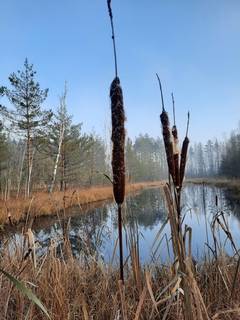
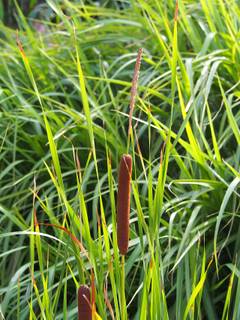
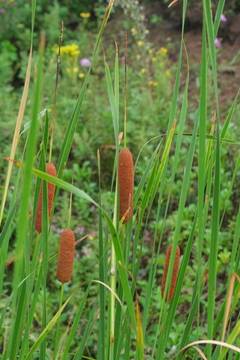
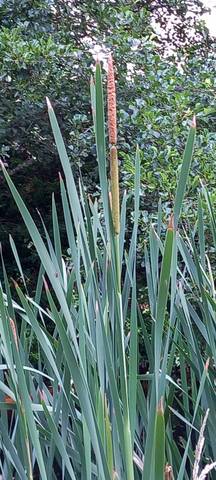
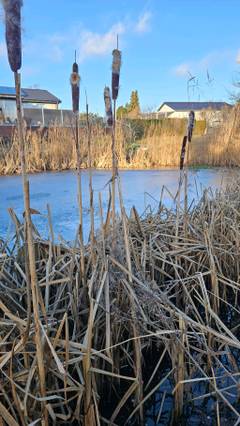
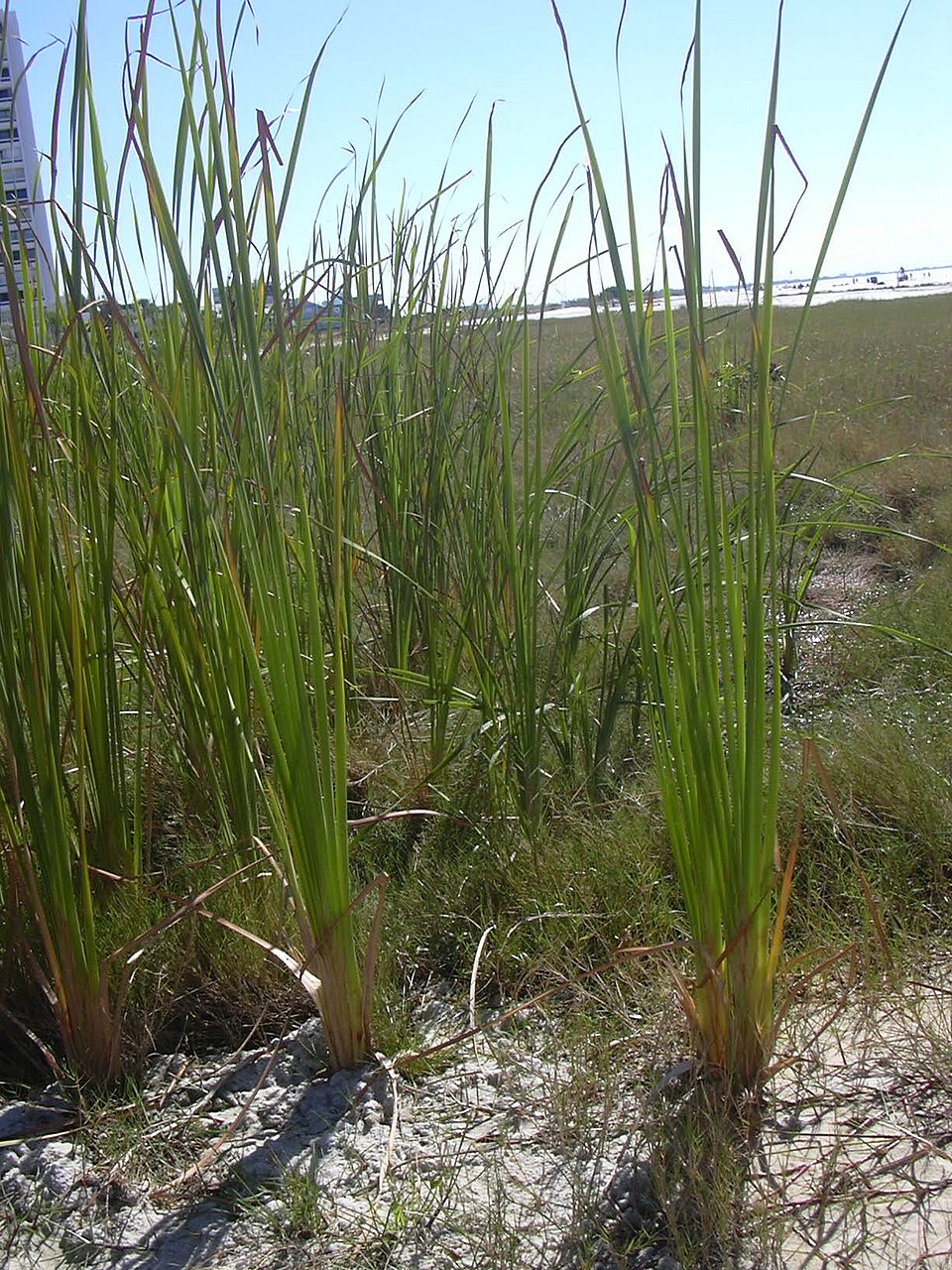
Typha domingensis is a tall, rhizomatous wetland perennial in the cattail family, growing 6-13 feet (1.8-4 m) tall from creeping underground stems that form dense stands. The leaves are flat, narrow, and strap-like, 0.2-0.7 inch (5-18 mm) wide and longer than the flower stalks, pale gray-green and spongy in cross-section. In summer it produces the cylindrical flower spike typical of cattails, with a brown female section below and a narrower male section above; in this species a visible gap of bare stem usually separates the two, which helps tell it from broadleaf cattail. The female spike matures into a dense brown cylinder that breaks apart into wind-borne, cottony seeds in fall and winter. It grows in fresh to brackish marshes, ditches, pond margins, and slow streams across warm regions worldwide, tolerating standing water 1-2 feet (30-60 cm) deep. The plant spreads quickly by rhizomes and seed and can form monocultures that crowd out other wetland species, which makes it weedy in managed ponds and constructed wetlands. It is grown intentionally for water treatment, shoreline stabilization, and wildlife cover.
Native Range
Native across warm-temperate, subtropical, and tropical regions worldwide, including the southern United States, the Americas, Africa, southern Europe, and Asia. It grows in fresh and brackish marshes, lake and pond margins, ditches, and slow-moving water.Suggested Uses
Used in constructed treatment wetlands, pond and shoreline stabilization, erosion control, and wildlife habitat plantings, where it gives cover and nesting material for marsh birds. Its spreading habit suits large naturalized basins rather than small ornamental ponds.How to Identify
Appearance
Size & Dimensions
Height6' - 13'
Width/Spread3' - 6'
Bloom Information
Flowers in late spring and summer, with pollen shed from the upper male spike before the lower female spike matures. The brown female spike persists into fall and winter, then breaks apart into cottony, wind-blown seed. A single spike can release hundreds of thousands of seeds.
Detailed Descriptions
Foliage Description
gray-greenGrowing Conditions
Sun Requirements
Requires 6-12 hours of direct sunlight daily
• Full Sun: 6+ hours of direct sunlight
• Partial Shade: 3-6 hours of direct sunlight
• Full Shade: Less than 3 hours of direct sunlight
Care & Maintenance
Care Guide
Typha domingensis grows in full sun in saturated soil or standing water up to about 2 feet (60 cm) deep and tolerates fresh to brackish conditions. It establishes from rhizome divisions or seed and spreads quickly once rooted. It tolerates a wide pH range and a variety of mucky and silty soils. Because it forms dense, spreading colonies, it is usually confined to lined basins or contained margins to keep it from overtaking a pond. Cutting stems below the waterline through the season weakens the rhizomes over time. In constructed wetlands it takes up nutrients and metals from the water.Pruning
Cutting or mowing stems repeatedly, especially below the waterline, reduces the stand and drains the rhizomes over several seasons. Removing the brown spikes before they shatter limits seed spread. Cut material is often pulled out to keep it from building up as muck.Container Growing
Suitable for container growing
Minimum container size: 5 gallons