Image 1 of 2
1 / 2
Plant Reference
Typha, Genus, angustifolia, Species,
- Genus & species
slender-leaved cattail
Native range debated — likely native to Europe with some North American native populations and introduced genotypes
Overview
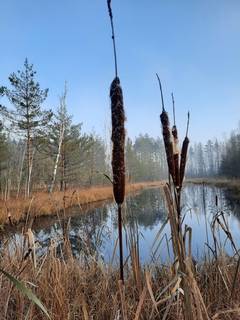
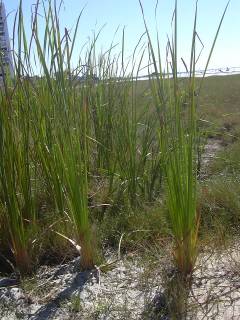
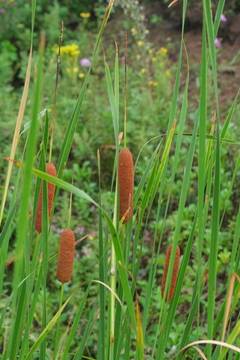
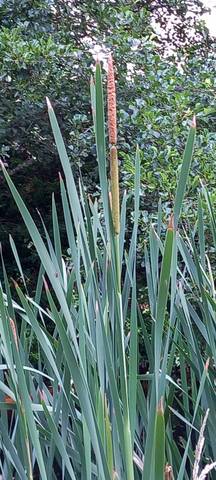
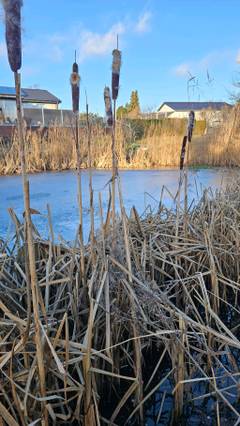
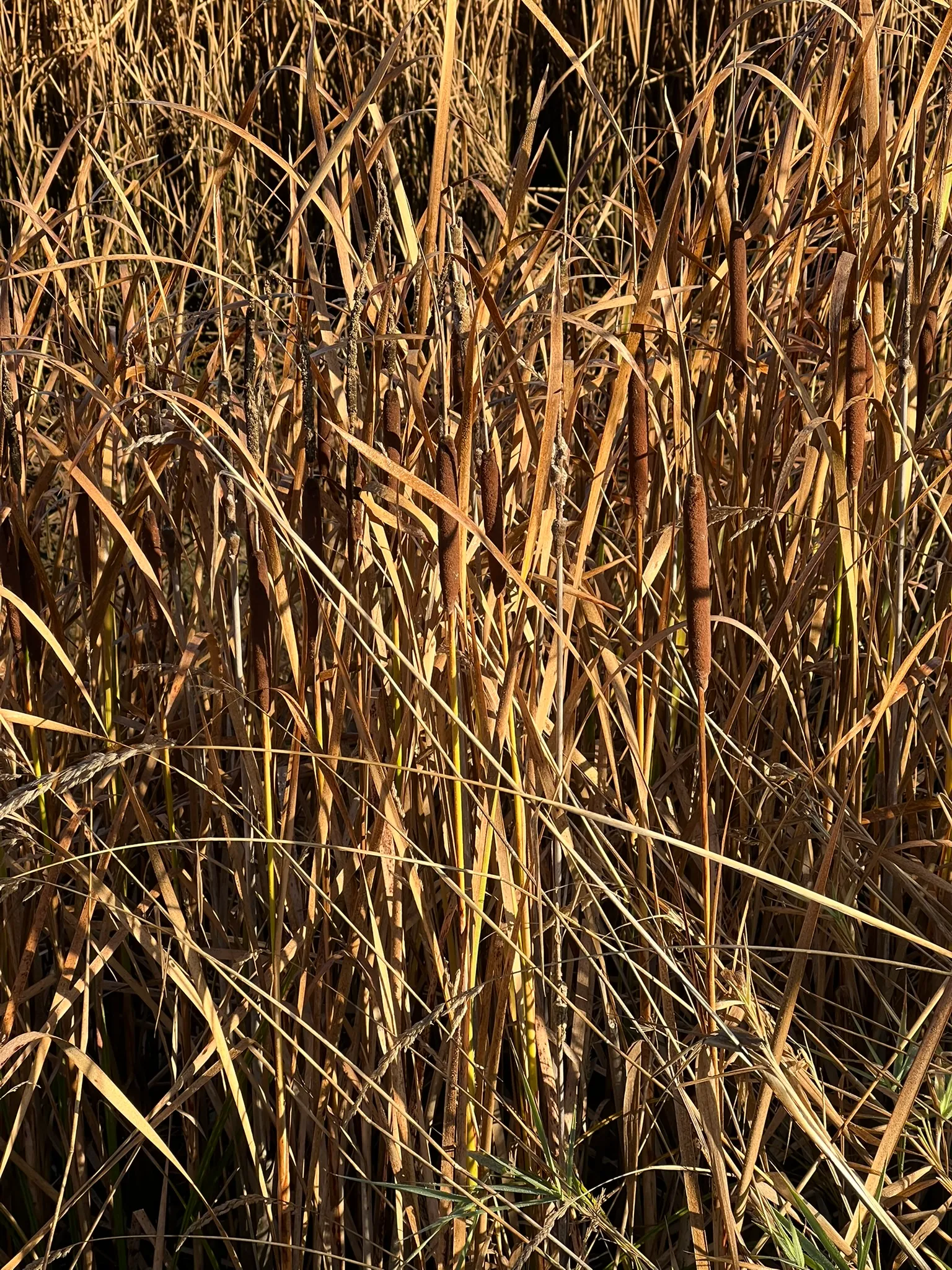
Typha angustifolia is a robust rhizomatous emergent aquatic perennial in the cattail family (Typhaceae) reaching 48–96 inches (120–240 cm) tall and 24–48 inches (60–120 cm) wide, forming dense monoculture stands in marshes, ditches, and pond margins. Leaves are erect, narrow, linear, 0.2–0.4 inch (5–10 mm) wide (versus 0.4–1 inch / 10–25 mm in T. latifolia), gray-green, with a D-shaped cross-section (convex on the back, flat on the inner face). The inflorescence is the diagnostic feature: a terminal spike with a brown cylindrical female (pistillate) portion 2–6 inches (5–15 cm) long and a narrower yellowish male (staminate) portion above, separated by a gap of 0.5–4 inches (1–10 cm) of bare stem — the gap is the primary distinction from T. latifolia, in which the male and female portions are contiguous. A single female spike produces 100,000–700,000 seeds, each carrying a tuft of hair-like bristles enabling wind and water dispersal. Rhizomes are thick, starchy, spreading laterally to form dense stands. The species hybridizes readily with T. latifolia to produce T. × glauca, which is often more aggressive than either parent. T. angustifolia tolerates deeper water than T. latifolia.
Native Range
Native range is debated: Typha angustifolia is likely native to Europe with some native North American populations alongside introduced genotypes. The species occurs in marshes, ditches, pond margins, roadside swales, and constructed wetlands from sea level to approximately 6,000 feet (1,800 m). In the Pacific Northwest, the species is increasingly common in disturbed wetlands, ditches, and constructed stormwater facilities. Tolerates brackish and polluted water.Suggested Uses
Used in wetland identification for the gap-versus-no-gap cattail comparison: T. angustifolia (gap between male and female spikes, narrow leaves) versus T. latifolia (contiguous spikes, broad leaves) versus the hybrid T. × glauca (intermediate). The large seed output (up to 700,000 per spike) is a standard teaching example in reproductive allocation. Rhizome starch, young shoot edibility, and fiber use are taught in ethnobotany. Used in constructed wetlands for phytoremediation of nutrient-rich and polluted water.How to Identify
Appearance
Size & Dimensions
Height4' - 8'
Width/Spread2' - 4'
Bloom Information
Flowers from June through August. Male spikes release pollen first (protandry), then wither. Female spikes mature over 4–6 weeks, turning dark brown. Seeds disperse from late fall through winter as the spike disintegrates. A single spike releases 100,000–700,000 seeds. In the Pacific Northwest, the brown female spikes are visible from July through the following spring.
Detailed Descriptions
Flower Description
Brown (female spike) and yellow (male spike); separated by a gap of 0.5–4 inches (1–10 cm) of bare stemFoliage Description
Gray-green to dark green; narrow, linear, erect; 0.2–0.4 inch (5–10 mm) wide; D-shaped in cross-section (convex on one side, flat on the other)Growing Conditions
Sun Requirements
Requires 6-12 hours of direct sunlight daily
• Full Sun: 6+ hours of direct sunlight
• Partial Shade: 3-6 hours of direct sunlight
• Full Shade: Less than 3 hours of direct sunlight