Image 1 of 10
1 / 10
© No machine-readable author provided. Keisotyo assumed (based on copyright claims)., some rights reserved (CC-BY) · Wikimedia Commons
Overview
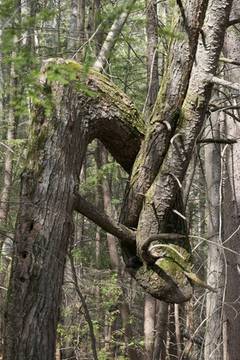
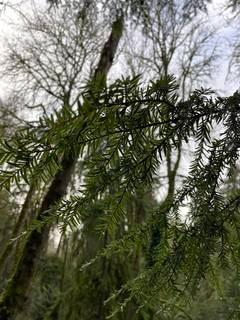
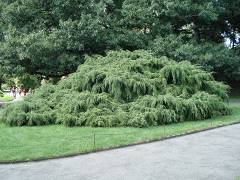
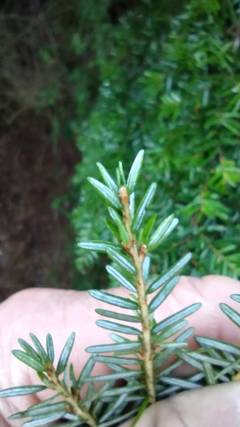
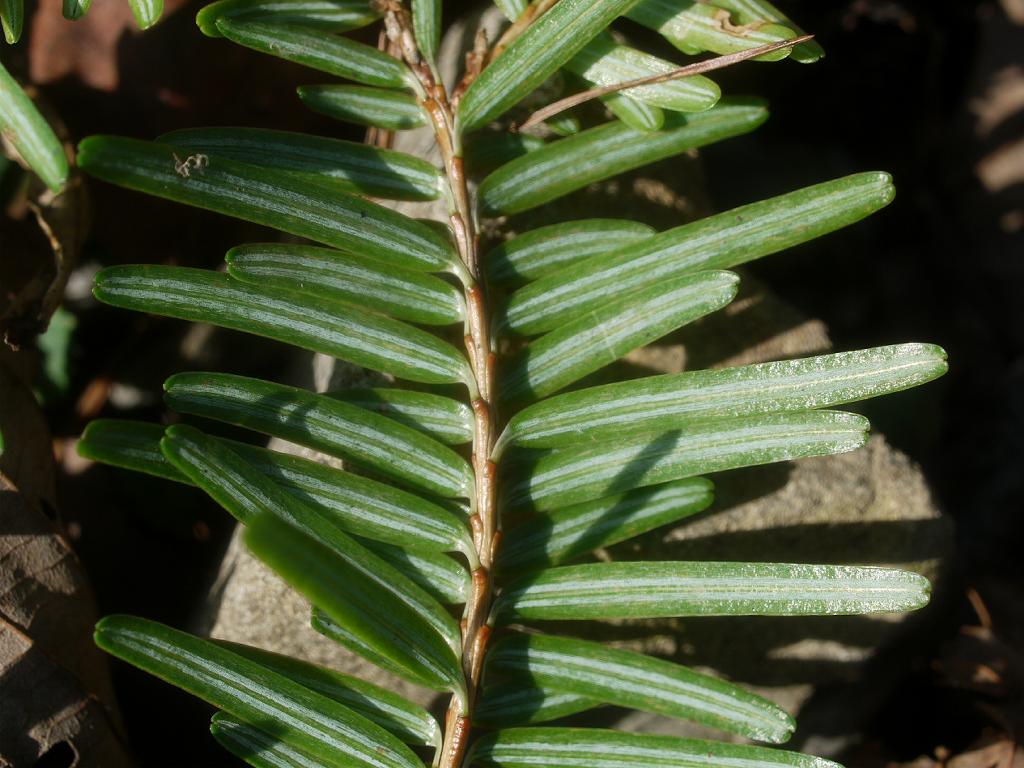
Tsuga sieboldii is an evergreen coniferous tree reaching 40–80 feet (12–24 m) tall with a spread of 20–30 feet (6–9 m) in cultivation, and up to 100 feet (30 m) in native forest. The crown is broadly pyramidal, with horizontal to slightly drooping branches and gray-brown bark that is scaly to ridged. Needles are flat and linear, 0.4–0.8 inch (1–2 cm) long, glossy dark green above with a notched tip and two white bands of stomata beneath, and are arranged in two rows along the twigs. Oval seed cones 0.8–1.4 inches (2–3.5 cm) long ripen from green to brown in September–October of the first year and release winged seeds. Growth rate is slow to moderate. Dense foliage casts deep shade, and young plants tolerate shade. Shallow roots and thin bark make plants susceptible to drought and heat injury, and needles drop in dry, windy sites. The species is less susceptible to hemlock woolly adelgid (Adelges tsugae) than T. canadensis. Hardy in USDA zones 6–8.
Native Range
Native to southern Japan, on Honshu, Shikoku, and Kyushu, and to Ulleungdo island in South Korea. Grows in cool, humid mountain forests.Suggested Uses
Grown as a specimen, in groups, or as a screen, spaced 20–25 feet (6–7.5 m) apart as specimens and 12–15 feet (3.7–4.6 m) apart in screens. Planted in shaded sites at woodland edges where soil moisture is consistent. Used as a sheared hedge.How to Identify
Appearance
Size & Dimensions
Height40' - 80'
Width/Spread20' - 30'
Bloom Information
Pollen and seed cones form on the same tree in April–May in zones 6–8. Pollen cones are 0.2 inch (5 mm) long and yellowish, and seed cones are small and green when receptive. Wind carries pollen between trees. Seed cones ripen in September–October of the same year.
Detailed Descriptions
Foliage Description
Glossy dark green above, white stomatal bands beneathGrowing Conditions
Sun Requirements
Requires 4-8 hours of direct sunlight daily
• Full Sun: 6+ hours of direct sunlight
• Partial Shade: 3-6 hours of direct sunlight
• Full Shade: Less than 3 hours of direct sunlight
Care & Maintenance
Care Guide
Grows in moist, well-drained, acidic soil (pH 5.0–6.5) in part shade to full sun; afternoon shade reduces needle scorch in zones 7–8. Newly planted trees need 1–2 inches (2.5–5 cm) of water weekly during the first 2–3 growing seasons. A 2–3 inch (5–8 cm) layer of mulch keeps shallow roots cooler and moister. Established trees tolerate short dry periods but drop needles in prolonged drought and drying wind. Hemlock woolly adelgid, spider mites, and scale insects occur on stressed trees. Waterlogged soil causes root rot.Pruning
Needs little pruning because the pyramidal form develops naturally. Dead and damaged branches are removed in late winter or early summer. Shearing in early summer, after new growth hardens, maintains hedges at 6–10 feet (1.8–3 m) tall.Pruning Schedule
Prune: February–March & June
winterearly springsummer