Tsuga, Genus, canadensis, Species, 'Pendula', Cultivar,
- Genus & species
- Cultivar
weeping Canadian hemlock
Species native to eastern North America — Nova Scotia south to Alabama and west to Minnesota; cool moist forests on acidic north- and east-facing slopes; cultivar discovered around 1870 at the Hudson River estate of H. W. Sargent
Overview
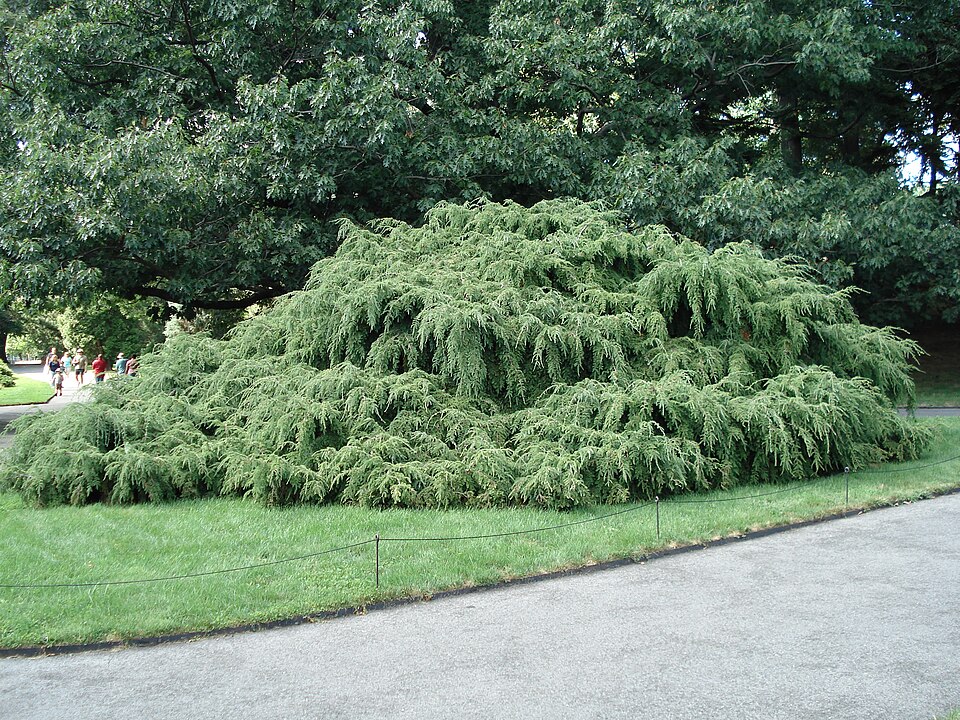
Tsuga canadensis 'Pendula' is a spreading coniferous evergreen shrub. Plants reach 3-6 feet (0.9-1.8 m) tall when grown unstaked as a mounding cascade, or 10-15 feet (3-4.6 m) tall when staked to a leader to form an upright cascading fountain; mature spread is 15-30 feet (4.6-9 m) wide. Dark green flat needles, 0.3-0.5 inch (8-13 mm), with two white stomatal bands beneath are carried on cascading branchlets that create overlapping layers of dark green foliage. Inconspicuous brown strobili appear in April-May, followed by small pendant cones in fall. The cultivar was discovered around 1870 by H. W. Sargent at his Hudson River estate, and most plants in commerce trace back to that selection. The cultivar has no central leader of its own — early staking determines whether the plant grows as a low mounding cascade or a tall fountain, and the choice cannot be reversed once branches set their orientation. The species (eastern hemlock) is the state tree of Pennsylvania. Hemlock woolly adelgid (Adelges tsugae) is the primary pest threat — the adelgid susceptibility is the principal limitation in much of the eastern range, and annual systemic imidacloprid treatment is required for control on landscape specimens in affected regions. Foliage contains tannins and is toxic to pets and humans (the species is not the same as poison hemlock, Conium maculatum, which is an unrelated herbaceous plant). Acidic soil is required (pH 4.5-6.0). Not drought-tolerant.
Native Range
Species T. canadensis is native to eastern North America from Nova Scotia south to Alabama and west to Minnesota, in cool moist forests on acidic north- and east-facing slopes. The cultivar 'Pendula' was discovered around 1870 by H. W. Sargent at his Hudson River estate.Suggested Uses
Grown as a weeping evergreen specimen in shaded woodland gardens, beside water features, or at viewpoints where the cascading silhouette can be seen against open ground or sky, spaced 15-30 feet (4.6-9 m) apart. Form is set by early staking — mounding cascade if unstaked, upright fountain if staked. Adelgid-susceptible. Not drought-tolerant. Foliage is toxic. Hardy in zones 4-7.How to Identify
Appearance
Size & Dimensions
Height3' - 15'
Width/Spread15' - 30'
Bloom Information
Spring (April-May). Inconspicuous brown strobili (coniferous cones, not flowers). 2 weeks. Wind-pollinated. Small pendant brown cones, 0.5-1 inch (1.3-2.5 cm), in fall.
Detailed Descriptions
Foliage Description
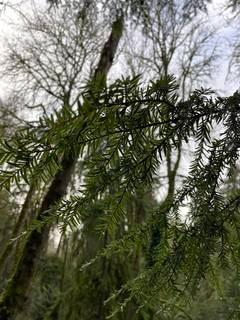
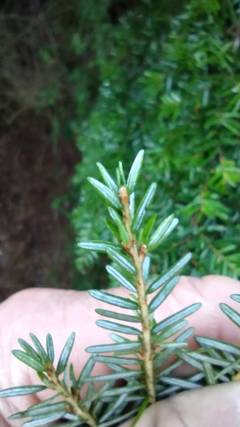
dark green above with two parallel white stomatal bands beneath; short flat needles 0.3-0.5 inch (8-13 mm); soft small-scale texture; cascading branchlets create overlapping layers of dark green foliageGrowing Conditions
Sun Requirements
Tolerates up to 6 hours of direct sunlight daily
• Full Sun: 6+ hours of direct sunlight
• Partial Shade: 3-6 hours of direct sunlight
• Full Shade: Less than 3 hours of direct sunlight