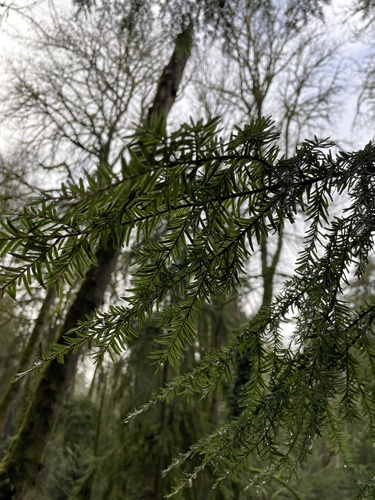
Tsuga, Genus, spp., Multiple species,
- Genus
- Multiple species
hemlocks
Overview
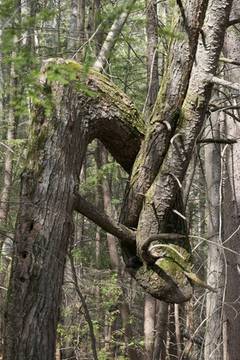
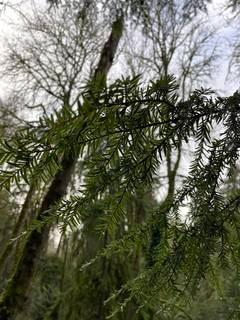
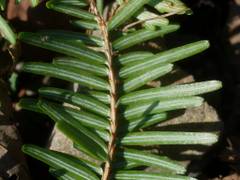
Tsuga, the hemlocks, is a genus of about nine to ten species of evergreen coniferous trees in the pine family, Pinaceae, native to North America and eastern Asia. They are pyramidal trees with a slender, nodding leader and gracefully drooping branches, reaching 50 to 150 feet (15 to 45 m) tall at maturity depending on species and site. The short, flat needles are 0.25 to 0.75 inch (6 to 20 mm) long, dark green above with two pale bands beneath, arranged in flat sprays. The small, pendent cones are 0.5 to 1.5 inches (1.5 to 4 cm) long, ripening from green to brown and hanging from the branch tips. Hemlocks grow in cool, moist forests, often in shade and on north-facing slopes, and tolerate deeper shade than most conifers. They are slow-growing, long-lived, and shallow-rooted, needing cool, humid, acid soils and suffering in heat, drought, and exposure. In eastern North America T. canadensis and T. caroliniana are under severe threat from the hemlock woolly adelgid, an introduced sap-feeding insect that has killed large numbers of trees. The genus is grown as specimen trees, screens, and clipped hedges in cool climates.
Native Range
Tsuga is native to two separate regions: eastern and western North America, and eastern Asia including the Himalayas, China, Japan, and Taiwan. T. canadensis ranges across eastern North America, and T. heterophylla dominates moist forests of the Pacific Northwest. The Asian species grow in cool mountain forests.Suggested Uses
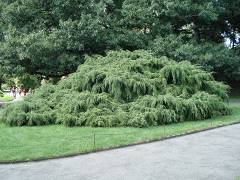
Hemlocks are grown as specimen and screening trees and as clipped evergreen hedges in cool, moist climates, where they take shade and shearing well. The soft, drooping foliage gives a soft texture in woodland and shaded gardens. They are unsuited to hot, dry, or exposed sites and, in adelgid-affected regions, need pest management to persist.How to Identify
Appearance
Size & Dimensions
Height50' - 150'
Width/Spread20' - 40'
Bloom Information
As a conifer, Tsuga does not flower but produces small cones. Pollen is shed from tiny male cones in spring, around April and May, while the young seed cones develop at the branch tips. The cones ripen and open in their first autumn and winter, releasing winged seeds, and the empty cones may hang on for a further year.
Detailed Descriptions
Foliage Description
Dark green with white bands beneathGrowing Conditions
Sun Requirements
Requires 3-8 hours of direct sunlight daily
• Full Sun: 6+ hours of direct sunlight
• Partial Shade: 3-6 hours of direct sunlight
• Full Shade: Less than 3 hours of direct sunlight